The Trust’s Cinderhill Tar Pit research site has seen and had to cope with a second heatwave and draught in the four years of its existence. The willow trees planted to remediate the acidic tars of the site have had to deal with temperatures up to 400C and two months of no measurable rainfall. ground surface temperatures on the site were above the recorded air temperatures and the plants have had to cope with great er amounts of gas being liberated through the willows. Further to these problems the leaves of many of the young trees have been burnt off.
1n the trees’ initial year after planting the heat and draught damaged many of the young cuttings which required a replanting operation to be conducted in the first winter of the project. It was natural to fear that the plants would have suffered similarly in this year, especially with the record temperatures of this last two months of July and August.
The site was visited in the last week, initial inspection across the site gave credence that our fears were realised in part. A large number of trees had lost their leaves completely whilst others showed that partial leaf retention had been achieved. This partial retention had been achieved about the edges of the site and through parts of the centre of the planting.
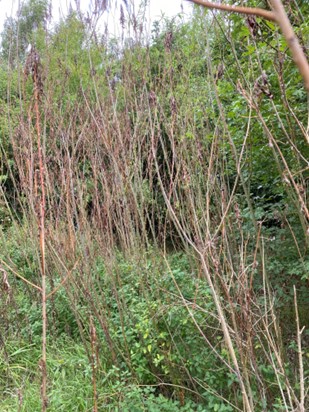
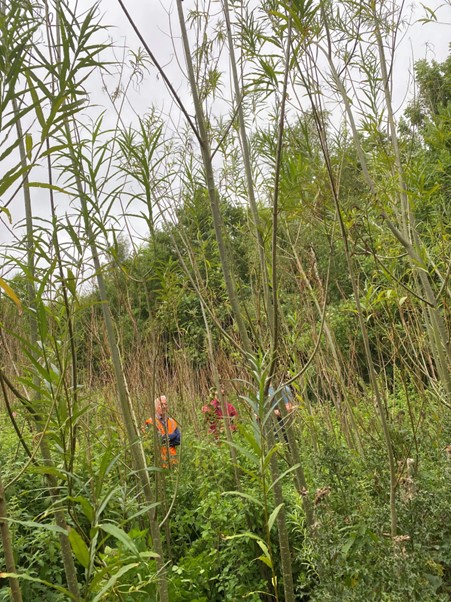

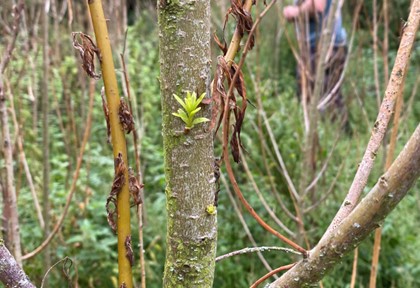
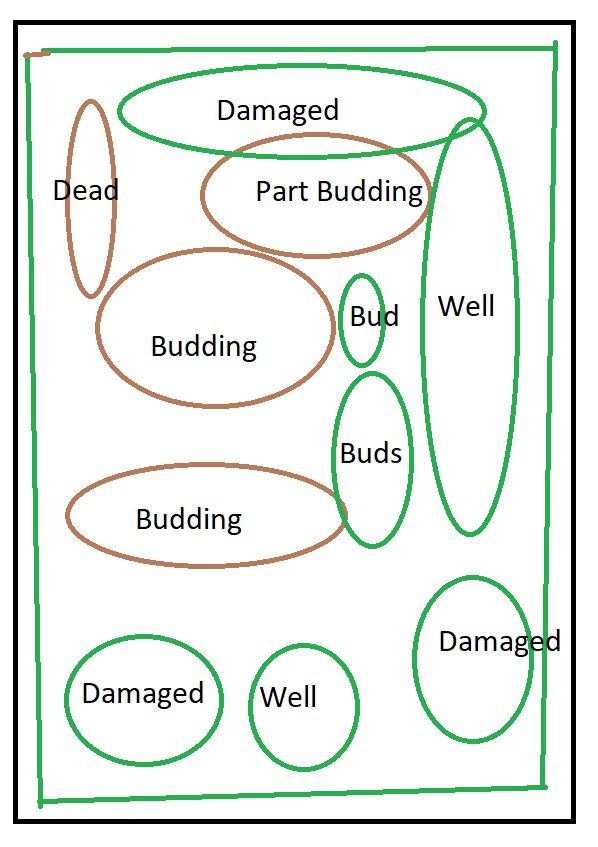
The site plan shows apparent situation at the end of August 2022. The damaged areas are not dead but rebudding has not as yet started. The progress will be monitored closely over the next two weeks. A better understanding of the full situation will require a good break in the draught with a reasonable level of precipitation.
The willows will need to re-establish a good leaf cover before the third week of October to ensure good survival rates over the winter months. Some pollarding of tall (5+ metres) may be considered in December and the resultant cuttings used to replace any serious losses.
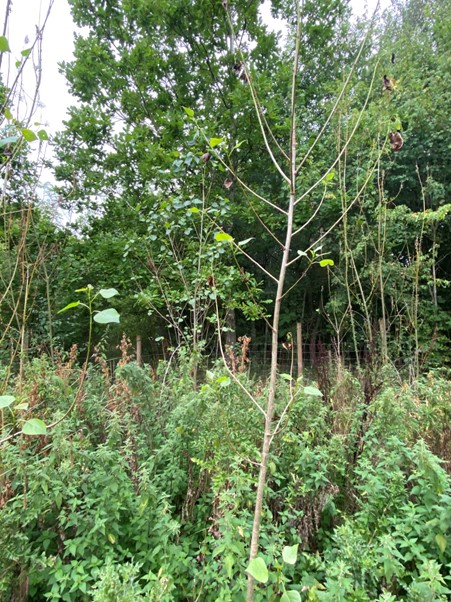
A few poplars were planted at one corner of the site at second planting, winter 2018/19 to trial their growth. They hold their leaves better than willows when draining gases encountered by the root system. This is due to the poplar having only two gas discharge nodes whilst the willow has three. Both pass gases via branch and twig nodes but willows also have individual leaf nodes. This last node allows the leaves to drop at each gas encounter whilst the poplar remains in full leaf.
Compared with willows the poplar is slower growing and their establishment takes longer. The root systems appear to be similar in their robustness to the willows. Their continued leaf hold would make them an ideal planting addition to allow the greening of the site to be more apparent than a monoculture of willows.
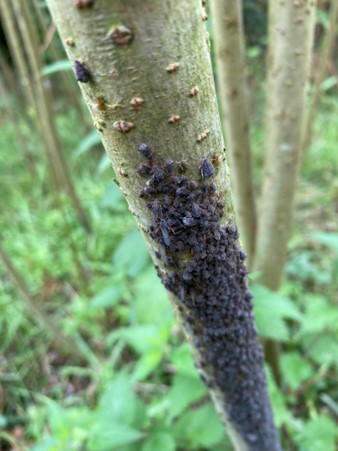
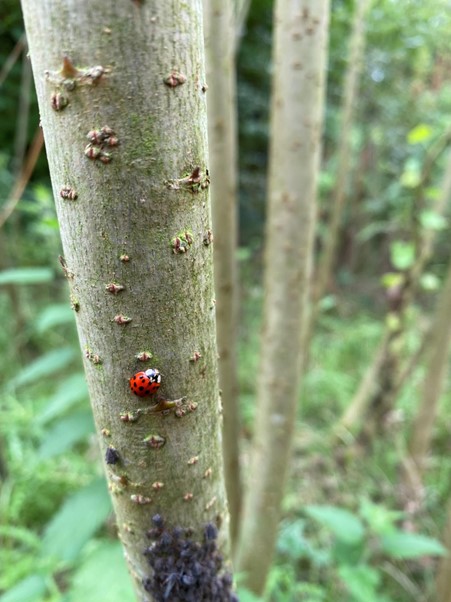
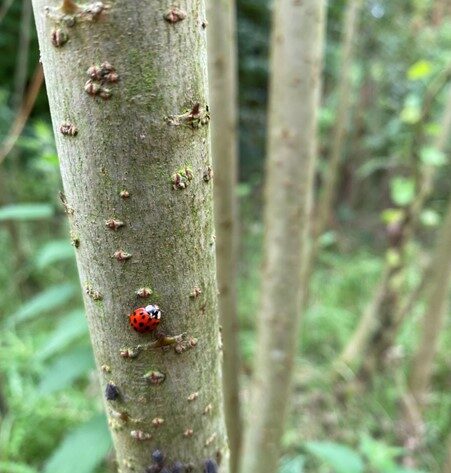
Great Willow Aphids.
The willow aphid, which usually has made an appearance during the late spring gas appeared on a few of the willows in the last week. They are taking moisture from the developing bark on the plants and have had little effect in previous seasons. If this changes in the next two weeks they will be removed by a weak solution of Fairy Liquid, which has been demonstrated to work well with little or no damage to any other fauna.