Phytoremediation Trial 2018 to 2020.

The Trust is grateful to the Environment Agency for introducing the site to us 6 years ago, we had been aware that there was a major pollution problem here for many years, but an introduction is useful. We are grateful to Harworth Group plc for enabling our trial to take place. We are grateful to many other people and organisations that have enabled the project to go ahead and prosper. Special thanks to Sophie Annable and Nathan Coop for their skill and care throughout the whole project and during Covid.
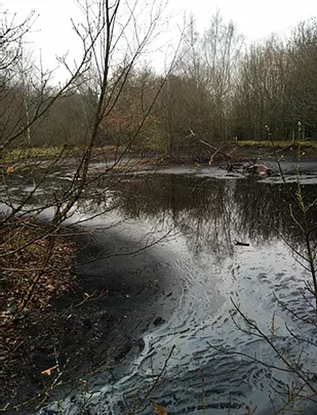
The site was historically a clay, stone and coal digging site, and its last economic value was that of a depository for acid tars, the residues from recycling engine oils that took place in Belper, the nearby town. The company, Silcolene had been carrying out this way of creating specialised lubricants from the 1940s. There are several such sites around Belper and further afield in the West Midlands and elsewhere. The tar pit was created in 1976 and was filled by 1978, one of five in the immediate area. This site was the last site for acid tar deposition prior to this form of disposal being banned.
Our involvement was exactly 40 years from when the site was abandoned and 16 years from when the local authority, Amber Valley Borough Council listed it with the Department of the Environment as a Special Contaminated Site under Section II a of the Environment Act.
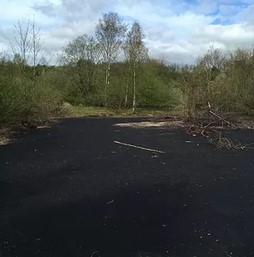
In that 40 years this tar pit had not started to allow nature to begin to regenerate the surface. Nothing grew, snails that ventured onto the site dissolved, not just their keel and soft parts but their shells were eaten away. Rain falling on the site ran off the surface as a strong acid (pH2). The site had a strong aroma of hydrocarbons, the surface was soft, anything placed on the surface, would sink below and into the tar. Several cars had been burnt on the surface over the years and their remains had disappeared beneath the surface, one still showed protruding from the tar.
Our trial was put together based on several research projects and other work that the Trust had carried out over the last twenty years. These researches included the use of willows to aid treatment of acid mine drainage, willows, and other tree species for the treatment of oil pollution from oil spills, and road runoff. The use of willows to stabilise acidic dredgings from Dutch and Belgian canals. Observation of natural willow uptake of metals and its use to remove or restructure metals on hazardous sites.
These projects spread out over so many years allowed the Trust to put forward a scheme to address the several issues that affected this acidic tar pit. It was agreed that the work we proposed to carry out had to address and achieve set goals:
- Stabilise the site.
- Remove the smell of hydrocarbons.
- Break down the tars and allow willow root growth.
- Neutralise the acidity of rain runoff.
- Neutralise the tar acidity as the willows’ roots penetrate the tar.
- Increase biodiversity.
These project goals might be thought a big ask. The research that had been carried out in the past though gave the Trust the confidence to agree with the aims and objects suggested.
Trust the confidence to agree with the aims and objects suggested.
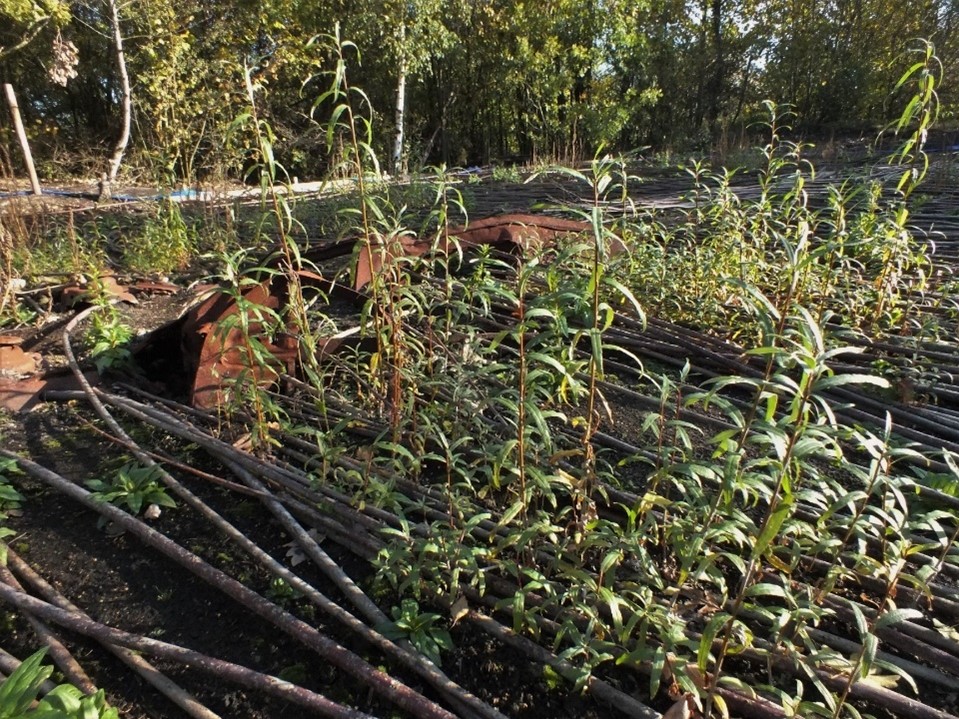
The methodology used was to plant willow wands across a surface of spent mushroom compost. This method had worked on dredgings and similarly the willows rooted swiftly. The young shoots grew well. It was planned to cover over the rooted wands in the autumn winter with further compost, but the summer brought with it drought and heat. The site baked and around 50% of the young willows died. This was despite the site being watered. This though was not the problem but heat. Many of the cuttings cooked in 400C degrees of surface heat.
Despite the heat the tar stabilised, the smell had already gone.
In the Autumn /winter the site was recovered with another layer of spent mushroom compost. The dead willows have been removed, and chipped adding to the available biomass on the site surface. The areas where the willows failed were again replanted though this time beneath the second layer of compost. Other, short willows were beaten through the compost and into the tar surface.

By the spring of 2019 there was a need to investigate the tar structure, which was venting gasses and the site surface was dropping.
The site for a borehole was decided on for a day in February 2019. Normal precausons for such an exercise were inplace, that included gas protection and breathing apperatus. The bore hole penetrated a strata of gas that showed itself as a white vapour that qwuickly dispersed but an area of the newly planted willows suffered expose to the fumes. The damage due to that expose demonstrated its severity during the next years growing season. The willows exposed to the gas died.
Other plants though revegitated the varea via self seeding.
Much of the site though grew well throughout 2019 and the trial has been maintained throughout 2020 despite the Covid Crisis.
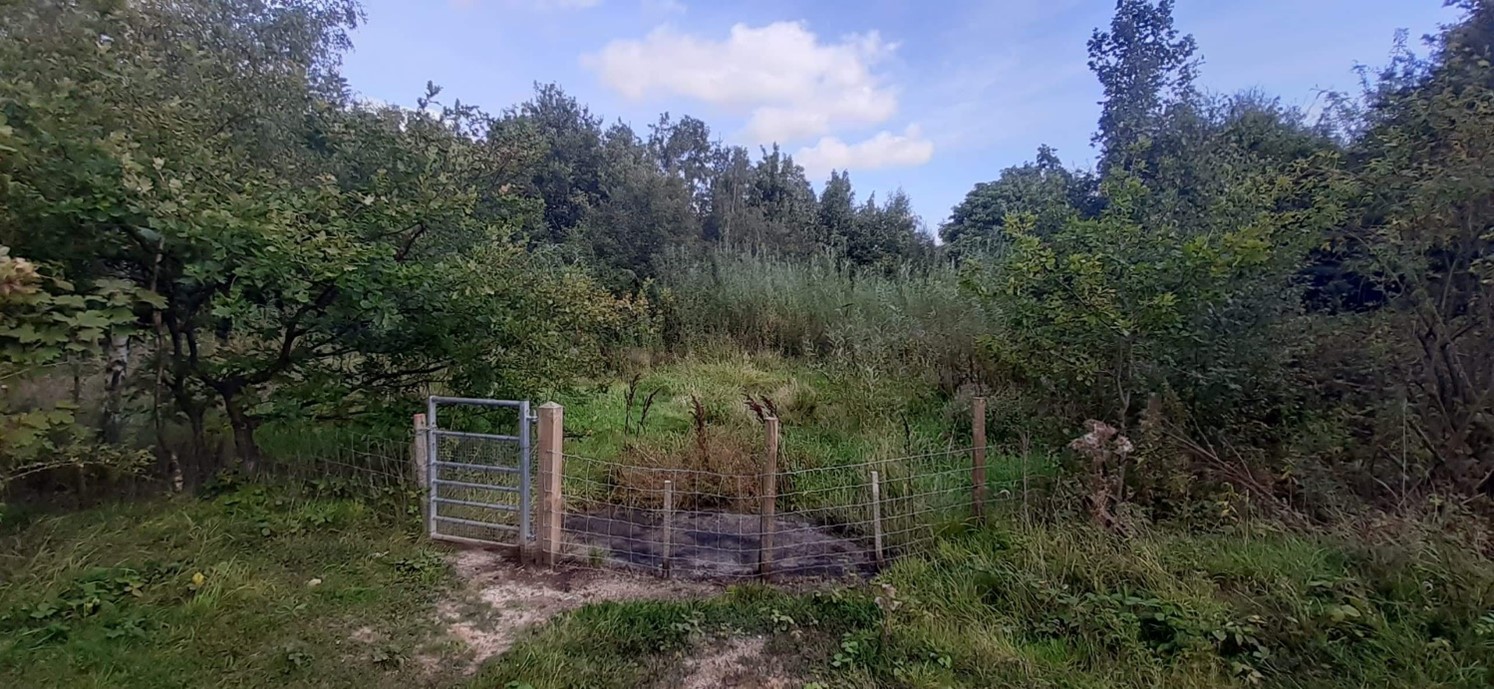
The project has had many detractors and sceptics throughout its time on site. The fact that the site is vegetated at all is testament to the concept, but it was independently monitored to report on the trial’s findings.
The University of Nottingham was requested and commissioned by Harworth Group to carry out an independent chemical, geographical and ecological overview of the project. The research overviewed the work for two and a half years. Its report at the end of the second year showed the project had achieved all that was asked of it.
The site:
- Was stable and no longer swallowed up what was placed on the surface.
- The smell of hydrocarbon ceased altogether as soon as the planting was in place.
- As soon as the willow roots broke into the tar broke down the tar, venting gaseous material from the nodes of the willows.
- The acidity was neutralised.
- The tar acidity neutralised as the willows’ roots broke down the tar.
- Instant biodiversity was noted instantly. Mice took up residence. Frogs toads, newts including Great Crested newts were found on the surface of the tar pit. Trail camera film showed regular visits by badger, fox, rabbit, several species of deer, pine martin, snails, slugs, grass snakes and caterpillars including that of an Elephant hawk moth.
A further finding by the university during the monitoring was the PAHs; that were a major hazard of the site and a carcinogenic concern to the local authority, a major reason for the site’s contamination designation, had been found been removed by the actions of the project.