River Basins of England and Wales;
with a small southern section of Scotland and West Wales not marked. (Source DEFRA)

The Natural Water Qualities of England and Wales.
Preface
Clean Rivers Trust was formed 26 years ago; one of its first national projects was to produce a short report on river water quality and the state of the water environment across England and Wales. This was in response to the report published by the National Rivers Authority in 1991, which was a travesty in green wash. The Trust’s report was a catalyst for much work and the improvement of many rivers’ water quality: also it was responsible for a great deal of animosity from the National Rivers Authority. At one stage the Authority took to releasing press releases and writing articles for publication directly to the environmental press to discredit our actions and views. This though rebounded on the perpetrators as such actions are apt to do.
The old report pointed out the many failings of the National Rivers Authority and it’s trumpeted early successes in reducing pollution and as the report pointed out time and again such vaunted reductions in damaging discharges were more the relocation of some and a change in the monitoring and reporting of others. Such remarkable results as the overnight reclassification of the River Tyne was not that treatment at sewage works was improved but that the discharge pipe from the most polluting site had been extended to the tidal estuary. This meant that the waters running through Newcastle and Gateshead no longer were devoid of life 24/7 but were pretty unpleasant for just part of each tidal movement and the dilution factor made it possible for fish to re-enter the river from both ends: some entering the river from the sea to spawn in the headwaters of the Tyne and others to test the waters from the landward side to develop sustainable cadres of fish. It has taken many years since those early days for this to be achieved and much expenditure by the water company to achieve it, aided by industrial decline that has seen many of the oldest companies, the most polluting, disappear.
The newly privatised water companies were surprisingly supportive of our views at the time; they were run mainly by water men, today such agreements are more unlikely as those in control are more likely to have MBAs rather than have been apprenticed engineers, mores the pity.
The 1992 findings were dominated by the costs of polluting, the fees the National Rivers Authority levied to allow polluting discharges to enter controlled waters, the Environment Agency still do levy such charges and the issues of discharge pollution percentiles: as long as a site discharge was within consents 95% of the time the other 5% could be an horrific polluting glitch, is still current policy. Water law has not changed very much in the last 25 years, the Chancellors of the Exchequer have done some good for the environment over the years: Landfill and Aggregate taxes included. Michael Heseltine as President of the Board of Trade killed off the deep coal mining industry in 1992 so cutting the polluting discharges from the working collieries, he also became the one individual to cause more pollution than any other by so doing. The closures were responsible for a multi hundred mile set of pollutions as the mines filled up with water after the pumps were turned off and a multimillion pound legacy that stretches beyond the foreseeable future. .
Britain was no longer the ‘Dirty Man of Europe’ but was complacent in being still exceedingly mucky.
Its rivers were edging away from what were no better than lifeless sewers in the south of the country, differently in the north, once away from the Thames watershed things were still appalling. The Thames has always been a special river and will be discussed in some detail later in this document. Members of Parliament from wherever their constituency area take the great river as the touch stone of the nation’s water quality, it can affect their daily working lives as it did during the ‘Great Stink’ in 1858 when the stench from the river forced debate to cease at the palace of Westminster. In the 1950s and 60s the river did not smell and was less enriched with raw sewage but was dead due to the power stations discharging water from their cooling systems raising the river water temperature beyond that of holding oxygen: the river held no fish below Teddington Lock.During the 1970 the river became less warm as the large Thames Side power stations were shutting down. It was not long before reports of salmon returning to the Thames to dead upstream to spawn. It was more likely they were lost! The last indigenous salmon was caught in 1833. Since that date none have been caught that might have been returning to theriver to spawn. Since the 1970s the various agencies, The Thames Conservancy, Thames River Authority, Nation Rivers Authority and the Environment Agency have spent many millions of pounds (estimates of between £4 and £16 million) in attempting the infeasible by reintroducing salmon parr to the rivers. 100s of thousands of young fish were introduced to the headwaters of the river annually and these all but disappeared, never to be seen again.
The rivers of England and Wales have been ill served over the years by agencies aware of their shortcomings and unable to carry forward desirable plans, the European Union has been good for demonstrating this fully. The Environment Agency staff in the regions would love to bring the nations kicking and screaming to have cleanerrivers, remove threats biodiversity, protecting the environment generally and to reduce carcinogenic or other detrimental materials in the environment but their enthusiasm is dampened by the pragmatism emanating from Rio Hose, the Agency’s headquarters located outside Bristol. The headquarters staff are pragmatists and good civil servants; as such they glory in the plausible excuse since the economy of truth is now unacceptable wringing of the hands is: the inability to act for pure economic reasons, the acceptance that the majority of rivers have been altered in some way at some time and as such will fail the European Water Framework Directive. The cry goes up that we are now policemen not capable fiscally to deliver more than better basic advice and prosecutions. The one area that is engaged with by the agency is flood alert and support on a local level; oddly this is where the headquarter staff are abysmal and as to illustrate the point, the ex-chairman of the agency Sir Phillip Dilley resigned after only 18 months in post as he was unavailable to the media invisible to the public during the Christmas and New Year flood events of 2015/2016.
The Chairman of the Environment Agency should not be a job for the faint hearted as Chris Smith (the previous Chairman) demonstrated even when doing the job well. You may not be a full time employee of the organisation and not to be treated as a sinecure or top up for one’s pension. Such are not the best ways to win sympathy, plaudits or influence. Such a leadership post needs to be populated by an individual who is both a visionary and idealist who will listen and engage both the public and staff at all levels.
This short overview of the rivers of England and Wales sets the scene for the next set of improving actions across the countries’ rivers.
Introduction.
The Rivers of the UK are remarkable in their place in British life, few people are unaware of their local stretch of river, and they may not know from where it rises and are unlikely to know where it enters the sea or joins a main river. The local stretch of river or canal is often a place of leisure, play or reflection. Few people actually question the quality of water flowing through their community, more important is the fact that it is safe and often in urban areas it’s not easily accessible to unsupervised children (the River Rae as it runs around the edge of Cannon Hill Park and the Cricket Ground).
The rivers of literature from the writings by the Trent Otter, AA Milne, JK Gerome and K Sheppard, are concerned with leisure, others such as George Elliot’s Mill on the Floss are more robust in nature and deal with a working world where the river and its abilities to both advance and destroy life are described. The most popular aspect being that of the haunt of idlers. That is precisely what this country’s rivers have been, in the care of idlers. Twenty five years ago the rivers of this country were in a grim way, yes they have improved despite the best efforts of several who are or were senior managers at the Environment Agency. Sources of pollution were many and much research needed to be undertaken, it still does, but they are now better known, the answers to many pollutants are understood; there is no reason to still have a sorry state where over 60% of the sylvan streams of England and Wales are of moderate, poor or bad quality with less than 40% good or of high quality.
Such basic statistics can be labelled as unfair but in the 25 years of work on the rivers of the UK it might be dispiriting but one knows that all those years ago nearly 50% of rivers were labelled ‘polluted’and a river of moderate quality was to be aspired to. Today a river of high quality is aspirational, those over 40% of moderate quality could be of a good quality (those at present make up around 35% of the rivers of England and Wales) if basic steps were taken by the Environment Agency with the support of government ministries.
This is explained by the Environment Agency’s almost heart rending display of hand wringing regarding all major water pollution issues, estrogenic material, agricultural chemical, pharmaceuticals and chemical manufacture alongside more pithy issues of mine and quarry waste, redundant tailings impoundment stability and floodplain protection. The Agency has not excelled itself in its work to deny alien species not just gaining a foothold across the country but it has no strategy to address such issues as mitten crab, signal crayfish, various other crustaceans, fish or floralistic additions that are so widespread that they are now the dominant species of their genera. The excuse for this is that the European Water Framework Directive requires implementation of baseline and actual study data so as to judge what has been achieved by 2020 when the full force of the document comes into force. Politically astute it expects to be reformed in a new guise around that date, April 1st being the usual date for such rebranding exercises.
The rivers of the UK are remarkably resilient as each age puts stresses on the aquatic environment either in terms of pollution or stress on the ground water resources that give the rivers their base flow. A river such as the Trent is remarkable in that its makeup just before it reaches its tidal stretch in summer can be made up of around 60% treated sewage and another 10% from other externally derived water sources such as industrial discharge or road runoff.
As looking at the Water Framework Directive helps point out few rivers in the country are truly natural, some have been totally engineered into space allowed by man, such may be seen where the River Tame passes through Spaghetti Junction to the north of Birmingham, running in a concrete channel almost totally forgotten. Most other rivers though have been less cruelly treated but have still been hugely modified and engineered to at the least flow in set channels and not spread over their floodplains. Their shoaling areas have been dredged at times to allow navigation by at least shallow draft craft. Today many such rivers are no longer obviously altered but have silted up and regain that age old appearance beloved of the landscape painters of the 18th and 19th centuries. But even then they were working environments with sluices and locks to allow passage of lighters around fords and only lost in the last century.
Yes the river has always been an enigma, never quite what the majority of us think it should be, a place to watch kingfishers slice the air from vantage post to overhanging branch; a place where children cast their line on a summer afternoon, a halcyon idle of unchanging perfection at their best and even in their urban settings as the waters flow past the mills and warehouses, now closed, converted into apartment blocks or heritage centres beneath the silvered surface of the flow a primeval world of dace and rudd, pike carving through shoals to take their prey. But and it is a big but’ again it is not like that in many places. Still urban rivers are the source of much of the plastics that pollute the seas and oceans putting the great set of ecosystems at risk. Thousands of plastic water bottles and other waste are deposited each day from the urban centres, destination unknown and unconsidered. In reality much of the plastic choking the stomachs of the fish, whales and dolphins of the world’s oceans originates from towns and cities miles from the sea. The rivers are the receptacle of our lives: the laugh as a balloon bursts and flows, a shrivelled in consequential object soon if not instantly forgotten destined to choke an albatross 15 thousand miles away or be the last meal of a loggerhead turtle heading to lay its eggs on some far off beach.
I have walked rivers all over the planet and found bottles not with notes asking for help but empty pharmacy dispensing ones with multitudinous addresses, on the Trent, and the Thames I have picked up similar glass jars that once contained potions for different people but eerily had been handed over the same chemists counter in Hull. What made the two individuals cast their bottles away on the flood and even more remarkably how one to be washed up 50 kilometres inland and one to be marooned on the mud at Greenwich? The rivers of England are still in a parlous state; a different state than they were in 25 years ago not so toxic, more biologically active and capable of showing the cocktail that now pollutes them, not the blanket of horror that once masked this detail. Now the world knows much more what is poisoning the planet, we know what is demeaning our rivers: is it not timely for the people to take control of the waters and require the regulators to act in tandem with the mass of the population who claim they care.
The River Regions of England and Wales.
Anglian Region.
A varied water environment from the fenland of the west to the secluded small wooded vales of the Essex and Suffolk boarders, the Broads and their crowded waterways to the isolated muddy shores of the Deben.
The Fens, a flat land stretching from the Wash to past Peterborough in the south and encompassing Cambridge and Ely, a range of truly manmade drains and dykes built from Roman times and the great creation of the Bedford Level by the Dutch engineer Cornelius Vermuyden in the 1600s all demonstrate the value of fen soil and the nations need to stop it reverting back to a land of swamp and islands; which it has nearly achieved many times, most latterly in 1953 when the gales from the north held the North Sea hard up against the Wash and a flood tide occurred killing many in the catastrophic inundation not just across the fen but on Canvey Island on the Thames Estuary and in the Netherlands where dykes and dams failed and the inundation devastated much of the nation. This area of fertile land is only a shadow of its former self, once the land was peat rich and as a sponge moist and expansive: due to the constant drainage it has shrunk down upon itself; as at Wicken Fen the land has dropped several metres from its level when the area was first drained, the natural fertility has been wrung from this land and has been replaced by fertilisers, first natural and later manufactured. The consequential river water quality suffers with each application, similarly the pesticides and weed killers appear as shadows of the activity on the fields.
The fenland agriculture further burdens the dykes pollution levels by the processing of the crops, potatoes go to washeries where aqueous wastes including starches and soils are lagooned now where 25 years ago were deposited to the River Welland or the Ouse, the lagooning allows the rivers respite from the worst effects of oven chips but still oils enter from the plants that produce them.
The Fens are a vast factory that delivers foodstuffs to the UK and world markets and as such it is a muddle of major growers who on the whole strive to stay on the right side of good agricultural and sustainable agricultural practice, the small farmers are not so well versed in such need and many use pesticides that come to hand, do not particularly concern themselves with such modern issues as spray safe and buffer strips. The real factories, the sheds and packing halls are better served by regulation but as already outlines there are many poor practices that have yet to be identified and illuminated.
The whole of the Anglian region is predominantly rural but beyond the flat lands the agricultural practices of the big estates prevail with good practice rewarded by agricultural associations and much money seeping from the European subsidies for those that own their land. The tenant farmers are overseen by their landlords and are responsible farmers all the same, the problems now are historic with more than half the regions groundwater polluted with the residues of agricultural practices of thirty and forty years ago when wheat and barley were the dominant crops and the more nitrate and phosphate that was used to increase cropyield both increased the sales figures and the Common Agricultural Payment subsidy cheques.Much of the cereal farming country across the original European Union states is similarly burdened.
The Norfolk Broads, those over used flooded peat workings that are the spiritual home of Norfolk reed the thatcher’s choice is now found to be not so durable as it once was; the reads strength or robustness is lacking: due in the main part to the pollution of the waterways by phosphates which come not just from the farmland streams and rivers that feed the complex system of mere and broads but also from sewage treatment works such as that at Norwich. This fertilised water provides a boost to the re*ed at its emergent stageand is continuously over feeding throughout its growth cycle so that its robustness of stem is weakened and the reed quality declines. The waters and silts that have built up over many years are a complex reservoir of such over nurture that it may take many years for that ‘required robustness’ to return to the reed stock.
Humber Basin
The Humber, an estuary without a river of its own but taking the rivers draining out of much of Yorkshire and the River Trent. These being amongst the most industrial rivers in the country but also taking the drainage from the remote dales of the south eastern Pennines;the Swale, Ure, Don, Ouse, amongst them. The River Trent draining most of the Midlands and the Derbyshire Peak District. These catchments’ highly complex geomorphology ensures their place amongst the most unnatural and natural river systems in Europe.
The fast flowing Yorkshire rivers’ sources are all in remote locations and are then rapidly and originally brutally captured by the industry they meet below their initial drop from the dales uplands and into the industrial valley towns below where the water was used to power industry, driving looms and supplying the power for the textile industry, it drove the iron and steel industries alongside the coal that was exploited across the south of the region. The waters are little used today for the powering the mills or driving forges, from Halifax to Sheffield the rivers run between walls of stone and cement fed by road runoff, sewage works’ discharges, pollutions from abandoned industries, mining, steel and other from a myriad others.
Rivers like the Don have for more than 150 years suffered the effects of polluting discharges from the mining industry and to a degree still do but at the height of coal production and during the industry’s decline the river was nearly devoid of life. Today the rivers have regained fish stocks and are now alive and developing a remarkably diverse ecology.
The River Trent catchment is the single largest river system within this basin, it is fed by several slow moving meandering tributaries that drain much of the lower lying heart of England, principally the Soar and Tame; the river also receives the drainage from the southern parts of the Pennines, as it rises on Biddulph Moor, part of the Kinder Scout plateau and in its mid-section receives major contributions from the faster flowing rivers from the Dark and White Peaks of Derbyshire the riversDove and Derwent.
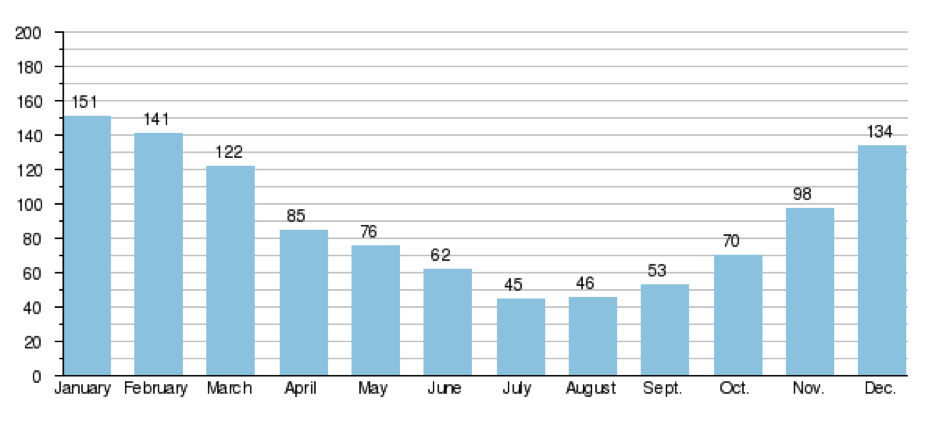
Flow of the River Trent at Colwick in cubic metres per second.
The Trent’s main pollution issues continue to be sewage related though now not the gross form it was 26 years ago but the constituent parts; the pharmaceutical elements particularly. This mirrors the rest of the UK. Agricultural discharges from the lowland parts of the catchment are still an issue as are the high chloride discharges from Radcliffe Power Station on the River Soar. Illegal fly tipping of both chemical and other waste is a constant concern, such an incident saw a major fish kill in 2009 and other suspected events have taken place since. Such rivers as the Trent have major problems with indiscriminate inert waste that is deposited across the flood banks at times of high river flow. On the Tame which is the principal river to drain much of the Birmingham conurbation the old Severn Trent Water Authority created a collection system in some redundant gravel quarries at Lee Marston that at their peak need removed tens of thousands of tons of floating waste and stopped it entering the main river. They are still in use today.
North East Catchments
The new name for this region of England is the Northumbria Catchments for which the government and the Environment Agency should be ashamed. To have renamed this set of catchments after one rural county whilst in reality it covers major conurbations and cities with industrial focus and expanding populations which would be better served by the old title (as is used to head this section). It is part of the spin game that government and others are playing to bamboozle the population into thinking all is far better than it is.
The aquifers across much of this region have been threatened by the closure of the mining industry as what was a set of secure basins of water are now liable to intrusion from the coal strata below due to the pumping of the mines being no longer worked. The Coal Authority have placed three major pumping schemes in place, two at Dawdon and Horden with more to follow to protect these water supplies that feed the taps of Newcastle and Gateshead, Durham and the surrounding region.
The total groundwater are threatened by returning water within old coal workings is estimated by DEFRA to be 12,935 square kilometres or 82% of the total water supply for the region.
Across the region a total of 36 rivers are affected by abandoned minewater pollution with at least 494 km of their length impacted by abandoned coalmine drainage. Some of these pollutions have been addressed but there is still much to be achieved.
Further pollution occurs at historic metalliferous mine sites across the region, many of which are towards the western edge or Pennine fringe where a variety of metals were won over many hundreds of years including iron, lead, copper and zinc. These mines impact on 11 rivers for a length of 212 km and effect public water supplies over an area of 3,330 square kilometres.
North West Catchments
This region covers the area stretching from the Wirral to the Cumbria and on its eastern edge the Pennine hills. From chemical and heavy industrial producing conurbations to remote rural areas. A contrasting set of landscapes from wetlands to high fell country including England’s highest hills.
Sewage from most of the larger cities including Manchester and the western coasts are treated to standards unheard of 30 years ago, the River Mersey and the rivers of Cumbria all flow clear and free of the pollution loads of the past: as ever though this allows the inspection of the major residual pollutants, phosphates, pharmaceuticals and other hard to remove or as yet noncritical concerns.
There has been much research undertaken regarding the tidal effects on the blending of Liverpool’s sewage with the seawater of Liverpool Bay; colour coded bananas have been the biodegradable tools used to monitor the solids fraction flow patterns, velocity and directional drifts which has demonstrated the reasons for many of the crustacean contamination problems along the coast as far as the Cumbrian coast and Morecombe Bay.The shell fishery has much improved of late both in regard to bacterial pollution and deposition of solid wastes.
The issue of abandoned mines and the water emanating both from the historic workings and spoil heaps has led to several remedial works being put in place across the region but there is much to be achieved in this set of issues; 37 rivers effected with a total length of 538 km made up of coalmine sourced pollution 383 km and metalliferous 155 km. The effects to aquifers is estimated by DEFRA to put an area of 4,185 square kilometres at risk, which equates to 32% of the regions aquifers threatened by pollution or recognised already to hold ‘poor status’. These last figures are a combined figure with regard to both coal and metalliferous sourced pollutions.
Severn Catchment
This catchment is made up of two great rivers that rise within a stone’s throw of each other, the rivers Wye and Severn. For much of their length they alternately share the geographical task of marking the boundary between England and Wales; from the high country in which they both rise they flow through rural landscapes towns and cities of great beauty whilst receiving the flow from tributaries draining nearly a fifth of England and tree quarter of the Principality. The Severn catchments has recently been expanded to take in part of the South West and now the industrial areas around Avonmouth and the River Avon itself are added features of this catchment.
There have been many issues of concern with regard to this region, signal crayfish have invaded both the Severn and Wye, there have been legal attempts to dredge the River Wye so as to restore the ancient navigation of the Wye and Lugg Navigation Company: an ill-conceived idea from the outset, salmon, an important part of the ecosystem for both the Wye and Severn have been failing to return in the numbers that they once did: similarly the elver or glass eel has kept failing to return in the numbers that once made the eastern shores of the Severn a famous fishery. The relevant fisheries associations are uncertain of what actions can be taken and as little is known of either fish whilst out in their respective areas of the Atlantic Ocean, to the south of Greenland and the Sargasso Sea respectively. The only sure way to avoid total population collapse is to carry on limiting catches and monitoring year cadre in the salmon. Little is at present possible for the young eels as there is so little known or understood regarding any stage of their lifecycle. The possible effects of global warming and pollution from contamination from sites such around the old ‘National Shipyards 1 and 2 at Beachley and Bulwark near Chepstow have never been ruled out as possibly causing some damage to the juveniles as they run down to the sea as smolt.
The Severn Catchment as a whole suffers from pollution from abandoned mines both metalliferous and coal. The hills and valleys of Wales and the Forest of Dean both having impacts. The total waterways effected being 584 km of 48 rivers throughout the catchment area. With over 3,000 square kilometre of aquifer under treat from pollution. Little is currently being carried forward to combat these issues at present.
South West Catchments
The South West region, a land of holidays and flood tragedies, the Somerset Levels flood but tragedy is the flooding that took place in Lynmouth in 1952 when the village was obliterated by a flash flood of such violence that it was the subject of speculation that the government had sown clouds so as to create the deluge. The Somerset Levels have been washlands since recorded history began, though the flooding problem of the winter of 2014/15 that flooded few properties and closed a few roads has seen more public money used to hold back future tides and stop roads flooding has been a knee jerk response to an expected event. The inconvenience of commuters and the farming community’s complacency that such events were unlikely to take place has seen roads built up above the last flood and undisclosed amounts of compensation paid to commuters who were stranded and had to work from home.
The Somerset flooding though was also a pollution event, silage and pig slurry, human sewage from septic tanks all spilled over and eddied and flowed across the area plus mine waste of lead and cadmium from the ancient mine workings on the hills surrounding the levels was not mentioned. The flood saw Chris Smith resign as Chairman of the Environment Agency because once he had been a Labour Party government minister and was attacked at the national level by the media as if he still was rather than a person leading a government hobbled agency.
The region suffers severely from the historic legacies of metal mining. The best known example was the pollution that took place from a tin mine, Wheal Jane in 1991/2 when it rebounded, sending highly concentrated toxic water out of the Nan Giles Adit and into the Carnon River. This pollution coursed severe pollution and economic damage to the shellfish fishery of Restronguet Creek and into the Fal Estuary. It took many years and many millions of pounds to bring this pollution under a management regime that worked satisfactorily. Today water leaving the treatment works enters a small tributary stream of the Carnon River and the clear stream turns red. The cleaned up highly oxygenated water leaving the treatment works instantly starts to hydrolyse the streams water which is predominantly constituted of water from other mine workings and waste spoil heaps. The River Carnon itself receives many millions of gallons a day from other mines and adits including much of the drainage of the northern Cornish coat around St Agnes via the county Adit which is not just red with iron but highly acidic (pH3).
The south western part of England has 153 water bodies directly or threatened by minewater pollution and has over 981 km of streams and rivers effected by these pollutions: that is 14% of the regions waterways are damaged and the groundwater contamination covers an area of at least 6,011 square kilometres which is 15% of groundwater resources required to meet the populations supply needs.
In Devon there are a pair of old tailings lagoons that are known to have not been used since 1958. They are covered most of the year by a thin crust of metalliferous mud, below that crust are several metres of liquid waste made up of zinc, copper, cadmium, iron, arsenic. The fill is still highly liquid and the tall embankments are never evaluated for their geotechnical stability and are likely, if not brought back into management so that they might be decommissioned safely to eventually rupture, threatening both life and property in the valley below.
There are several hundreds of redundant tailings impoundments across Devon and Cornwall; may be double or triple the number of mines originally. Today the only active tailings lagoon being at the Wheal Jane treatment site and is in sight of reaching its critical load capacity without endangering the people and properties that stand in the picturesque valley below it.Theonly redundant tailings impoundments are those already noted in Devon, but it is estimated that there may be around 25 similar sites that are of greater threat to property in Devon and Cornwall alone likely to be a public risk.
South East Catchments
This area of the south of England with majestic landscapes, views across the English Channel, oast houses, rolling Downland, great estates is also to be the location of production wells extracting shale oil and gas. The vagaries of geological formations has and still does produce many important minerals and water itself that has had to be mined and even ‘fracked’ for.
In Sussex there are flint mines from the Stone Age, iron mines and furnace sites from the Iron Age. In Kent there were coal mines at Shakespeare Cliff, Dover, Snowdown, Bettshanger and Chislet being the most notable. There were others that were sunk privately such as that by Lord Darnley (operational drift mine 1947-1953 producing up to 80 tons per week) to supply Cobham Hall and estate. The Chislet mine workings caused huge ground stability problems for the River East Stour which subsided slowly into the voids below, today the government/Environment Agency/Coal Authority maintain pumps to ensure the river reaches the sea and does no further harm to the surrounding area. The Coalmines also coursed severe damage to the East Kent Aquifer by allowing minewater from the working colliery at Snowdown to be lagooned for coal washery purposes. This water was slowly released over the years and at the end of coal mining in 1988 the aquifer was totally spoilt and leaving much of East Kent severely short of public water supplies.
DEFRA today acknowledges that there 4 rivers affected by coalmine drainage still, with 18 km polluted by runoff from abandoned mines. It abstains from any knowledge of the aquafer damage and says that this has been rectified but as the Dover and Folkestone Water Company said ‘they wished it were’.
DEFRA also acknowledges there are 40 km of river affected by water from other non-coal mining operations within the catchment region; the only notable mining that is still being carried out being that of Gypsum in East Sussex. These two mines as they were originally were put down after a failed series of bore holes in an attempt to find oil in the 1890s.
The rivers and streams of Kent, Sussex and Hampshire are a delight and a constant issue for local people to debate the further west one travels the rivers become more famous, not so much for their size or grandeur of scale but for their riparian value. The chalk streams of the region are amongst the best cared for waters of the country, in reality the best kept in the world. The owners of these fisheries make large sums annually allowing a few rods to hire rights of access to the water, in the pursuit of native brown trout and occasional sea trout that come upstream to spawn.
These rivers are not just protected by the Environment Agency but are nurtured by them and are at the bidding of the estates who own them. Any perceived risk is investigated and first reported to the riparian owners. The public seldom reads of this work as it is sensitive to the protection of private wealth. The owner have an army of bailiffs and water/banks men who clear the overhanging trees, escort walkers away from the most beautiful stretches of river as they are trespassing. Some owners employ security firms.
Beyond fishing there are the watercress beds, a centuries old agricultural practise that many estates wished did not now exist. The purity of the chalk streams the surety of water quality ensures a crop that is disease free.
These rivers are splendidly kept but not suitable for the rat or mole amongst us who likes idling by rivers and cannot afford a rod.
Thames Catchment
The Thames as already noted earlier in this document is a byword for the state of the nation’s rivers. It is a river of extremes, a literate river the subject of poets and story tellers throughout time.
It has been the source of inspiration for painters. It has been the haunt of the most talented of idlers. A busy commercial and recreational navigation beyond the confines of London for centuries and it continues to develop.
The tidal Thames has since the 1980s suffered severe oxygen depletion in its waters whenever it rained in the capital due to the combined sewage system that drains the capital. The city having grown beyond that which was ever possible to foretell, even by Bazalgette; he designed the sewers and gave them a capacity for more than double the population at the time. Now the sewers come close to their capacity and are unable to function and every time it rains, a gentle shower will do, the system fills and has to escape out of its confinement of the Victorian subterranean and burst out at points along the river’s edge. These storm overflows designed to be used to save the system from rupture once or twice a year come into play. Those occasional events though now are frequent and with the raw sewage the waste drains the oxygen from the river water so fast it is possible to monitor a sag develop in seconds at points along the river. Where this happens life within the water ceases to be. Dead fish floating past the terrace of the Palace of Westminster is poor PR for Thames Water and so since the 1990s barges travel the river and when the weather foretells rain these craft force oxygen, at least air, into the water to counter any sag. The other aspect of the storm drain taking its Styxian load into the Thames is that along with the sewage it takes the sewers floating debris into the outside world, condoms and cardboard, tampons and other sanitary products predominate and Thames Water works hard to minimise their aesthetic effect by removing them as speedily as a Thames Skimmer can go.
The water company has now set in motion the new dawn for transporting the waste of the sewers by bringing new engineering to bear in a tunnel that follows the river flowing deep beneath it to the treatment works to the east of the capital. It is to be expected that soon the storm drains will not be needed as they are today and some will be removed permanently.
The Thames is not all about London’s tide way, it is a long river rising on the edge of the Cotswolds near Cheltenham and idling across the landscape where the great and good have vied to live in ostentatious luxury or modestly but close to the capital’s action. It is a river that is tied at various points to the canal systems that still exist allowing navigation across the country and a good way north. It floods but in most cases never badly enough to unset the phlegmatic bankside dwellers overmuch it is a river that has tradition; boat races, pageants and regattas. Swan Upping ensures the royal birds are more than just observed from a hide. It has many roles including the cooling of the power stations that sit within its catchment and the all-important one is conveying the treated sewage away from the Home Counties and out to sea.
West Wales and Dee Catchments.
These two sets of catchment area are the preserve of Natural Resources Wales though the Dee is partially shared with the Environment Agency due to some tributaries rising in England and part of the main river marking the border between the two authority areas. Much of the western area, away from the coastal fringes is wild and much has been mined. Coal and gold, iron, copper and other ores. Coal having been mined in the Dee catchment in Flintshire and around Wrexham.
A Welsh Assembly Water Spokesman said that 115 rivers, 1028 km were damaged by minewater, a remarkable 39% of the rivers in the regions. The figures for groundwater contamination are poor as well with 65% of the regions aquifers damaged and recognised as being of poor status (DEFRA 2016) with 6,600 square kilometres of 10 aquifers harmed.
Across much of the high ground the surface waters have been damaged by acid rain though today it is not on the scales once witnessed due to recessions and the loss of engineering and heavy industry the environmental conditions in parts of the regions are looking up, though that is not a reason for complacency.
Solway and Tweed Catchments
A pair of rivers that run along much of the border between Scotland and England. The main agency that leads the administration of care for the catchments being the Scottish Environment Protection Agency. The Environment Agency is involved due to the tributaries that enter the rivers from the English side of the border.
The main issue that damages the high quality of these two important rivers waters, apart from treated sewage,agriculture and road runoff is minewater and mine-spoil drainage. The two rivers see 59 km of their feeder streamsimpacted. Coalmining has also damaged a small (149 square kilometres) portion of the aquifer of the region.
The Players.
The Environment Agency
The Agency was founded on the 1st April 1996 and replaced the National Rivers Authority (founded 1989) and Her Majesty’s Inspectorate of Pollution (founded in 1972). The Agency is at present tackling two major issues, global warming / climate change and flooding: both vital for the future of a shrinking island and for demonstrating best global practice to other countries.
The Environment Agency has to raise part of its income; this is in the main by charges from consents for the abstraction of ground and surface water (above 5 cubic metres per day) and collecting volumetric fees for annual abstracted use, similarly it collects fees from companies that directly discharge waste water to the aquatic environment, though it does not receive fines levied on polluters who are taken to court. It further raises fees for licensing of landfill and other waste sites such as waste transfer and recycling facilities.
The agency has found itself over the years constrained fiscally by government cutting back its core Grant in Aid and is unable to fund the volume of research that it once did, so now looks elsewhere to find best practice including the US Environment Protection Agency and the European Environment Agency. These other organisations usually have different agendas driving their research programs so the bespoke research that the Environment Agency commissioned is sorely missed.
Natural Resource Wales
The relatively new (founded 1st April 2013)NRW is the Welsh region Environment Agency for a part of Wales that falls outside the Severn Catchment area whilst it is the nationwide countryside agency and ancient monuments commission and the agency that can accept any other role that the Welsh Assembly wish to bestow on it. It has a large number of rivers, many small in flow volume and short but vitally important for the regions biodiversity and environmental wellbeing. The issues of farming practice, isolated community sewage treatment particularly tourism and its fluctuation effects on pollution loading of sewage systems, mining heritage pollution and the issues that England’s Environment Agency are taxed by.
Scottish Environment Protection Agency
SEPA is a fine organisation formed from the River Purification Boards in 1996. The close links built between the Water Office at the Scottish Parliament. It has taken on the role of enquirer into issues more vigorously than the Environment Agency in England. This does not though mean that they are more effective but are more aware and involved with issues.
DEFRA
DEFRA; the Department of Environment, Food and Rural Affairs and is a multi-role ministry that was formed from parts of ministries responsible for environment and agriculture. The Department is the main channel of funding for water research using the Environment Agency as its commissioning agent and is concentrating much of its fiscal support towards the issues of global warming and flooding. Since ADAS (Agricultural Development and Advisory Service, founded in 1822) was privatised in 1997 the Ministry of Agriculture and now DEFRA have had to wean itself away from their original primary agricultural role so as to accept the global food marketplace and the change to not to be even partially self-sufficient in food production as a nation. The Somerset Levels flood being a good demonstration of this role change as the commuters living in the area were not being able to travel to the towns to work was the issue rather that those of land contamination.
DECC
The Department for Energy and Climate Change came out of the amalgamation of parts of the ministries of Trade and Industry and Environment and is the governing body of the autonomous Coal Authority. DECC is charged with keeping the lights on in England and Wales whilst seeing that the countries cut carbon use and emissions. The government as a body having no coherent energy generation policy and in the light of the Paris Convention 2015 is forcing the Department for Energy to lean of generators to reduce coal burn, import biomass, agree nuclear expansion (subsidised and questions are now being raised regarding its feasibility, particularly in the timeframes required), encourage solar and wind though as invisibly as possible, tidal and other prospects that might be environmentally dubious whilst signing long-term contracts with the Middle East for LPG, also looking towards the home production of shale gas to tide the nation over till ‘green’ alternatives can come on stream. The government has some members of parliament now raising the politically charged issues of ‘clean coal’ technologies again now that the last deep mine has closed (2015).
The Water Companies
The water companies are the largest legal polluters of this countries waters, rivers estuaries and seas. They are also the major illegal polluters of the rivers and estuaries due to both the vagaries of what might appear at any sewage works, poorly screened storm water overflows and any other pollution that is recorded as emanating from the end of a waste water treatment works discharge pipe and coursing nuisance. The water companies are the nation’s favourite whipping boys as the public do not like their drinking water being in the hands of the private sector, no one even thinks about the sewage. Generally the water companies have needed little encouragement to present the public with drinking water to be proud of and the environment with treated waste water that is fit for purpose; which is for further dilution within a rivers flow. There will always be accidents such as the Camelford drinking water poisoning (The South West Water Authority in 1988 failed to act when a tanker unloaded aluminium sulphate into the wrong tank at a water treatment works and contaminated drinking water to a large number of homes and businesses in Cornwall. Many people were critically ill and there was at least one death) or the 2009 sewage works failure and major fish kill on the River Trent (fly tippers disposed of cyanide to a public sewer which stopped a sewage works from functioning and poisoned the river), but the water companies provide higher quality services and are more responsive than the town hall could ever have been and are the conduit for investment. Dennis Healy, when Chancellor of the Exchequer stated in 1977 ‘there are no vote in shit’ he was preparing the ground for the privatisation of the water infrastructure of England and Wales.
Internal Drainage Boards.
The IDBs are a shrinking number of locally based statutory bodies that are almost but not quite independent of government and locally answerable to their local Drainage Rate payers, primarily farmers and other major land holders within the lower lying flood prone areas of the UK. There has been a huge set of upheavals in their organisation over the last 25 years. Originally their remit was purely and simply to ensure water was lifted away from low lying agricultural areas and out to sea as fast as pumping, dams and sluices would allow. This then radically change in 1996 allowing environmental considerations to be brought to the fore, whilst still encouraging water away from low lying farmland. This though, due to the flooding of the Somerset levels and other areas over the last few years the emphasis has returned to expediting the water away as fast as is possible.
Their role is prescribed by the government though now with some interventions from the European Community Life Program regarding the restoration of peatlands such as at the mouth of the Trent and Don rivers on the Humber Estuary. But they is likely to be remodelled in the future to a single authority, this though might be a great loss as each board has local roots and local knowledge that has built up over more than 100 years in some areas.
Pollutions.
Local Authorities.
Local authorities used to be the bodies that were responsible for the treatment of sewage as well as often the water supply across England and Wales prior to the regulations that reordered local authorities and established regional water supply and waste water treatment authorities in 1974, known thereafter as the ‘water boards’; these were split up further in 1988/89 with the water supply and treatment operations becoming private companies with the regulatory arm being formed into the National Rivers Authority. During all these hiatuses most local district and borough councils held on to some of their sewage treatment establishments (Fenland 30+, Kings Lynn and West Norfolk 13 and Newark and Sherwood 3) in the belief that those they retained would save the rate payers of the future money.
As was with all government actions of the time the saving of money raised by town halls or county council offices was popular and the plan to retain locally owned sewage treatment works was an underwriting for future local authority social housing expansion and other local developments. What was not anticipated was the developments in requirements by regulators for higher quality discharges to receiving waters, inflation and the need for local authority investment in their retained infrastructure. Many of these plants have been almost overwhelmed by their customers changing their personal habits, people bathed more, washed their cloths more frequently and had washing machines. All this added wastewater steadily created an increase of flow through the pipes into what were basic and barely suitable treatment systems. Since the 1990s the local authorities have attempted to offload their liabilities to the regional water companies but with a few exceptions most are still causing problems for the local authorities.
Pollution
Point Source
Sewage works and industrial direct discharges to rivers and estuaries have always been a great source of contamination to rivers. Chemical spilling into the little brooks, similarly mines and power stations: smelting works, dye houses, paper mills and cheese and dairy product manufacturers. Reports of rice pudding residues totally annihilating a stream in the West Country when a dead rat blocked a drain are still in the memory. Oddly the company was then a household name and still is though it’s a tiny part of a major multinational today. The rat was unfortunate as was the environment that suffered the loss of biological oxygen that was engendered by the spill, the pollution wiped out all life from the local waterway and took years to recover. The company was fined a couple of thousand pounds and claimed on its insurance and was snapped up byan unnamed conglomerate.
Diffuse Pollution
Diffuse pollutions is a term that relates to both major and minor non-point sources of pollution to rivers, streams and canals of England and Wales; the Environment Agency see these sources as the major blight to water quality in that they are various, often hidden and hard to track down.
“The agency … has found it difficult to measure the full extent to which diffuse pollution is responsible for the failure to meet water quality standards. It believes, that 30% [of water bodies] are failing to achieve a good status because of diffuse pollution, with a further 34% failing for unknown reasons”. (National Audit Office 2010.)
The above quote from the National Audit Office report on the Environment Agency and its expenditure on diffuse pollution related primarily to its expenditure on agricultural issues demonstrated the lack of results and true engagement with the major share of the farming community. Their (the Environment Agency’s)) figures are finely spun and as gossamer hide the truth that much trumpeted success has not so much fallen on deaf ears but not even reached them.
The Agency has said much regarding agricultural practices and has had much coverage in the media, Farming Today and The Archers have raised issues and underscored the messages but the urban farmers of Pimlico or Edgbaston are not those with the wellington boots on; the poor creatures are cooped up bleary eyed confronted by EU payment subsidy forms, checklists and mapping regulation. These on the whole are unaware or if they are they are too busy to comprehend the detail of the various strictures and advice that may be given by government. Most farmers mourn the passing of ADAS but now the Environment Agency are there to act as big brother rather than friend, councillor or neighbour.
Agriculture
The farmer is the most assured of humans to care for his land but as a bread the farmer is slow to change opinions. The roll of support for farmers and farming has changed markedly over the last quarter of a century, Farmers used to be visited periodically by advisers who turned up informally, often over years the same adviser became a friend to be trusted and listened to.
ADAS was the farmers friend, they called on large and small alike, understood the famers needs and helped write Ministry of Agriculture policy, sadly today their services come at a price that only the larger land holder can bear and have not the ear of the ministers in government as they are a private company.
The big farmer is spoilt for choice from the consultancies who will be only too happy to spend any spare money they have, the little farmer may look on the internet and talk to a few other farmers at a market but they have no supportive advice. The Environment Agency are tied to subjecting actions and consultants, not friendly, over the kitchen table advice.
Abandoned Mines
Abandoned mines contribute a major series of issues as has already been mentioned in this report, over 350 rivers affected, over 5000 kilometres of rivers polluted or at high risk. There over 34 groundwater sources damaged and of poor status with an area of over 51,000 square kilometres affected. A report carried out for and commissioned by the government in 2012 put the costs of bringing pollution from metalliferous mines alone under control at over £300 million and the figure rises annually.
With the deep coal industry now finished (2015) and the productive minewater pumping across the country no longer taking place the Coal Authority monitors the rise in water across the coalfields and plans are being put new pumping stations and water treatment works in place to respond when need arises to handle each situation individually. This the Authority has done in a number of instances but the treatment costs, both capex and operational are high and they are hindered by lack of funding.
The government realises the size of the problem, the ongoing nature of it: a mine may need to be pumped indefinably, not 10, 20 or even 50 years. The greater scale now realised due to the inclusion of metalliferous site which once were ignored, has left all concerned somewhat in awe of the figures now being talked of for all mine waste and water clean-up, that figure is in the region of £500 million. It is unlikely to be more than pecked at for the foreseeable future and is not a great legacy to leave future generations.
Contaminated Land
Contamination of land has gone on for centuries, much of England and Wales is contaminated due to human activity; prehistoric man changed environments by mining at Grimes Graves in Norfolk, the land around the old flint mines today is protected both for its historical remains but also its surface vegetation is protected as an SSSI due to the plants that occur in this area of chalk waste deposition. The Romans mined in the Mendips and across the Pennines, the industrial revolution started in the Forest of Dean now a recognised area of outstanding natural beauty though little of Dean is natural, it has been mined, slag and metalliferous wastes have been spread across the whole areas, Nature has reclaimed it.
In every town, city and village oil and petrol tanks at garages and on farms, central heating and red diesel tanks leak, some contaminations are huge but affect no one and are contained in local clay lenses whilst some small dripping leak into a light soil allowing the pollution a pathway that can kill a whole streams ecosystem.
Tailings Dams
Tailings dams have a bad press, year after year water pollution events and worse, deaths every year, not always well covered by the media. Not enough tragedy, too few people dead in some remote country. In the UK such events have been thankfully few but one of the worst globally occurred at Aberfan when a coalmine tip liquefied and slid down the hill wiping out a village school, houses and taking the lives of 116 children, 28 adults and nearly destroyed a tight knit community. Technically it was not a tailing emplacement but in reality all the issues surrounding such structures were there.
Today there is only one functioning tailings dam but there are many that are redundant and sit malignly waiting for something to fall into them and disappear into the metres deep slimes or for some trigger to send their contents into the valleys below them.
Too often when one dam fails the resultant tragedy is blamed on natural courses or on the maintenance engineer, the lowest paid and least respected member of any mine staff. He will be out in all weathers and doing what he can to avoid a collapse of a dam: often he dies and cannot refute the blame heaped on his memory. The true course for many dams failing is the consulting engineers, a small brotherhood to check each other’s work and refute blame of any of their number, they can be intimidating with regard to being criticised, and believe that only they know best. A sure fire way to prove yourself wrong.
Misconnections and Rural Sewage
A remarkable number of the population do not know about the drains that serve their homes, they are uncertain if all their drains lead to sewer of septic tank or if some go to soakaways. And when it comes to do it yourself their plumbing can kill wildlife when it is the least likely wish for their actions. The washing machine or dishwasher if its effluent pipe is directed to a soakaway will work wonderfully well for years but somewhere the phosphate rich waters will end up appearing in a waterway or just seep from the ground as a pool of whitish residue which quickly can result in the growth of sewage bacteria and fungus. The wastes can be toxic and will certainly damage both birds and mammals.
Septic tanks and cesspools have a mystique all of their own, they are the subject of myth and ‘old wives’ tales; ‘a dead chicken should be thrown in once a year to feed the bacteria in good heart’ is a favourite one. It is unnecessary to do so as they feed on the wastes deposited in them daily, just do not use too much bleach so as to kill them. Septic tanks and cesspits usually drain the top water, which is the liquid fraction that goes into the collection chamber to soak away or go through a treatment system such as a reedbed whilst the solid element settles into a compressing sediment that should be removed ever year by a licensed collector and taken to a treatment centre, usually a sewage treatment works for final disposal.
Last Thoughts.
The rivers of England, Wales and Scotland are a part of each person’s heritage more important than the ancient buildings and structures, stately homes and castles that abound within beloved landscapes and which are protected by statute and conservation trusts and societies. Legislation protects and allows for classification of heritagevalue such as grade 1 or grade 2 building, such is not the case of rivers; they are the sculptors, alongside the elements, rain and wind, snow and ice, of the landscape and are not protected as they deserve. People believe they will never change; they do, they get in the way of urbanisation, road building and are culverted or moved as the human need dictates.Rivers can be a nuisance to planners and need to be tamed or engineered and confined in concrete to avoid their power. The use of much of their natural washlands and floodplains are now denied them in most catchments where housing and urban spread have sprawled into them. Today if the rivers are not to be placed into higher and higher walled confinement they have to be returned to their natural nature where there is space to still allow such actions.
In the introduction I mention that the majority of the population claim to care: this is true but the majority are also lazy, they wish for an easy life and even if they join a group to pick litter off the banks of a river one Sunday morning they are equally likely to allow an empty carton to be blown into a river on a Saturday afternoon. Often the local and international ecospheres that we all inhabit are spoiled and will eventually perish not through megalomania but inertia and indifference. Wringing our hands is not an option. The government is very like the general public but less likely to pick up the rubbish washed up on the riverbank without a media presence.
Acknowledgments.
Thanks is due to the following; Severn Trent Water Ltd, Anglian Water Ltd, The Welsh Assembly, The Wildlife Trust, The Wildfowl and Wetland Trust, The Broads Authority, The Coal Authority, Alkane Energy, University of Nottingham, The Environment Agency, Scottish Environmental Protection Agency, DEFRA, DECC, MoD, Forestry Commission.
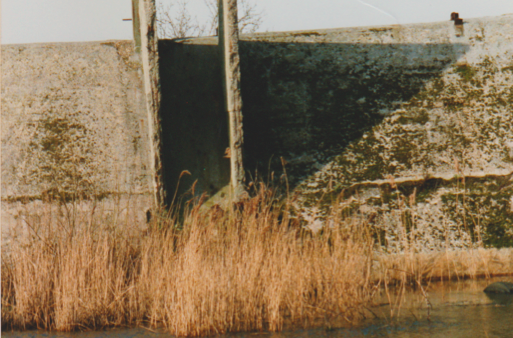
Note. Front photograph, Kings Lynn ‘Muck Works’ © 2002 Harvey Wood.