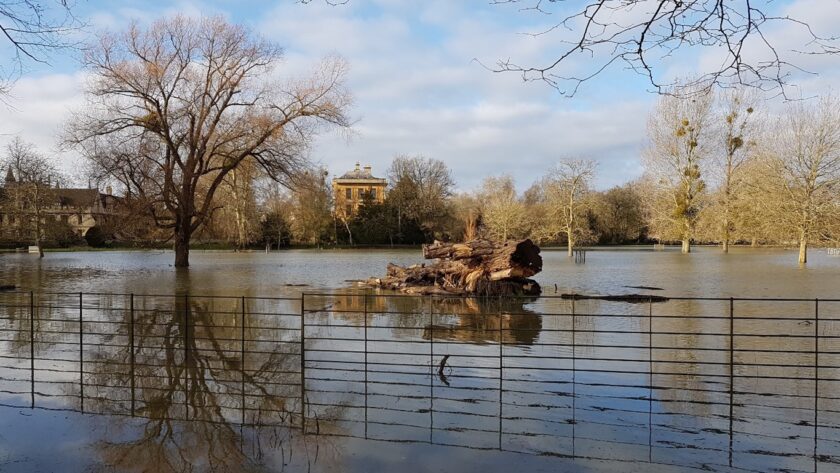

Watermeadows were part of the countryside of my childhood. Wet meadows close to streams and rivers, they periodically flooded during winter and sometimes again in late spring. These wonderful habitats have nearly all gone today: drainage boards and local flood alleviation schemes have stopped these regular inundations. These meadows were in many cases the last vestiges of what were late medieval and early modern methods of improving grazing by irrigation.
The purpose of the irrigation was not to flood and damage the ground but to keep the soil continuously damp. At its best organised it protected early grass growth from severe frost, so giving cattle first growth grass and after a second inundation during late spring a hay crop followed by sheep folded over the meadow. Further inundation would allow for another round of cattle feeding before the worst of winter.
The flooding allowed silts to be distributed across the surface of the land giving nutrients to encourage grass growth. The management of these schemes was carried out by ‘drowners’ or ‘watermen’.
Beside many streams and rivers today these engineered grass lands can still be identified, though due to their age and the siltation due to lack of management they no longer work. Many still hold water after rain in strips. Old feeder channels may still exist, and sluices may still be present but hidden by trees or hedgerows. These remnant sites are highly biodiverse and in their own right worth conserving.
Resurrection of Old Sites.
There may be several reasons for developing these old water meadows.
- Flood reduction by holding back river flow at its highest point. This may replace the creation of more complex wetland schemes such as with introduction of beavers.
- Take the place of false restoration of rivers and give possibly greater nature value.
- Increase natural carbon sequestration over long time periods.
- Creation of ‘wetland’ habitat whilst keeping land in agricultural production.
Next.
The Trust is about to start a project to understand these schemes better and to see what value may be gained from reintroduction of a modern redevelopment of such land/water management in the light of global warming and the moves to develop carbon sequestration alongside sustainable farming methods.
Bibliography.
https://www.bahs.org.uk/AGHR/ARTICLES/35n2a3.pdf