Clean Rivers Trust
Charity No: 1037414
Curtailing acidic tar entering the Middle Lagoon at Cinderhill, Derbyshire.
2021.
Justification, methodology and risk.
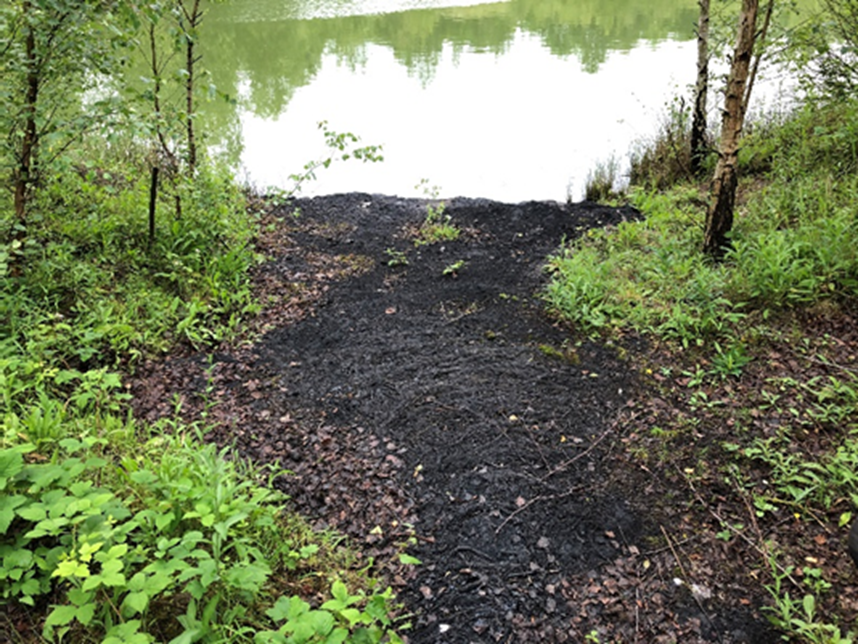
Larger Tar Seep
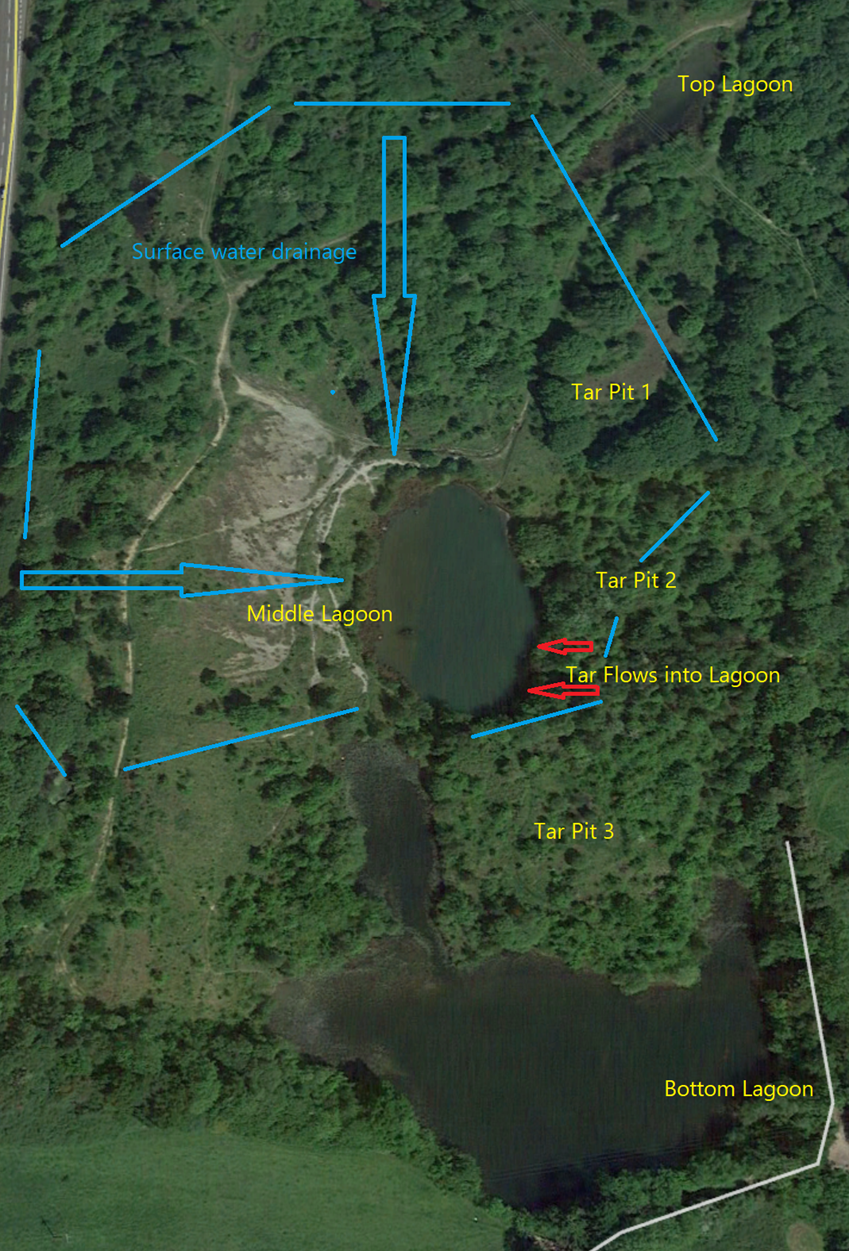
Fig. 1. Middle Lagoon catchment and location of tar creeps.
1 Introduction.
1.1 The Environment Agency introduced Clean Rivers Trust to the problems of the ‘Tar Pits’ outside Belper in 2014 at a meeting of the Bottle Brook Derbyshire Derwent Catchment Partnership.
1.2 Clean Rivers Trust have been physically involved with the Cinderhill Tar Pits since January 2018. Producing reports on the possible movement of contamination from the site via abandoned coalmine workings; also, the effects contamination on the site might have had or may have on the Bottle Brook.
1.3 Since May 2018 the Trust has been carrying out a phytoremediation trial using willows to both stabilise and break down the tar on pit 4 on site.

Fig. 2. Schedule 2 designated contaminated land. (Amber Valley Borough Council)
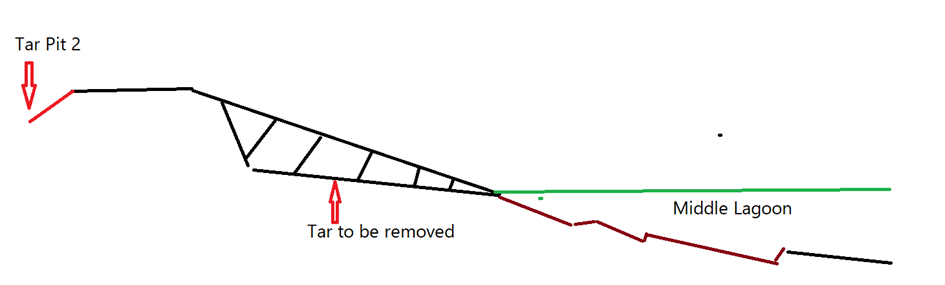
1.4 Clean Rivers Trust was asked (2019) to look at the causes for the Middle Lagoon contamination. The initial walk over the site identifying two tar creeps from Tar Pit 2 being the source. These were examined and were investigated.
1.5 The tar was found to be between 25 and 38 centimetres thick and moving downhill slowly into the water.
1.6 The tar spread across the bottom of the lagoon was found to be in the form of a semicircle to halfway across the bottom of the lagoon. The furthest reaches of the tar being covered by silts. Some or most of the tar furthest from the creeps had covered the ground surface prior to the lake filling up with surface water drainage.
1.7 The present tar creeps are vestigial tars that have now been pulled back from the water’s edge. This was done to ascertain if tar was passing through the lagoon banking as well as over the top of retaining bank.
1.8 The exercise demonstrated that the tar is not passing through the bankside and is made up of only surface flow from residual pit over filling, spillage, and bad management in the 1970s when the pits were first filled.
1.9 The cutting of tar flow into the Middle Lagoon has demonstrated that the source of acidity within the water came from the tar creeps. The removal of fresh tar entering the water body has change the water pH from 3.5 to 6.
1.10 A report of March 2021 (CONFIDENTIAL) states the middle lagoon has elevated metal concentrations of metals, but no petroleum hydrocarbons present in recent samples analysed.
2 Proposal
2.1 The purpose of the proposal is to stop any further acidity from either tar or rainwater run off via the routes of the creeps permanently entering the lagoon.
2.2 The Middle Lagoon during high rainfall events, winter 2019 most notably over tops and enters the undesignated Bottom Lagoon. This is said to over top, and its flow passes along Brickyard Lane and enters the Bottle Brook. Thus, stopping possible pollution of a controlled water.
2.3 The development of an understanding of how to contain and protect the Bottle Brook and the intervening properties if this is the actual source and not groundwater sourced flooding.
2.4 Boreholes put down in the immediate area in 2019 demonstrated a near surface aquifer in the area adjacent to the source of flood water emerging.
3 Planned Operations.
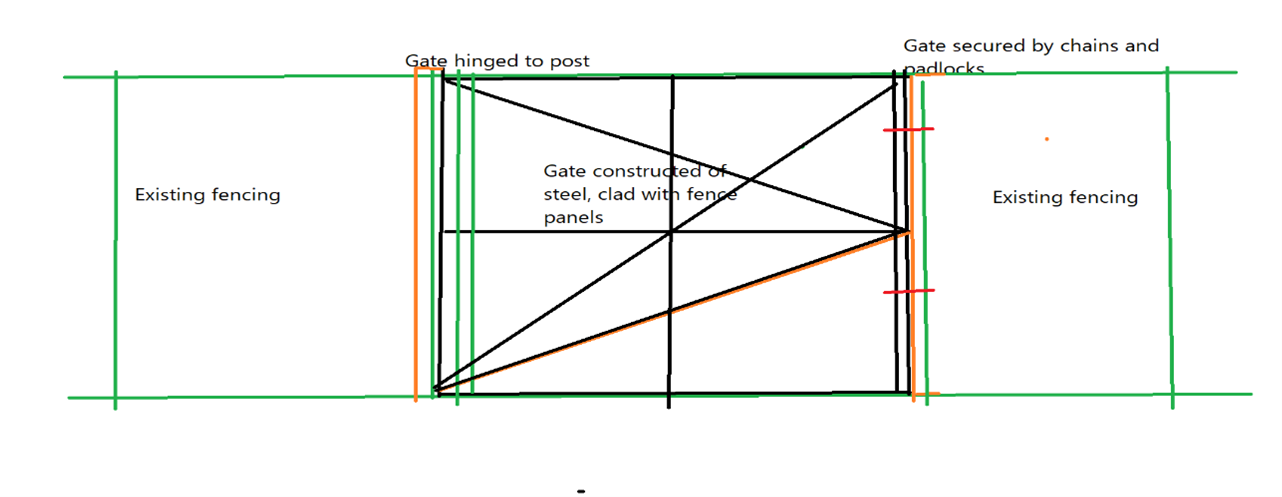
3.1 Place a suitable gated entrance to the fence, permission granted by Fuchs (25th March 2021) the responsible party. Location not on/off a public footpath.
3.2 Survey present situation at the two tar creep sites.
3.3 Carry out risk assessment, taking knowledge gained from working on Tar Pit 4.
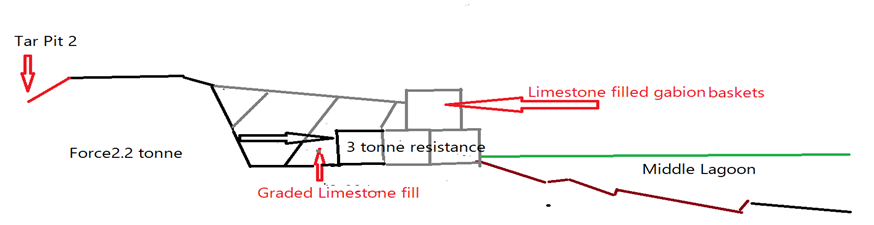
3.4 Ensure sites are stable and place gabions in place. Fixing with rods.
3.5 Fill gabions with limestone.
3.6 Back fill to bank of Tar Pit 2.
3.7 monitor settlement.
3.8 Encourage plant growth over surface.
4 Safety.
4.1 Site to be secured at all times so no unauthorised persons can enter the area of contamination.
4.2 Personnel to always wear correct protective clothing and boots on site.
4.3 All personnel to wear gas masks and PPE when working with tars on site.
4.4 Gas monitoring to be carried out on site.
4.5 All personnel will sign in and out of the site.
4.6 No drinks or food to be consumed on site.
Placing of Gabions.
Gate.
5 Risk.
The major hazard is COVID, and all personnel are appraised of the regulations and guidelines which will be strictly enforced without exception.
Toxic and explosive gas emissions are a potential hazard. Emissions will be monitored prior to and during any excavations. Such monitoring will be undertaken by suitably qualified personal and where appropriate personal monitors will be worn.
All excavations will be undertaken by suitably qualified and experienced personal familiar with the potential hazards at the site. This is also relevant to the hazard potential of moving vehicles.
Lifting will be in accordance with Lifting Regulation and undertaken by experienced personal.
The location of the excavations adjacent to the lake to the lake raises the potential of water immersion. Rescue equipment will be available.
Other normal potential hazards such as vandalism, general public access and other vehicular movement are not relevant as this is a closed fenced site.
There are no hazards associated with either welding or electrical equipment.
All relevant British Standards, European Regulations and any EA Requirement will be adhered to.
| Risk | Low Risk | Moderate Risk | High Risk | Actions to be taken |
| Machinery sinking in tar |
/ |
Machines to use historic haul road between tarpit and lagoon. Has been used in last twelve months | ||
| Crushing by machinery | / | Care and safe distance working | ||
| Drowning | / | Shallow water at edge of lagoon. No lone working | ||
| Gas ingestion | / | Gas monitoring and protective equipment including gas masks where needed.
Call emergency services |
||
| Explosion/fire from volatile gases |
/ |
No smoking on site, no naked flames | ||
| Poisoning. | / | No eating and drinking on site, hand washing facility available | ||
| Eye damage Blinding | / | Eye protection to be worn, eye wash facility on site | ||
| Broken bones | / | First aider on site, call ambulance, all gates to site to be unlocked to aid evacuation | ||
| Cuts | / | First aid available |
Notes.
Emergency Services 999
Nearest accident and emergency
Hospital A&E
Sandham Lane,
Ripley,
Derbyshire.
DE5 3HE
Telephone
01773 743456
Bottom of Form
Protective Clothing to be worn.
High visibility vest or coat Gloves
Gas masks.
Safety boots
Hard hat
Mask
Site Staff / Visitor Log
| Name | Date/Time on site | Time off site | Company | Purpose of visit | Comment |
Site Conditions Log.
| Date | Time on site | Wet / Dry | Wind direction | Gas | Comment |