A really excellent paper has been published this week:
Walls, D.B.; Banks, D.; Boyce, A.J.; Burnside, N.M. A Review of the Performance of Minewater Heating and Cooling Systems. Energies 2021, 14, 6215. https://doi.org/10.3390/en14196215
The paper has been well researched and written: one of the best pieces on flooded mines as a heat reservoir published to date. It must be read; the https link is above. It is an open access publication and should be shared widely.
It briefly outlines the actions that have been carried out to access and utilise this resource from the 1980s up to the present time. It outlines the methodologies that might and have been employed to access these opportunities. The paper further concentrates much of its focus on the difficulties, risks, and high costs of any such venture. Most of the negative issues that surround any scheme wishing to take advantage of low-grade heat from the subterranean mined environment. There is nothing one can fault in the papers detail, facts and figures appear faultless. The authors are well qualified and have been immersed in the issues of minewater for some time.
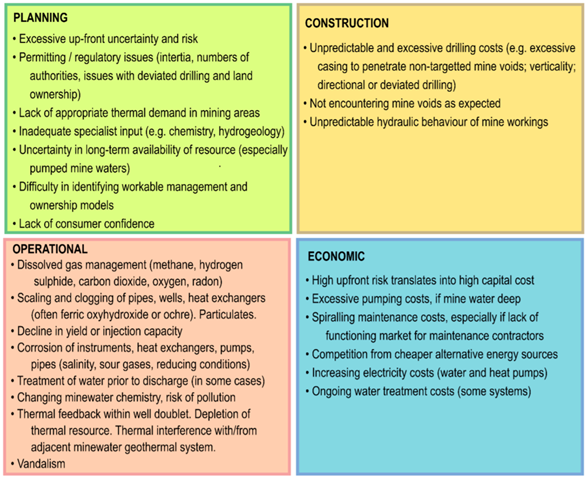
Sadly, though the phycological impact of this paper has been calculated to dampen the spirits of enthusiastic advocates for a sustainable renewable energy resource. The resource is downplayed, almost to the point of writing it off. (See tables below.)
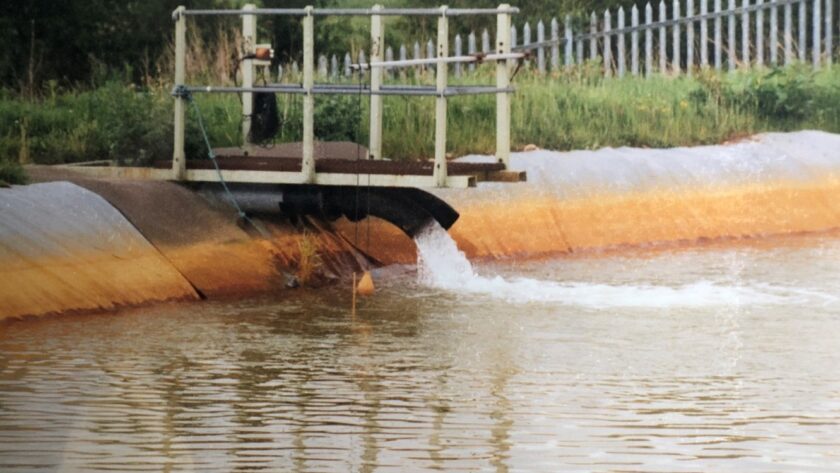
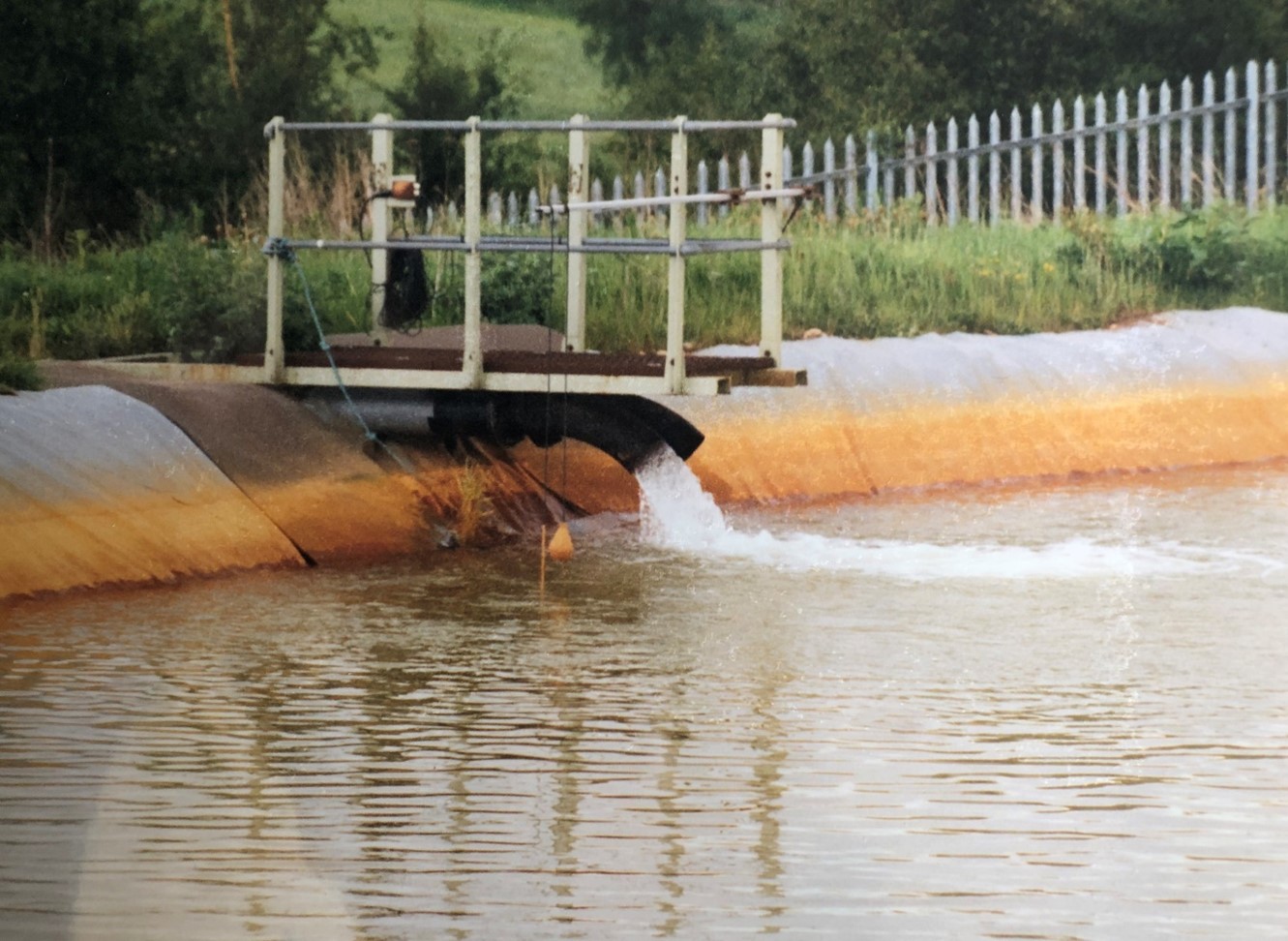
The Coal Authority are at present running over 70 minewater treatment schemes across the country. There are likely to be more than 200 further treatment schemes planned over the coming years. It has stated its desire to encourage the development of this resource, at the same time demonstrating a wariness to engaging with it in a meaningful manner.
Clean Rivers Trust introduced the Coal Authority to minewater heat in 1996, alongside the mining companies active at the time. Both Midland Mining and RJB Mining demonstrated an interest. Between 1996 to 1999 several water companies, including Severn Trent, Northumberland and Hartlepool Water visited minewater pumping locations across the active coalfields at that time, from Nottinghamshire to Fife. The water companies thought of coal mine heat along with water that could be turned to bespoke supply as financially and environmentally exciting. The Coal Authority alongside the price of gas made such ideas untenable at the final stage.
The four sets of issues needing to be resolved to set up minewater heat schemes using minewater as a resource, as outlined above in the coloured boxes demonstrates the uncertainties of opening boreholes to old workings whilst in the text of the report praising the accuracy of the many colliery surveyors’ abandonment plans. It appears a slight contradiction.
What this report though leaves open, the viability of sites where shafts are still open or are actively pumping at the present time for environmental reasons. This at the same time, though the paper does not say this, the Coal Authority could have over the coming years an opportunity to put new pumping locations in locations that would both benefit the environment and be available as a heat resource. As already stated, there are over 200 sites yet to be developed and all could be located for maximum value to the community.
Value.
The report does not go into depth about value, the Coal Authority have one major stumbling block to overcome, ‘their’ water from deep mines. Where they pump to protect surface water or aquifers once it enters the above ground environment, cleaned and ready to discharge to stream or to the sea it has no owner, or very possibly the Environment Agency. Some advocates will argue that the water in the mine does not belong to the Coal Authority, they own the pollution that is suspended within the water, the water is not owned.
The Coal Authority is somewhat keen to receive some financial benefit from its work with polluted waters and their decontamination costs are high and rising, but the reality is that you can not sell something you may not own. You can pump it for the state, at the government’s expense and you can discharge to the wider environment the cleaner water, but the Coal Authority is not the likely beneficiary of the ownership of the water.
Government needs to assess the value of this heat, is it a community resource or one that can be sold on to the highest bidder. Many minewater sites across the UK are areas of fuel poverty and social schemes would be welcomed. The Coal Authority is though not a social philanthropist and money raised can lesson the organisations bonds to government. A portfolio of valuable assets would be attractive alongside the other income generation aspects of the Authority, mining reports especially. It could leave them as a suitable asset that could be passed on to the private sector.