Introduction.
The closure of coal and metal mines and the contraction of the industries across Europe have had a socially catastrophic impact on the communities that worked within the mining environment. Mining society by the nature of the work will engineer strong social and emotional ties within the communities. The other aspect of mining is that the taking of minerals from under the ground has been carried out in the majority of areas for hundreds of years. By the nature of most mineralised geology mining areas are quite large and historically many pits or mines worked seams or loads in any one area. Some mines working to extract more than one commodity at the same time: clay or ironstone alongside coal or arsenic and tin alongside copper. From the late Victorian era / later 19th centaury mining communities developed around the larger mines. These areas were at times economically prosperous; the metal mining regions though were more used to boom and bust economic expansion and contraction as commodity prices rose and fell on the expanding world market. The coal mining regions were more stable in this regard. The miners earned a low wage that was made up to a living wage only if the other members of the family worked either on the pit top or other pip operation.
After the Second World War saw a huge change in mining community fortunes; metal mines fared badly due to the abrupt cessation of need. Mining coal fared better, the poor winters directly after hostilities ended, strikes and nationalisation of production all concentrated the importance of miners within society and a rapid development in terms and conditions of employment, increasing wages and political influence. The near universal socialist based governance that came about across Europe between 1945 and 1948. Some of these political changes came via the ballot box and other states found that they were behind the ‘Iron Curtain’.
Throughout the years rationalisation of coal mines took place, in many instances new pits were sunk that allowed modern mining methods to develop, the miners loosing jobs found others if they wished close to where they had previously been employed. The Berlin Wall came down in1989; the newly democratised states joined the EU brought about an epidemic of mine close; economic and environmental drivers became the justification for these events. The world price of coal was low and the beginnings of climate change awareness were cited by pan-European governments including that of the UK: other reasons may come to mind in that instance.
Across Europe the deep coal industry has folded in upon it self, a few operations still mine beneath the earth: in the UK, Spain, and Poland and else ware but the vast mining areas across Europe are now moribund.
Renaissance.
The social disintegration across many European communities has had terrible consequences that have been recorded by sociologists and mental health parishioners over many years. Their findings have very obviously found supportive funding to aid the central European mining areas and such use of technology is seen as a social demonstration of redetermination for these communities.
In the UK such schemes have to be, at present more ‘hard nosed’ economic and commercial decisions and social benefit is seen as the ‘add on’ rather than the driving force. The area of the UK which has been less than well known for its coal industry and its closure being that located in eastern Kent. The communities still suffer from being incomers to the Garden of England though their families originally arrived after the First World War from Durham, South Wales and Fife: now five generations have been born in the county: the industry is closed down but the communities are still mining and the residents’ miners.
It would be a pleasant surprise if the hard to develop mine tops at Snowdown, Betteshanger, and Tilmanstone could be given the boost of innovation from such technology to regenerate the communities that have stuck together through the years since the pits closed in 1985/6. Unlike all other mining communities that are large these are isolated communities in many ways a long way from home living in an alien environment.
It is a fitting challenge for the future across the whole of Europe that such an opportunity as to develop heating and power sources on the back of the biggest wealth creating industry’s carcass could be offered at this time. The need for strong government to demonstrate original thinking and to encourage a growth in sustainable development at cut price in the middle of the present economic crisis is due. .
Harvey Wood.
Note.
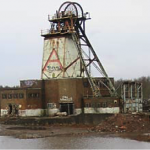
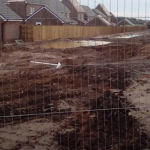
Clean Rivers Trust has travelled to all the mining areas of the UK several times over the years; the collieries have gone and the pit tops are either still derelict or covered in industrial units, some so badly designed that they are now wastelands in their own right. A few such as that at Annesley in Nottingham where from the mine site the view was splendid have been developed into expensive bijou housing estates and are now known by names that bear no reality to the sites past history or do the men who toiled beneath the earth justice. Annesley colliery top is now known as Jasmine Gardens.