The Guardian recently published a valuable piece of research by Watershed Investigations outlining the issues regarding road run off sites that are the responsibility of National Highways. These are only the tip of an iceberg with regard to road runoff across the country as most road discharges are the liability of county or metropolitan authorities’ highways departments. No road drainage to river stream or ditch is a consented discharge by the Environment Agency, Natural Resources Wales, or the Scottish Environmental Protection Authority as all such water is considered as rainwater which otherwise would likely enter a river system naturally. In many urban situations road drains are combined with local sewers and are part of the feed to sewage treatment works.
Sadly, this rainwater when it leaves the road surface is not pure but has picked up the accumulated detritus that comes from road users, exhaust waste, brake linings, tyre rubber, oils, fuel, and the litter caste off by those traveling the roads. This is mainly plastics, paper, and aluminium. This cocktail of metals, PAHs, plastics, rubber, and much else often in summer would build up on road surfaces and when rain eventually falls this slick would enter waterways killing much of a stream’s fauna.
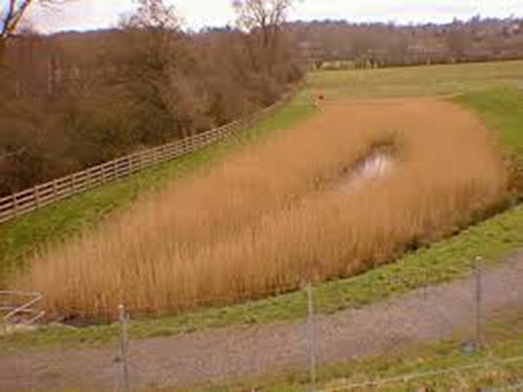
It is good to see on the map that the watercourses along the M4 are shown as relatively free from road pollution as the Trust in the early 1990s was asked to outline methods for collecting the polluted runoff from the road. We outlined the use of wetlands alongside oil traps.
The treatment of road runoff from all major highways is vital to the protection of water quality of rivers and streams across the UK, wetlands are amongst the simplest and most effective methods. It is also the easiest to put in place.

Reference.