Clean Rivers Trust has recently been introduced to the developing problems that are causing concern for the River Spey, one of the world’s great salmon rivers and one of the most important rivers for employment and tourism in Scotland.

Issues.
Water Diversion.
The Spey has been for many years used as a water resource, since the 1940s water has been removed from its headwaters and lower reaches with these large volumes transferred to Loch Linnie and the River Tay catchments. The purpose of these abstractions and water transfers being to supply hydroelectric schemes. This has led to excessive low water levels in the river during lengthening periods of low rainfall and elevated summer temperatures. The level of Loch Vaa which is located close by the river near to Aviemore and fed by groundwater which lost 90% of its water in 2018, this was though an exceptional summer suffered across the whole of the UK. It is likely that, with global warming more water might be lost due to droughts and evaporation than would be traditionally expected in the Highlands and bordering river catchment.
In less exceptional years as in 2020 the river ran at less than 40% of its normal flow at Kingussie and water temperatures along the river’s length were notably elevated. The river is designated a Special Area of Conservation to help protect its important and varied flora and fauna. The most notable being high numbers of wild Atlantic salmon, lamprey, and pearl mussels.
Water Quality.
Water quality is also a concern with the number of distilleries that operate within the catchment. Discharges of water from some undertakings have been identified as being lesser quality than they should.
Sewage treatment works at the major centres of population are known to increase nutrient loadings as do the smaller villages and isolated farms and other habitations in the rural area. These diffuse sources are small individually but add up to a severe threat. Agricultural operations in the lower lying tracts of the river are fertilised either naturally with manure or artificially. Forestry in times of changing weather patterns may impact water quality and chemistry significantly,
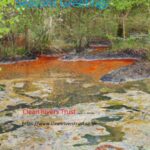
Little doubt drainage from old iron and manganese workings enters the river at points along its course, though the winning of minerals was not a major industry. Areas of interest include around Arndilly and up towards its source in the Monadhliath massif. Historically the run off from mine wastes would have been well diluted but as the flow has markedly shrunk there is a need to factor in all likely sources for concern.
Water Abstractions.
At present there 45 abstraction consents granted by SEPA, several of which remove water out of the River Spey catchment.
Those Involved.
Spey Fisheries Board, SEPA, Scottish Water, Scottish & Southern Energy plc, GFG Alliance, Scottish Government, local authorities, riparian owners, Forestry Commission Scotland, Scottish National Farmers Union, Chambers of Commerce, Alvance British Aluminium, local stakeholders.
Background.
Annex II species that are a primary reason for selection of this site as a Special Site of Conservation:
- Freshwater pearl mussel Margaritifera margaritifera
The River Spey is a large Scottish east coast river that drains an extensive upland catchment and supports an outstanding freshwater pearl mussel population in its middle to lower reaches. In parts of the River Spey, extremely dense mussel colonies have been recorded (225 m2) and the total population is estimated at several million. As the population also shows evidence of recent recruitment and a high proportion of juveniles, the River Spey is considered to support a pearl mussel population of great international significance.
- Sea lamprey Petromyzon marinus
The River Spey represents the sea lamprey Petromyzon marinus in the northern part of its range in the UK. It is absent from rivers north of the Great Glen, and the River Spey is virtually at the northern limit for this species. Recent surveys show that sea lamprey larvae are widely distributed throughout the middle and lower reaches of the river, where the particularly fast-flowing waters of the River Spey provide ideal spawning conditions for this species. In addition, as an unpolluted and relatively little modified system, the River Spey matches the other key habitat requirements of the sea lamprey in terms of good water quality, clean gravels and marginal silts and an unhindered migration route to the sea.
- Atlantic salmon Salmo salar
The Spey supports one of the largest Atlantic salmon Salmo salar populations in Scotland, with little evidence of modification by non-native stocks. Adults spawn throughout virtually the whole length of the river, and good quality nursery habitat is found in abundance in the main river and numerous tributaries. Salmon in the Spey system are little affected by artificial barriers to migration, and the waters in the catchment are largely unpolluted (the river is oligotrophic throughout its length). For a system of its size, the Spey is also relatively free from flow modifications such as abstractions, diversions and impoundments. The salmon population includes fish of all ages including migrating smolts and returning adults, possibly reflecting genetic differences within the Spey stock.
- Otter Lutra lutra
The Spey represents an important otter Lutra lutra site in Scotland, with good quality freshwater habitat. Surveys have identified high levels of otter presence throughout the Spey catchment. Riverine habitat features which are known to be important to otters are present, such as reedbeds and islands, and populations of important prey species are relatively healthy. The persistence of a strong population of otter on this river indicates that habitat conditions are particularly favourable for the survival of the species.

Comment.
The River Spey is one of the worlds ‘flagship’ rivers, a World Heritage Site, and the best-known Scottish salmon fishing location and centre of the Scottish whiskey industry.
Those who know the river are concerned and the report commissioned in 2021 by the Spey Fishery Board, demonstrates at least some of the issues that need to be considered urgently. Other information gleaned from SEPA and other interested parties deepens our concern.
As always, the crossovers between fisheries and industry give rise to other issues and often finger pointing, which must be avoided. The need to act as an honest broker accessing genuine good quality and honest data must not be lost.
References.
https://www.strathspey-herald.co.uk/news/new-shock-report-finds-river-spey-is-shrinking-fast-249871/
https://cairngormsnature.co.uk/spey-catchment-initiative
https://www.sepa.org.uk/media/75401/doc-6-river-spey.pdf
https://sac.jncc.gov.uk/site/UK0019811
http://www.moray.gov.uk/moray_standard/page_125804.html
https://www.speycatchment.org/wp-content/uploads/2019/11/SCI-2016-Catchment-Management-Plan.pdf
https://www.sepa.org.uk/data-visualisation/water-environment-hub/