The Seine is the premier river of France and in many eyes that of Europe. It is the romantic, the working and the most visited river in the world. It is a river that encourages dreams, personally it has been a cathartic river that allowed a young man shelter under one of its bridges when rebelling to follow a dream it is also a river of wonder, huge storms of lightning follow the turns and meanders of its flow lighting up the evenings with incandescent light that seems to envelop and at the same moment hang in the air.
It has been not just the vision of apparent perfection but been the pathway of the dead, a river of retribution and hate, the dumping ground of the victims of the wars of religion or retribution of horrors that happened in Algeria. The river has from time immemorial been the most popular scene for suicide to escape grief or ignominy.
The river has inspired kings and emperors to want to control France and some the world; it has inspired artists, writers, painters, gardeners and all classes of human kind. It is the river of Paris and also of France, the symbol of progression as one generation to the next the river flows on.

The river rises as all rivers do from unpromising beginnings near Dijon, in the past it rose as a god in Gallic and Roman eyes, a she, who went by the name of Sequana. At the source are the scant remains of ancient temples and a more fanciful 19th century grotto constructions. The river which comes out of the hillside at Saint-Germain-Source-Seine and since 1866 has belonged to the City of Paris which bought it to allow it to be turned into a health spa, though barely used. It is now a tourist destination where people toss coins into the pooling headwaters of what is one of the longest rivers in France second only to the Loire.
Its source is Burgundian and its waters spring from the limestones of the area fed on the cold winter rain of these hills and its flow developed and nourished by its tributaries coming from the Vosges Mountains and the northern chalkland plain. In winter ice flows pass down the river and its tributaries; these are often seen passing through Paris and beyond at the end of winter.
The Quality.
The Seine was a sewer and still is; a regal drain of much of the north of France. A large area of the country; nearly 80,000 hectares the inhabitants of the communities along its banks let their effluents drain via its streams and tributaries to the sea. It has been one of its traditional roles from after the last ice age and humans came to inhabit its banks. Today the river is far less polluted than it has been for over 150 years, industry has ceased polluting the river; in reality industry in the old fashioned style; manufacture or processes along much of its length have closed down altogether. The financial decline of European manufacturing on the mass scale of the past has almost ceased between the source and Rouen. The sewage from the cities has improved in quality markedly over the past twenty five years; the sewage from Paris no longer warrants the fish skeleton symbol that denoted gross pollution of the Seine in the 1980s and 90s. The river does run with raw sewage at times of heavy rain but not all the time. The river sediments are rich with heavy metals, mercury, copper and many others, the legacy of a bad old days when anything that needed to be disposed of was; into the river.
When I was a child I was taken to visit the sewers of Paris and experienced a boat trip on the surface of the black waters of the, none too fragrant, Styx on its slow motion flow towards the capitals sewage treatment works, which is located some miles to the west of the city downstream. Today you can still visit the sewers as a tourist but no longer experience the real thing which today is replaced with a full sized recreation of what I saw forty years ago for real. Today it is tourist safety and the French do do these things very well, but it is not the same.
Paris has one large sewage treatment works at Acheres that takes the varying qualities of the city’s drainage: the sewers are combined sewers as in most cities around the world. This is that they take the human wastes of the population and the rainwater that falls upon the whole area including the road washings and room gulley waters. The quality of such a sewer can vary greatly. The bank sides of the river as it the city have no storm water drains so when the sewers can no longer cope with the volumes of its mixed load of waste it erupts from the lowest points of the city’s drains; by the river and flood across the quays and into the river. When this occurs the water authorities have barges stationed at points along the river that pump oxygen into the water to go some way to mitigating the inevitable natural oxygen sag in the water quality.
The river has fish; it is said that there are around forty species present in its waters and that Atlantic salmon are now running up stream regularly to spawn. Even if there were no fish in the river there would always be a Frenchman with a rod and line sitting somewhere along its waters. The therapeutic action of fishing and its ability to allow the mind to move away from the rational and everyday is the reason and allows the optimism of the nation to be witnessed. There is always hope even when the fish are not biting. In France this optimism can mask the reason for the lack of fish which may be coursed by the absence of fish.
The Seine is a river like all others in that it is a constantly changing entity, its banks are set but the flow of water is constantly moving on. The Seine is not a fast flowing river though with the spring a surge of water from the tributaries and their headwaters raises the flow and fills the river channel. The river level rises markedly, in the past there were fears of flood, particularly the fear of flooding in Paris and other cities and towns; this is now much reduced by fluvial engineering that collects the overflow in compensation lakes and more water is channelled through the two great lock/sluice systems that evacuate the waters to the estuary before panic need set in. Upstream of the capital the compensation impoundments are designed so that at times of low flow the river is kept supplied with water to maintain navigation and the aesthetics of the river through Paris.
The Seine used to be at the centre of a network of canals that not just linked the city to the northern waterways of Europe but to the south as well. The river could take barges/peniches from the sea port of Rouen to Troyes far inland, today there are routes still to Belgium and Germany via the Marne and to the south by a non turning route via the canal/river system but like England the canal trade nearly died out in the age of the railways and then the development of motorway transport networks. The barges on the Seine are still operating taking aggregates from the great quarry at Glensander in Scotland that are stockpiled at a virtual quarry in Rouen to the development areas of the capital; they still operate a much smaller number of craft and with industry showing interest in the use of sustainable transport systems the number of peniches that are actively engaged in freight handling is again growing. The canals in many areas have or are being rejuvenated as a water network again, but for pleasure craft rather than commercial traffic.
This lack of use of the river and its network of canal has seen such towns and cities as Troyes forget that the river flows about its heart; it has turned its back on the Seine and though a important tourist centre it has mislaid the lifeblood of the country, out of sight and out of mind. In the case of Troyes it was the girdle of water on its three sides with the river flowing through the heart via subordinate streams and cuts that allowed, from medieval to the Third Republic industry to flourish. Die houses, tanneries and cotton bleaching works all used the rivers waters and all polluted it in one way or another with their practises. The present sewage system cleans the aesthetic pollution from the discharge into the river, but otherwise the quality of the waste water is poor.
No other town or city dismisses the Seine in the manner that Troyes achieves, the shear disregard for one of its reasons for long term prosperity over a thousand years; it is not a generous act. The other communities set out along the bank sides set their faces to the river, all the way to Rouen where the large port that represents that of Paris sees the development of refineries and chemical works line much of the banks; just before the river meets the La Manche they border the floodplain cheek by jowl. It is here that the river sides into the sea between la Havre and Honfleur.
Paris has been considered by the French the universal capital of culture, the epitome of style; in the 19th century and early 20th century it certainly was the heart of the new arts, the painters from Courbet, Manet and Monet and the many others who came. They surveyed the Seine in a different way to the practitioners of the Academy, they broke the surface of the river both giving it substance and being as none had before. The painter Monet was the most prolific of recorders of the river in all its lights and moods; working outside to understand and translate the play of light, refraction and flow of the water and the wholes relationships with the landscapes in which they merged.
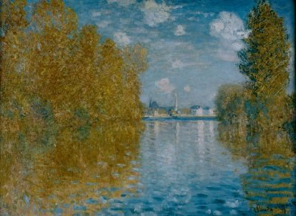
Argenteuil and the Seine; Claude Monet
The river winds through its landscapes from Burgundy; past Troyes and on towards the Capital, picking up tributaries, the Aube enters on the right bank at Marcilly creating a white stripe, chalk from the Champagne, alongside the dark water of Seine: it is developing its volume of flow. It always has been a working river, it has ground the flour of the regions it has passed through for a hundred generations and more, now few mills work along its length but at Nogent a large nuclear power plant uses the river to power its turbines and cools its generators. In the 1990s the power station gave back the water it used with the additions of twenty seven tons daily of sulphuric acid, copper and zinc; this though was not a great issue to the population, a larger number being reliant on the site directly and indirectly for their living and due to the poor quality of the river between Troyes and the power plant.
The river’s tributary the Yonne enters the flow at Montereau, a bigger river and some believe the true river and the Seine its tributary, but like the Flat Earth Society few people give a second thought to the notion. The river is draining much of the northern and eastern portion of the nation through Paris after skirting the borders of the Forest of Fontainebleau.
The River of Light.
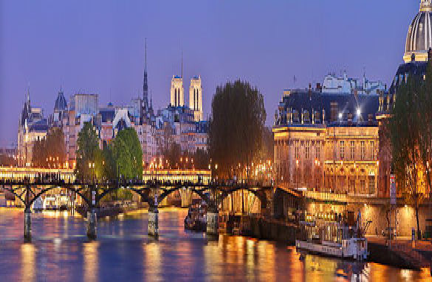
The quality of the river through its Parisian stretch is poor, as already noted earlier. The surface shimmers at night due to the lights on the bridges and along its banks. This makes the water a fantasy, one that no person can any longer enter. No one can swim in the river, though with special permission some competitions have been allowed to breach the regulations.
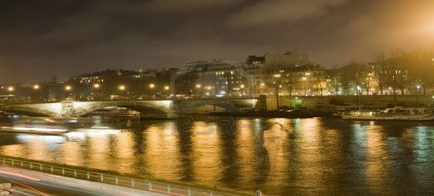
‘ordre et beaute; luxe, calme et volupte’ Baudelaire.
Beyond the Sewage Works.
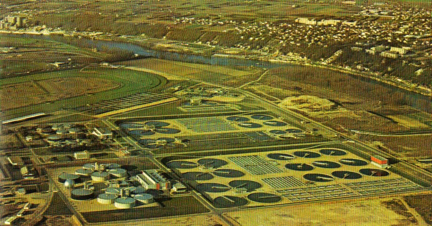
The Treatment Facilities at Acheres.
The sewage works is placed so that as many Parisians are unaware of its presence, water engineering of the highest order is used but in many ways it is fealt that the discharge is not the concern of the capital’s but that is more an issue for the people of Rouen a short distance further downstream.
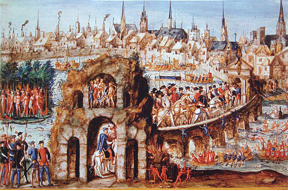
1550, Henry IV enters Rouen some 19 Years after Jean d’Arc was Executed
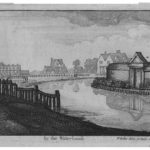
The picture gives a good understanding of aspects of the river at the time. An English fleet is tied up there are werries moving cargo about the waterway. A merchant vessel is tied up away from the fleet there is an abundance of fish in the river.
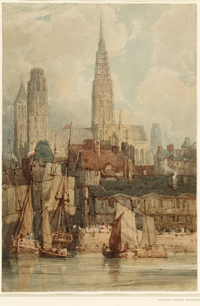
Bonington’s View of the Waterfront at Rouen 1822.
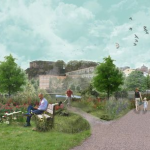
and Today
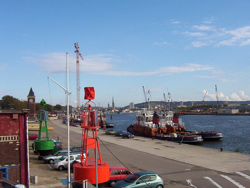
The river has a tidal bore similar to that of the River Severn in England; rather it did but engineering works at the mouth of the Seine have done much to abate its effects.. These works do not always work and can course a certain concern for larger boats in port at Rouen. It still can be felt as a mild serge against the houseboats tied up along the quays in central Paris on occasion.
Beyond the safety of the harbour of Rouen the estuary begins, rapidly widening with refineries and other facilities that require deeper anchorage connections to the sea.
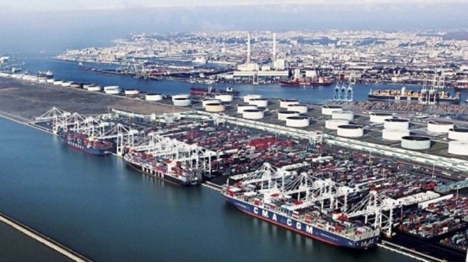
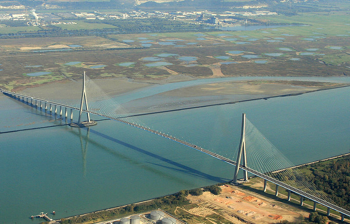
The French know how to span rivers with agreeable structures such as le Pont du Normandy as the river leaves the confines of its narrow channel to enter the estuary downstream of Rouen.
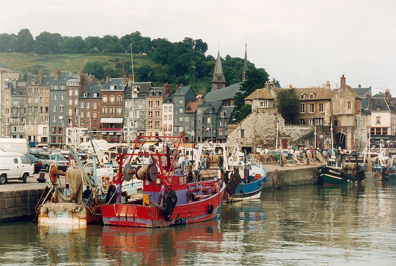
The Seine glides into La Manche between the large port of La Havre and the picturesque harbour and the starting point of the Norman invasion of England in 1066; Honfleur. The harbour today holds water the whole time, the mud and ooze that I remember well from when I first visited, have disappeared. I miss the mud with rotting keels and indeterminate objects protruding from the slimy surface.