These are a few issues that have appeared over recent times in Turkish newspaper Hurriyet. We have been asked by friends to check these out and have a look at any other issues.

Seventy-nine percent of freshwater bodies are polluted, the Chamber of Environmental Engineers has said in its report marking World Environment Day on June 5.
“Our freshwater bodies in Turkey are under serious threat. Some 79 percent of surface waters, streams, and lakes have been polluted. Of this figure, 60 percent represents the water that cannot be used for drinking water [due to the level of pollution],” said chamber head Baran Bozoğlu, while announcing the report’s results on June 4 in a meeting in the capital Ankara.
Bozoğlu said especially the rivers of the Greater (“Büyük”) Menderes, Sakarya, Susurluk, Little (“Küçük”) Meander, Gediz, Bakırçayı, and Ergene were very polluted, having turned into an “open canalization” system.
Turkey is also not utilizing 99 percent of freshwater bodies, which have a potential to be reused through refinement, Bozoğlu said. And foremost, the pollution in our seas in the Aegean provinces of Muğla and İzmir, the Mediterranean province of Mersin, and Istanbul are worsening, according to the head of the Chamber of Environmental Engineers, a member chamber of the Ankara-based Union of Chambers of Turkish Engineers and Architects (TMMOB).
The report also drew attention to the limited number of wastewater treatment facilities in organized industrial zones across Turkey, indicating that only 44 percent of the total 186 organized industrial zones in the country were equipped with these facilities.
Another issue that was pointed out by the report was the country’s failure to recycle plastic products, which are contributing to the destruction of water ecosystems.
“A total of 8.6 million tons of plastics [per year] are being used up in various sectors of Turkey. Some 1.8 million tons of plastic packages are released into the market, and only 384,000 tons of these, i.e. 21 percent, are accumulated back [for recycling],” Bozoğlu said.
The chamber’s report also touched upon air pollution, saying Turkey ranks 22nd among European countries in air-pollution related deaths, with 4.7 percent of total deaths in the country attributable to air pollution.
Ankara, Istanbul, the southern province of Adana, the northern province of Amasya, and the western province of Bursa are the places that air quality is a big concern. Heating houses, cars, thermal power plants, and mining and industrial enterprises have been indicated as the major causes of air pollution in Turkey.
The report has additionally touched upon flood disasters in Turkey, saying the Black Sea region was the region among six others that was “the most affected from food disasters.” In 2016, the region experienced a total of 134 flood disasters, the report said, calling out for “an immediate climate action plan.”
World Environment Day occurs on June 5 every year and is the United Nation’s principal vehicle for encouraging awareness and action for the protection of our environment. First held in 1974, it has been a flagship campaign for raising awareness on emerging environmental issues from marine pollution, human overpopulation, and global warming, to sustainable consumption and wildlife crime.
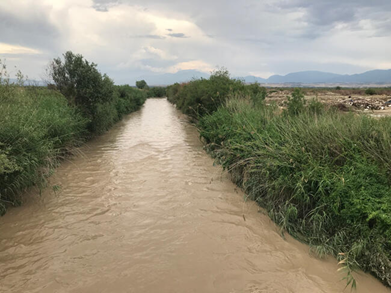
The Greater (“Büyük” in Turkish) Menderes River, one of the biggest rivers in the Aegean region, is under contamination by industrial waste, making it Turkey’s third most polluted river, according to experts.
The river, historically known as the Meander River, hit headlines in May following reports of mass deaths, which have washed ashore in the western province of Aydın. Such an environmental tragedy is not a first for the river, as 1.5 million trout have been suspected of being killed due to waste from juice factories along the river in Denizli, another Aegean province.
Experts have warned about the high levels of the pollution of the river water for many years now, but they are now calling for an intervention more than ever before, with growing news of environmental disasters putting human health in danger.
This river irrigates efficient farmlands and includes tributaries of other rivers and streams and many populated towns within its limits in the Aegean region. The river originates in the vicinity of Dinar near Afyon and has reached the Aegean Sea near Söke plain. It is 548 kilometres long and the bedrock structure of the river is composed mainly of metamorphic rocks.
Daily Hürriyet has visited some of the areas along the river in an attempt to witness the pollution. The waters in the Eldere and Suçıkan villages of Dinar are placid and clear, resembling a heaven so to speak. The waterfalls in the area accommodate ducks, goose, and various fish and bird types. Locals come here to enjoy the serene view.
“How can a river coming from such a source cause death?” is the first question that comes to mind when one sees the source of the Menderes.
The province of Uşak has a heavy leather production industry. Industrial waste pollutes the Ulubey Creek, which connects with the Great Menderes River bringing its pollution along with it. There is a bad smell, and the water loses its clarity at the point where the two waters connect. It can clearly be seen where the river’s colour and smell begin to change while it passes through the Ulubey Canyon.
As we reach the Sarayköy district of the Denizli province and the Çürüksu stream, the pollution becomes visible even to the naked eye, with the bad smell reaching an unbearable level.
“The name of this place is Çürüksu, but now it is known as the ‘Smelly Menderes’ because it smells really bad. We are afraid while living here. There is a ban on fishing here. Its colour does not look like water,” locals told daily Hürriyet.
In the Balat village of Aydın’s Didem district, the water takes on the colour of coal tar. The smell resembles the rotting of animal corpses. The Balat Delta is the last point where the river connects to the Aegean Sea. Thousands of fish died here last week.
Prof. Serap Birincioğlu from Aydın’s Menderes University (ADÜ) Veterinary Faculty told daily Hürriyet “everyone was aware of the danger” caused by the river.
“For the protection of the Menderes river, the Ekodost Foundation has issued a regulation. The water is being polluted. The water looks like coal tar. There are tons of dead fish. We are facing a big environmental problem. It is exceedingly difficult for the river to recover itself in a short period of time,” she said.
“The cause of the industrial waste can be determined. The contaminants and whether or not the water is being treated should be checked. It must be followed. The [water’s] path and its sources are evident so they should be followed well,” said Birincioğlu.
The river is the third most polluted river in Turkey, a local environmental associate has told daily Hürriyet.
“The water should absolutely not be used for agricultural irrigation. Not only does it hurt the living beings in the water but also those living around it,” said Germencik Environment and Nature Association spokesperson Dr. Metin Aydın.
“When I was the chamber head, we had conducted a study. The most deaths in Aydın were from the residential places closes to the Menderes River. There were deaths above Turkey’s average, i.e. fish, birds, and humans are dying. If you use polluted water for irrigation, that will be the result,” said Aydın, basing the figures on a study previously conducted by the Aydın Medical Chamber.
“According to a study by the Adnan Menderes University, the Menderes River is damaging the structure of bulbous plants and causing cancer,” he said.
“We should not forget that without the Menderes, there would not be life here,” said the spokesperson.

Heavy metal pollution at the Ergene River Basin in north western Turkey has led to a visible increase in cancer incidents among local people in recent years, according to experts.
The area of the basin located within the boundaries of the provinces of Tekirdağ, Kırklareli, and Edirne, is home over 1 million people.
There are currently 2,600 industrial plants in the basin, which are discharging their industrial waste into the Ergene River, daily Habertürk reported on July 4. Accordingly, experts now define the river as Turkey’s fourth most polluted river, with the water quality not considered to be clean enough for any use.
The Ergene River is one of the most important water sources in the Thrace region, but because many chemicals are discharged into the river without proper treatment both the environment and local people are facing a serious threat. Experts say this is largely due to the inadequacy of residential and industrial treatment plants, as well as the proliferation of illegal dumping in the region.
“Analysis of water samples taken from the river shows that 1,061 of the chemical substances discharged into in the river were heavily carcinogenic, including cadmium, which is a very dangerous cancer-causing metal,” Trakya University Rector Prof. Dr. Osman İnci told Habertürk, describing the Ergene River as “industrial sewage.”
“Cadmium is found three times above the normal level in patients with tumors who are living around the river. Other than cadmium, heavy metals such as lead, nickel, copper, zinc, and cobalt are also found in the river,” İnci said.
“If they want the problem to be solved, industrial plants will not discharge their wastes to the river. If the river was left to itself for 20 years [without being polluted] it would recover itself,” he added.
The environmental NGO Trakya Platform also commented on the issue, with its spokesman Bülent Kaçar saying the region is now “full of cancer patients” but they do not know the exact number as the authorities do not release official figures.
The number of cancer patients who registered at Trakya University Balkan Hospital’s Dept. of Oncology have reportedly steadily increased from 2010 to 2017, up from 1,739 to 2,150 cases.
The department head, Prof. Dr. İrfan Çiçin, on the other hand said it was wrong to make a definite connection between the industrial pollution and cancer incidents, and “additional epidemiologic studies” were needed to make such a conclusion.
There is no yet an official figure to clear the discussion on whether there has been an increase in cancer incidents at the Ergene Basin.
The Health Ministry previously initiated a project to determine the pollutant sources and their effects on public health. The ministry said their analysis was still ongoing and they would release the results in the upcoming months. When the project is completed, software will be developed to manage the water quality of the basin.
The Health Ministry further noted that the most recent official data on cancer incidents in Turkey belonged to 2014, but “when the data of the last five years are looked at, there is no increase or decrease in cancer frequency.”
“Everyone is doing research in their own way. But the side that will give the fundamental data on this issue is the Health Ministry,” said Forestry and Water Affairs Minister Veysel Eroğlu.
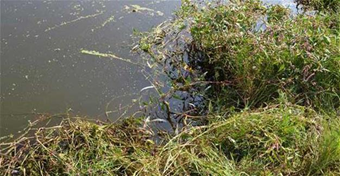
Local authorities in a north western Turkish district have warned citizens not to take away or consume dead fish washed ashore in the Susurluk River.
“Residents said there were dead fish by the river. When we went there, what we saw were perished fish, some floating. We informed the authorities immediately,” said Rasim Acar, a village head in the Mustafakemalpaşa district in the province of Bursa, state-run Anadolu Agency reported on Sept. 17.
It was the first such incident in years, Acar said.
Dursun Demirci, an official of the local agriculture authority, said an investigation has been launched over the fish deaths near the Çeltikçi village.
This was not the first time Susurluk River’s pollution threatened health conditions in the region.
In 2008, the river was seen flowing in black and red colours due to reported waste disposed by milk and meat factories.
Çeltikçi residents had, at the time, warned authorities that the land as well as the fish in the river were under some serious poisoning threat and conveyed this situation threatened both locals’ health conditions and agricultural production.
In a separate case in 2005, authorities said mass fish deaths were possibly caused by oily waste disposed into the river by cheese factories.
Susurluk is a river basin in the southern Marmara region and drains into the Marmara Sea.
The 321-kilometer-long water path, which has been vulnerable to industrial pollution, is also linked to the Lake Manyas, a shallow nutrient-rich freshwater lake inside a natural park that hosts 270 species of birds.
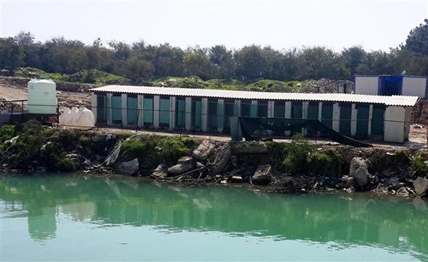
Increasing pollution in the Manavgat River in Turkey’s southern touristic hub of Antalya has drawn reaction from tourism professionals working in the region, including the head of the city’s tourism group, who called it a “dump river.”
Recep Yavuz, the head of the Antalya City Council Tourism Working Group, pointed to refuse and construction projects on the shores of Manavgat River, where thousands of tourists take boat trips every year, as the main source of pollution in the river.
Yavuz said the river once had a turquoise colour and clarity which attracted tourists with its fascinating beauty, adding there were many species of animals living on the river from kingfishers to terrapins. However, today the river has lost its former beauty due to the negligence of the people operating near its shores.
“Probably, the tour guides tell the old stories of the Manavgat River in this way, because the river’s beauty faded and what they tell is no longer there. On the boat trips, tourists see neither birds nor trees. Instead, they see hotel constructions, floating nylon bags and plastic bottles,” said Yavuz, who is also the general manager of NBK Touristic, a travel bureau.
Meanwhile, Yavuz said toilets for construction workers were worsening the pollution of the river, indicating that those toilets were not connected to the sewers.
“You can guess how much the tourists are surprised when they want to sunbathe on the dock but instead they see the toilets. The Manavgat River has become a dump river over the past 20 years. It is sad to see this kind of negligence and stolidity in one of the most-visited tourist attractions in Antalya,” said Yavuz.
Yavuz also urged everyone to be sensitive to the river’s pollution problem, warning that next month will mark the beginning of the tourist season.
“Next month, the tourist season will begin and thousands of tourists will again flock to Manavgat River every day. Particularly local administrators, non-governmental organizations and everyone who loves their city need to do their best to end this stolidity and restore the Manavgat River to its previous state,” he said.
Yavuz also offered an alternative for the touristic boat trips in the river to ease the level of pollution.
“Despite the commercial loss, we should suspend boat trips for a year if needed. Perhaps we should use nature-compatible transportation instead of motorboats,” said Yavuz.
Located in the southern province of Antalya, Manavgat River is considered one of the country’s most significant natural landmarks with its waterfalls and is an extension of one the world’s longest subterranean streams.
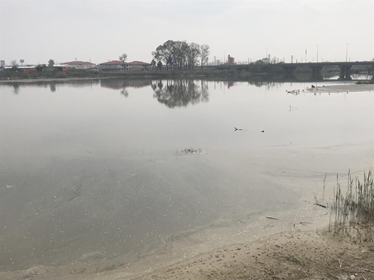
The pollution in River Sakarya, the third longest river in Turkey, is rising at an alarming rate, according to experts, with an official from the Sakarya Chamber of Commerce and Industry (SATSO) urging President Recep Tayyip Erdoğan to step in.
“There are many causes of the pollution, it is very correct to say that the pollution of such a big and long river stems from one reason. This is why the cleaning of this river is a national matter and it is not possible to have a single institution tackling it. The matter should be handled as a national issue,” said the head of the environment and urbanization commission of SATSO.
“This issue can be tackled under the patronage of our president. Or I think that the issue can be tackled as a joint work of other state institutions,” Mehmet Tuncer Açan said.
The River Sakarya flows through nine provinces in Turkey. The source of the 824-km-long river is the Bayat Yaylası (Bayat Plateau) which is located northeast of the Aegean province of Afyon. Joined by the Porsuk Çayı (Porsuk Creek) close by the town of Polatlı, the river runs through the Adapazarı Ovası (Adapazarı Plains) before reaching the Black Sea.
Açan said that there are four levels of pollution with regards to rivers, and the pollution in River Sakarya is at its highest level, getting worse over the years.
“We evaluate the water [pollution] with four levels, with the fourth being at the worst level. The first level is drinkable water, the second level is water that can be drunk following a certain process, the third level is water that can be used for only certain areas following again a certain process, whereas the fourth level is the most polluted water,” said Açan, adding that the water pollution level at the Sakarya River corresponds to level four.
The pollution in Sakarya River does not only affect the river itself and living beings inside it, but also irrigation areas and farms, according to Açan.
“There was an extensive work conducted by the Environment and Urbanization Ministry between 2014 and 2016. This extensive work took samples from various places of the river depending on the season. What can be done [to clean the river] can be thought within this framework, so this [work] might be a starting point,” said Açan.
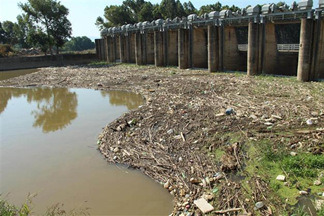
Tons of solid and liquid waste has spilled into the Aegean Sea and the Bafa Lake Natural Park in Turkey’s western province of Aydın after regulator covers on the Greater Menderes River were opened.
The waste had grown over the course of the 584-kilometer-long Greater Menderes River, collecting through the Afyonkarahisar, Uşak, Denizli and Aydın provinces and accumulating at the regulator covers, as there was no intervention despite warnings from local residents and associations.

Accordingly, Association of Nature Lovers and the Protection of Ecosystems (EKODOSD) executives in cooperation with the Söke Irrigation Union spotted the excessive waste build-up and referred to the Aydın Governorate’s State Hydraulic Works and the Provincial Directorate of Environment and Urbanization but to no avail, as a solution to remove the waste could not be reached.
As the officials did not take the warnings into consideration, the regulator covers were opened, and thousands of tons of waste flowed into the Aegean and the Bafa Lake Natural Park.
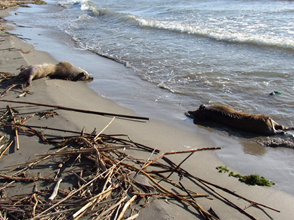
EKODOSD President Bahattin Sürücü said the Greater Menderes River, which serves as a lifeline supporting living things in natural parks and lakes, has been facing increased pollution stemming from humans.
Sürücü added the environmental pollution also affected the economic, ecological and social life in the region.
According to inspections by the EKODOSD, the waste ranged from housewares to plastic bottles, animal carcasses to diapers, and agricultural pesticide containers to cans.
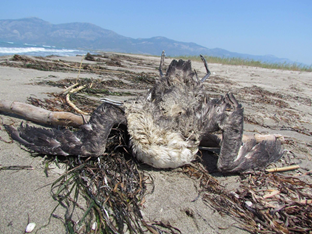
Having defined the most credible witnesses of environmental pollution as fishermen in the Bafa region, Sürücü slammed the mentality of “water sweeps the waste away,” which was predominantly seen in local people. This has encouraged people to throw their garbage in the river, particularly in crowded places where people hold picnics, gatherings and weddings.
The regulator covers will remain open until the next irrigation season, thus the waste will not be noticed. However, for this reason, waste will continue to be carried through the Greater Menderes delta to the Aegean Sea.
Conclusion.
Like the UK and most other countries, Turkey has succeeded in acting to clean up many of its rivers. Much that one sees in these articles though needs legislation and a regulator with the will to bring polluters to court. The state has some laws in place but these and local regulation require enforcement. The public need to be more aware of the actions that can stop litter pollution and that facet of clean up is rapidly gaining ground. Many of the major cities are cleaner than comparable ones in any European country and the populations take pride in their litter free urban centres. The countryside is different, the disposal of waste, the relaxed attitude to ‘loosing’ waste is not uncommonly an ‘economic aid’ to farmers or landowner.
Industries, that provide employment are now finding that such facts to justify bad environmental practice are now finding that local populations are beginning to take actions against pollution. In many instances it is the lack of available data or other detail that stops local action, which in Turkey can be telling.
Turkey is changing and rapidly. The people are requiring that the environment is vital both to the local residents but also to the nation as a whole. Local people are now regularly taking action to stop pollution and this sort of activity is having a profound effect on government at the local level and is now influencing governance at the national level as well.