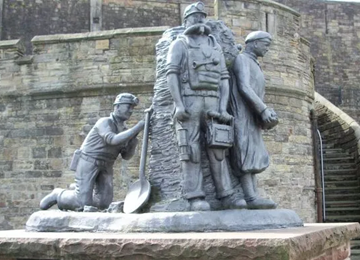
Visiting the Town of Whitehaven this week to reacquaint myself with the historic legacies the town has from the huge coal industry that carved much of the mineral from beneath the town from the 16th Century through to the 20th Century I was shocked by the opportunities that are wasted by the local authorities and government agencies.
Most of the major industries, coal, shipping, chemicals, and steel have gone from the town, the economy has gone beyond freefall and the town is reliant on small businesses and tourism to survive. The town is poor, and its population are disadvantaged by the lack of good quality employment options. The large housing estates are poorly maintained and grey for lack of paint and maintenance. There are large parts of the population unemployed. Young people are moving away to find better employment options elsewhere.
The population has a record number of its population suffering fuel poverty and the NHS reports elevated levels of depression and other mental illness. The town is economically depressed as well with many shops closed and the only exciting and more vibrant part of the town is round the harbour.
Since late last year (2022) the harbour is depressed due to a pollution that if it continues for much longer will see its vibrant marina fold as yachtsmen sail away to clean berths in Scotland and elsewhere.
What can be Done for the People.
Fuel poverty is growing as energy prices reach higher and higher levels, government giving winter fuel payments to all and further help to those in need is set to continue and so it needs to but there are certain things that might be considered in the town which might bring the area fresh hope.
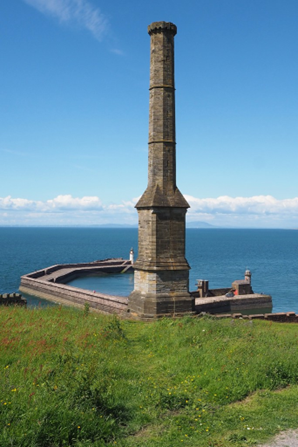
The coal industry left vast systems of workings beneath the town, and these stretch up beyond the town to the outcrops several miles inland and deeper workings travel several miles out under the sea. These workings are not empty voids. Some as the pollution of the harbour demonstrates are full of water, others are full of methane. The Candlestick Chimney overlooking the harbour demonstrates this well when it is struck by lightning and the gas burns like a beacon above the town.
Minewater Heat.
Flooded minewater is warm and can be considered a resource that could supply large numbers of housing around the town with central heating and hot water using heat networks. This is a potential long-term fix for fuel poverty that is both truly ‘green’ and sustainable. The costs are easy to maintain at affordable prices and will relieve many of the burden on unknown price increases going into the future.
We have engaged with the Coal Authority over many years: we being the first to introduce the idea from Canada in the 1990s to the UK. The Trust engaged in successful schemes in Holland and Spain.
Mine Gas.
The coal mines of West Cumbria are amongst the most gas rich coal seams in Europe.
The Trust looked at mine gas in the Whitehaven area specifically in the 1998 to 2000 period for Albright and Wilson. The gas was closely linked to the minewater we were researching for their Marchon Works above the town. We talked with the Dti in London and with the company who owned the licence to explore for gas in the Whitehaven mines.
The Government Office of Onshore Gas states that no company or person owns the licence for the gas from the Whitehaven area at present. The coal mines have been surveyed and the gas is of sufficient quality to be used either as an addition to the local gas supply and cutting gas costs to the population or a section of the town could be independently supplied at a much-reduced cost.
The use of gas is not a preferred government objective at the present time but the volumes of greenhouse gas (methane) being vented to the area could be better controlled by burning by cooking appliances and heating boilers than venting in unknow volumes from many mine entries that are not at this time capped or closed off.