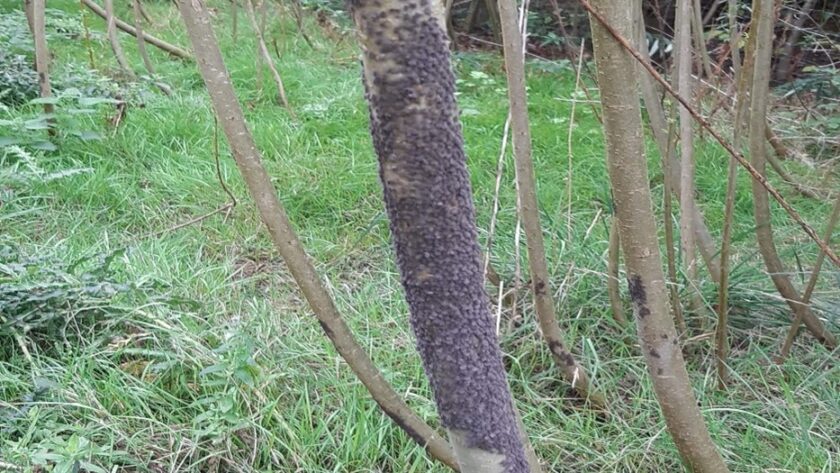
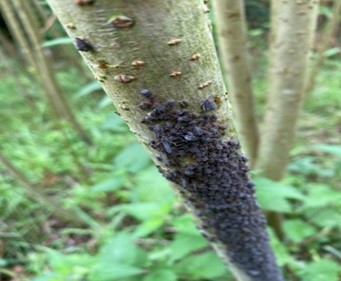
The Trust has been using willows and to a small extent poplars to remediate an acid tar pit at Cinderhill in Derbyshire. The last few months have been severe weather wise for the trees, with temperatures up to 40oC, lack of rain for three months and now they are suffering an inundation of Giant Willow aphids. These are large sap extracting creatures that exude honeydew which wasps and ants will harvest in the normal course of events. There are wasps and a few ants present but on a site such as ours where the fauna is only just coming to grips with the new ground available to them there are not the quantity of ants present. The excess honeydew appears to encourage black moulds to the plants.
Beneath the ground surface there are earth worms in the upper layers of what used to be acidic tar (pH0-1) and is now a pH 6.5-7. The trees have in places reached 4 to 5 metres in height, with their root systems reaching 2 to 3 metres in depth. The growth of these trees requires energy, the aphids though draw off sap from the plants through the bark. As these trees are working to survive and develop in a hostile environment any external agency that disrupts the plant in any form will inevitably have detrimental effects on the plant.
Many texts on the effects of these aphids stated that there were no ill effects to be expected, but one published in a New Zealand journal demonstrated the negative effects such aphids have had both there and in Australia.
The requirement to control their population has gone to the top of the list of actions on site. Willow nurserymen have recommended chemical and organic sprays that may work, but the Trust in liaison with those conducting the control measures will use gloves and squash the colonies individually. It will be a most unpleasant job and gloves are very necessary due both to the risk that their contact on human skin may trigger allergic reactions and squashing these creatures dyes one’s hands an iodine purple that is hard to wash off your skin
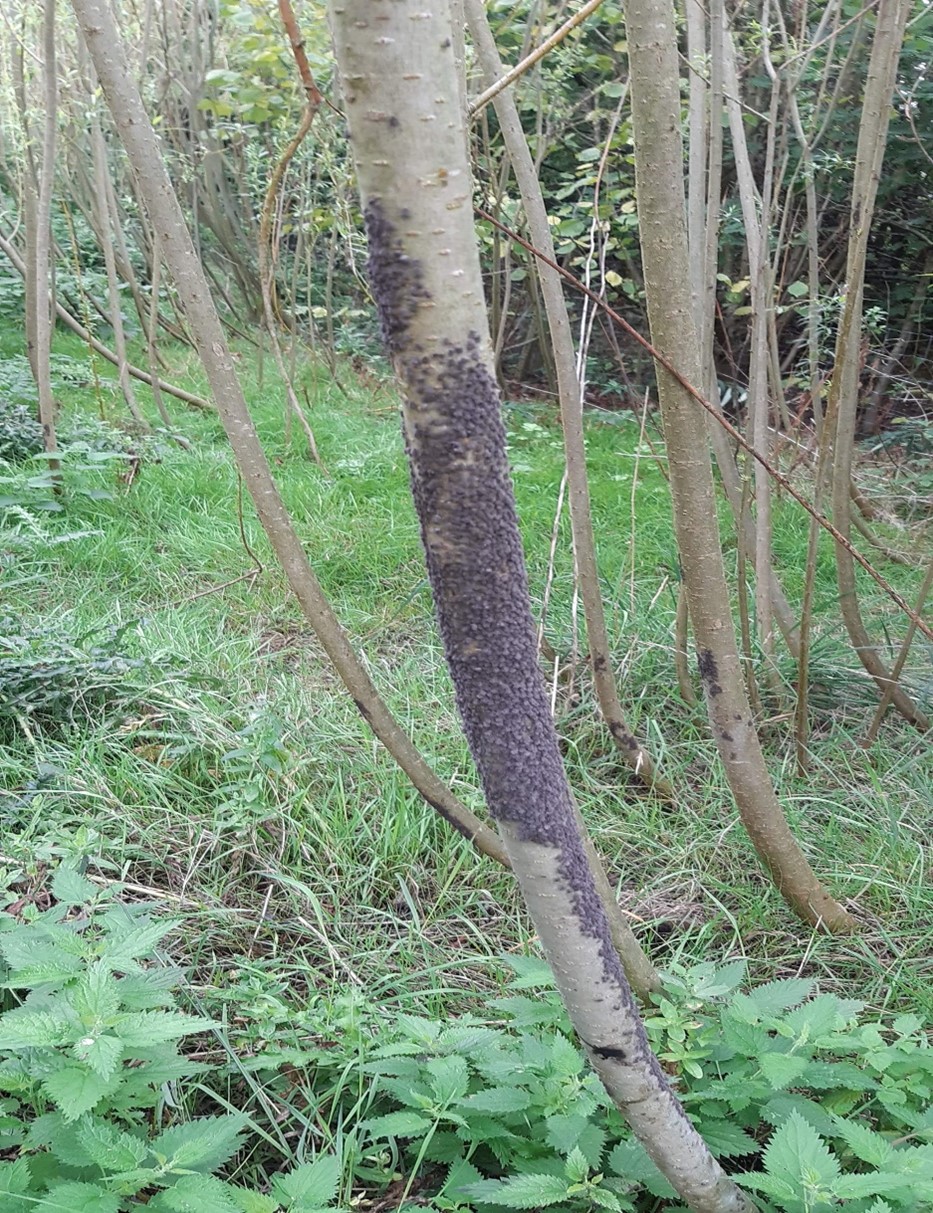
Some well-established trees have defoliated again after greening up after the drought and hot weather. The aphids appear to, if they totally ring the tree kill it or at least severely set it back. This ringing of the bark is similar to how a vandal may destroy a tree by cutting through the bark around the complete tree down to the sap wood.
There are no native predators of these aphids which appear to have originated in Asia. The only bug known to destroy them being another import, namely the Harlequin ladybird. We have had a few appear on the willows but the mass of aphides is unmanageable using their good offices alone. In New Zealand, the agriculturalists are looking at types of wasps to do the job, but no native species appears capable in this country. The importation of such species is not sensible as such wasps may have other effects that may be detrimental to the environment.
Willows are the main tree affected, but one or two individual aphids have been found on two poplars and they have been eradicated.
The black moulds have been seen effecting the leaves close by the aphids and are to be removed.

Giant Willow Aphids and the Black Mould coming for the Honeydew.