Clean Rivers Trust.
12th December 2015
Countryside Stewardship grant
Constructed wetlands for the treatment of pollution (RP8)
How much will be paid
50% of costs.
Where the item is available
This item is available for:
• Higher Tier
This item can only be used:
• in areas targeted for the reduction of water pollution from agriculture
• to treat field and farmyard diffuse run-off
• in conjunction with a Feasibility Study or a CSF commission design plan
When this item can’t be used
This item can’t be used:
• to treat slurry, silage liquor, heavily fouled water, or concentrated pesticide spills and washings (as defined as such under the Nitrate Action Plan Regulations, Slurry Silage and Agricultural Fuel Oil Regulations or Health and Safety Executive)
• on historic or archaeological features identified in the farm environment record (FER)
• without relevant advice or consents from the Environment Agency (EA), or Internal Drainage Board
How to apply
Applicants can read the Countryside Stewardship guidance for more on eligibility and how to apply.
How this item will benefit the environment
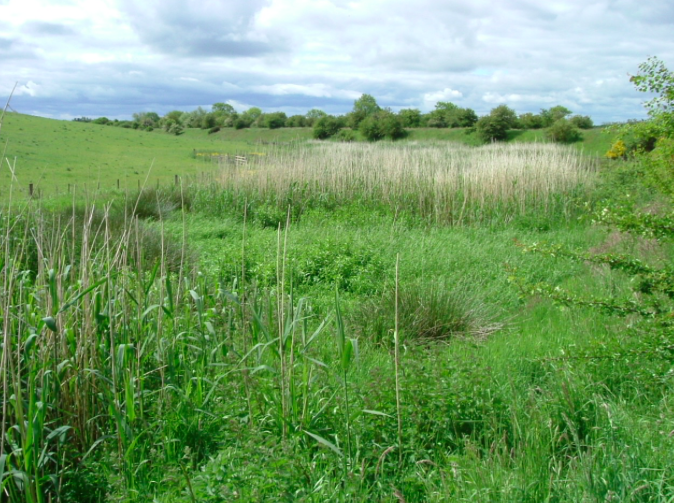
This item will create and maintain a wetland features to treat lightly fouled or polluted water, generated from normal agricultural activities. This will help reduce the risk of sediment and other pollutants entering a nearby watercourse.
Applications
Before applying, applicants must seek advice from the Environment Agency, Local Planning Authority and where relevant the Internal Drainage Board to check if consent is required to carry out the planned work. Applicants will have to send the following with their application:
• a copy of any advice or consent received from the EA, and (where relevant) the Internal Drainage Board
• a justification for using the item, explaining why it’s necessary and how it meets the eligibility criteria, including a photographs of the existing site
• a copy of the Feasibility Study or CSF Design Plan (water holding feature management plan)
Requirements
Higher Tier agreements
The requirements may differ slightly for a Higher Tier agreement as the item will be tailored to the site. Applicants should discuss and agree these requirements with their adviser.
On the land
Successful applicants are likely to need to:
• complete works according to the specification set out in the implementation plan or feasibility study and as agreed with a Natural England adviser
• follow the instructions set in a management plan (agreed with a Natural England adviser) for constructing and maintaining the wetland area
• get 3 quotes for completion of the work, with a statement outlining reasons for the chosen quote, and agree the selected quotation with Natural England
Keeping records
Successful applicants will need to keep the following records and supply them on request:
• any consents or permissions connected with the work
• the 3 quotes for completion of the work
• please see the record keeping and inspection requirements for more detail
Successful applicants will need to keep the following records and supply them with the claim:
• receipted invoices or bank statements where a receipted invoice is not available
• photographs of the completed work
What must not be done
The agreement will set out what must not be done. It is likely successful applicants will not be allowed to:
• place spoil on any environmental, historic, or archaeological feature
How to carry out this item
The following section gives advice on carrying out this item successfully but does not form part of the requirements for this item.
Specification
A detailed specification will be produced, tailored to the site. A likely design would be a treatment structure built in at least 3 stages.
Stage 1
The first stage is to create an open pond to act as a sediment trap without much wildlife value. The pond should be accessible to farm machinery for routine maintenance.
Stage 2
The second stage should have some planting to encourage settlement and remove nutrients.
Stage 3
The third stage should be a shallow wetland that is heavily vegetated to reduce pollutants in the water such as:
• nitrates or ammonia
• biological oxygen demand (BOD)
• faecal indicator organisms (FIOs)
Throughout each stage
Successful applicants should:
• restrict livestock access to reduce the risk of eroding or degrading the treatment area
• build on a non-permeable substrate (made up of 20% clay) or line the area so there’s a permanent pool of water for most of the year
• avoid building on sandy, gravelly and excessively wet soil in order to prevent contact with groundwater before treatment
• build gentle slopes with a gradient of no more than 1 in 4, the edges should provide good wildlife habitat and act as a safety feature
• make sure the pond edges are undulated to provide more edge habitat
• make sure outlet pipes are larger than inlet pipes to prevent water backing up along the system
• obtain a waste exemption if excavated material is to be removed (this information should be included in the agreed management plan).
Manage outfall
Successful applicant should:
• ensure any outfall of water is of high enough quality before it is discharged into the local watercourse
Applicants will need to agree acceptable water quality standard with EA before directing any outfall/
Further information
Catchment Sensitive Farming (CSF) operates in parts of country where there are water quality issues linked to farming. Find out more about CSF support.
Read the constructed wetland user guide produced by the Wildfowl and Wetland Trust for further help carrying out this item.
Clean Rivers Trust will help plan and liaise with the Environment Agency in an equitable manner helping to save farmers costs.
Get the project agreed first time.
Clean Rivers Trust
73 Sir Harrys Road
Edgbaston
Birmingham
B15 2UX
0121 440 8046
07885 422428
hwoopaol.com
www.cleanriverstrust.co.uk