Will the population return to the land set between water and sky; the original Marsh Arab community was forcibly displaced in the 1990s after being betrayed by their ‘liberators’ after the actions of the armies liberating Kuwait from the invading forces of Saddam Hussein, is yet to be answered.
The land was that between the rivers Euphrates and Tigris and close to the borders of Kuwait and Iran, a strange land brought to the notice of the world in the writings and photographs of Wilfred Thesiger in the 1950s and 60s. An Arab community set on water rather than surviving in an arid landscape. A civilisation that had been in in place for over a thousands of years. A civilisation with its own architecture, not built in stone or brick but of reed. Where camels did not carry but canoes of reed ferried goats from island to island and fish and waterfowl made up the major portion of the populations diet.
This community had developed alongside the marsh after the Arab invasion of the region whilst conquering the great arc of Mesopotamian states. Prior to that (1300 years previously) the marshes had been managed to supply rice and other grains to feed the region with water levels managed by a series of canals and flood banks. The sophistication of which is only partially understood.

Much of the outlying marsh has regenerated, as has some in parts of the central region, some species of fish have re-emerged as has also happened with some mammals and avian fauna but several species including the Bunn’s short tailed bandicoot would appear to have become extinct.
The marshes were drained and plans were being executed to turn this world into a vast cereal producing area that would have not just fed the Iraqi nation but much of the immediate Middle East earning the country a non-oil based income and making friends out of adversaries in the region. This plan was not realistic or any more than window dressing an act of ethnic cleansing. The marsh based population was in the region of three quarters of a million people in the1960s and in 2007 only an estimated 1,200 people had returned to the returning marsh. The rest of the population had been dispersed, around 200,000 having left Iraq as refugees to Iran and the rest going to towns and villages across the country or into exile. The villages were destroyed within the marsh and many potable wells were polluted. The draining of the marshes did not leave a fertile flat agricultural land but created desert.
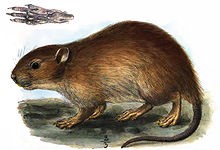
The Bunn’s short tailed bandicoot that is apparently extinct is a notable loss to the area as is actions within the marsh maintained the open water channels needed for movement. These creatures feeding on the rhizomes of the reeds stopping channels being choked.