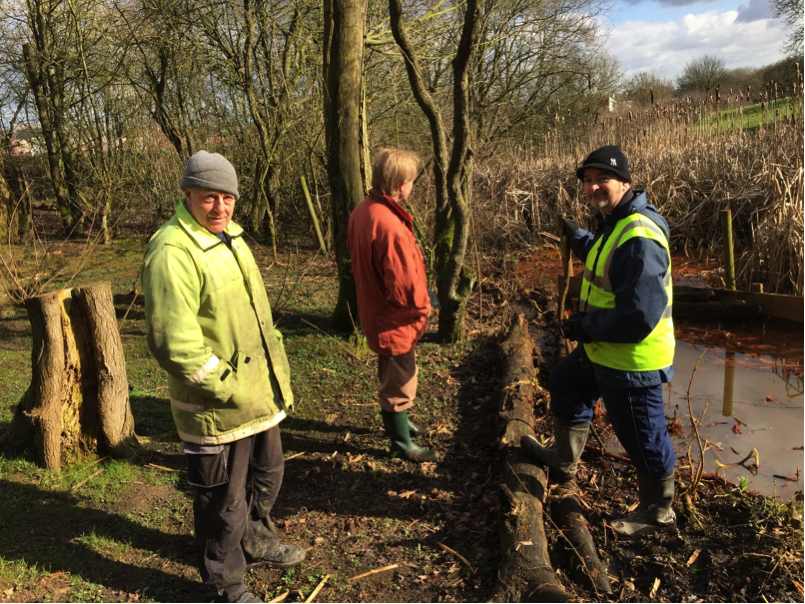
A beautiful early spring February day allowed for a comprehensive visit to the community woodland at Waingroves located on the edge of the Amber Valley in Derbyshire. The purpose of the visit was to see the work carried out in the minewater pond and wetland that I visited last year and to offer advice and see what might be done to protect the beech woodlands and the small spring fed streams of the woodland from the dewatering of the clay quarry adjacent to the site. These springs feed the pond by Waingroves Hall, a building being restored and brought back to life by Simon Tollervey and his family after 30 years of dereliction.
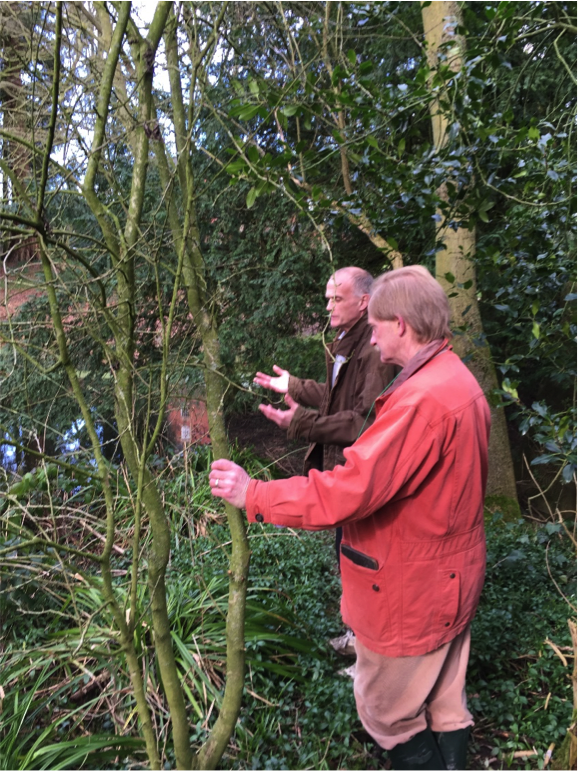
Harvey Wood with Simon Tollervey of Waingroves Hall examine the Hall pond.
The woods of the Waingroves Community Woodland are an extension of the remnant woodland leading from the hall grounds and are almost surrounded by mineral working or earmarked quarry land. Much concern has recently been expressed with regard to a lack of water flowing through the area of beach woodland close to Waingroves Hall, this has been shown to be coursed by dewatering of the working face of the quarry and the removal of groundwater by pipeline out of the immediate catchment. This has been evidenced by the lack of flow from springs flowing into the lake adjacent to the hall and the attendant near nil flow of water into the beck draining from that lake.
Much has recently been done to bring about the necessary remediation of this situation; the quarrying company that operates the site has agreed to restore groundwater levels to ensure the aquifer maintains the volume of water within the local sandstones so as to guarantee flows within the local watercourses and supply the woodland so it does not dry out. Thus the company is complying with the planning authority’s conditions of grant of planning permissions and their stated intentions of being good neighbours.
Harvey Wood with Woodland trustees Paul Cox and Shaun Walters examining the recently completed wetland with its ochre water. The knowledge and enthusiasm will ensure the area will always be well cared for.
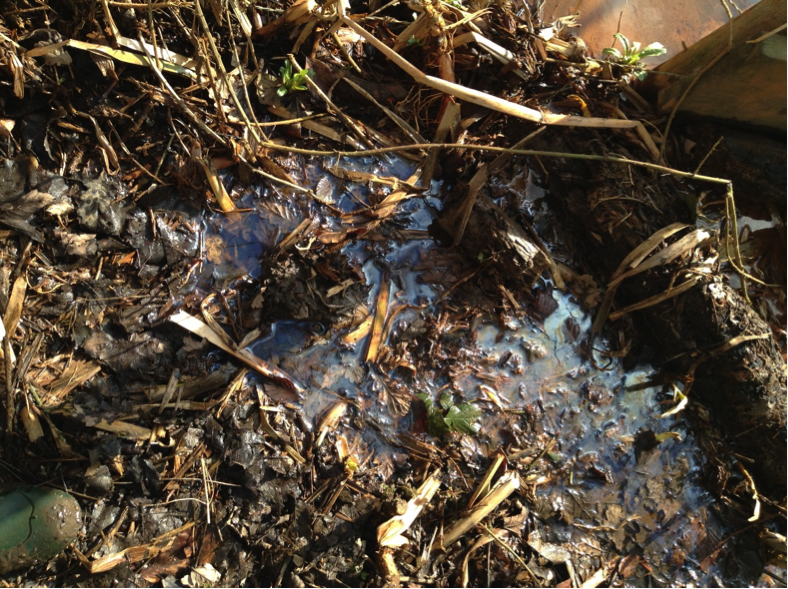
The oily shean of the sulphide reducing bacteria Thiobacillus ferrooxidans is seen across the whole wetland area.
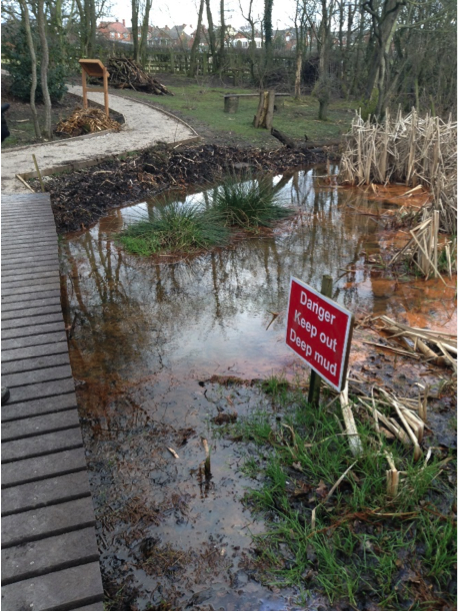
The last time this was visited it was a poor wetland with widespread ochre and an unpleasant site, today such improvemets over the last 11 months have proved that hard work and knowledge can bring real benefits. Today frogs are present and it is hoped that newts and grass snakes will take up residence before long.
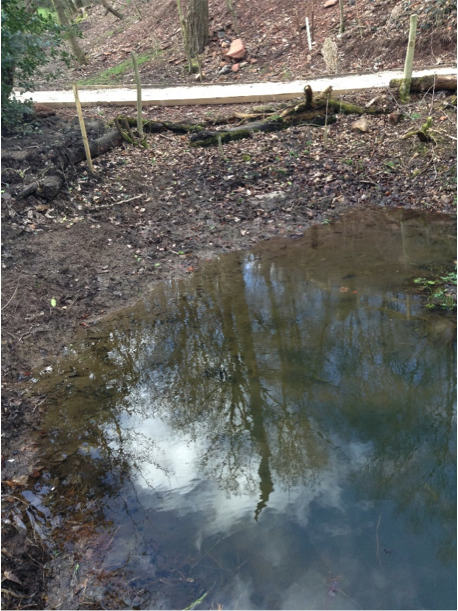
The pond has lost half its ochre and now reflects the trees and sky rather than an ochre mud.
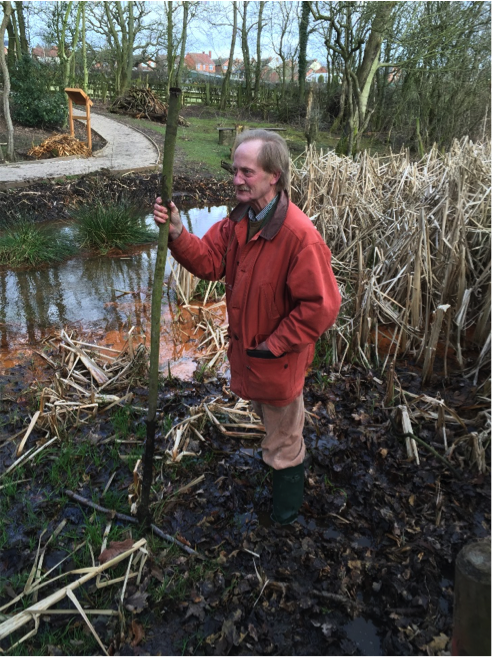
Harvey Wood gets ‘down and dirty’ to assess the wetland ochre problem. I was grateful for the stick!
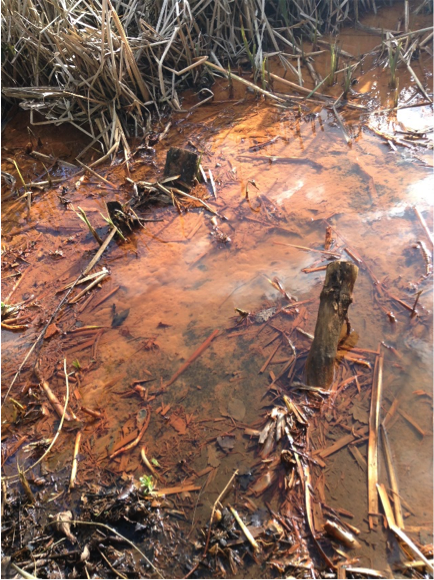
Typha latifolia is the predominant flora of the wetland, though there are two developing large juncus clumps starting to thrive as well.
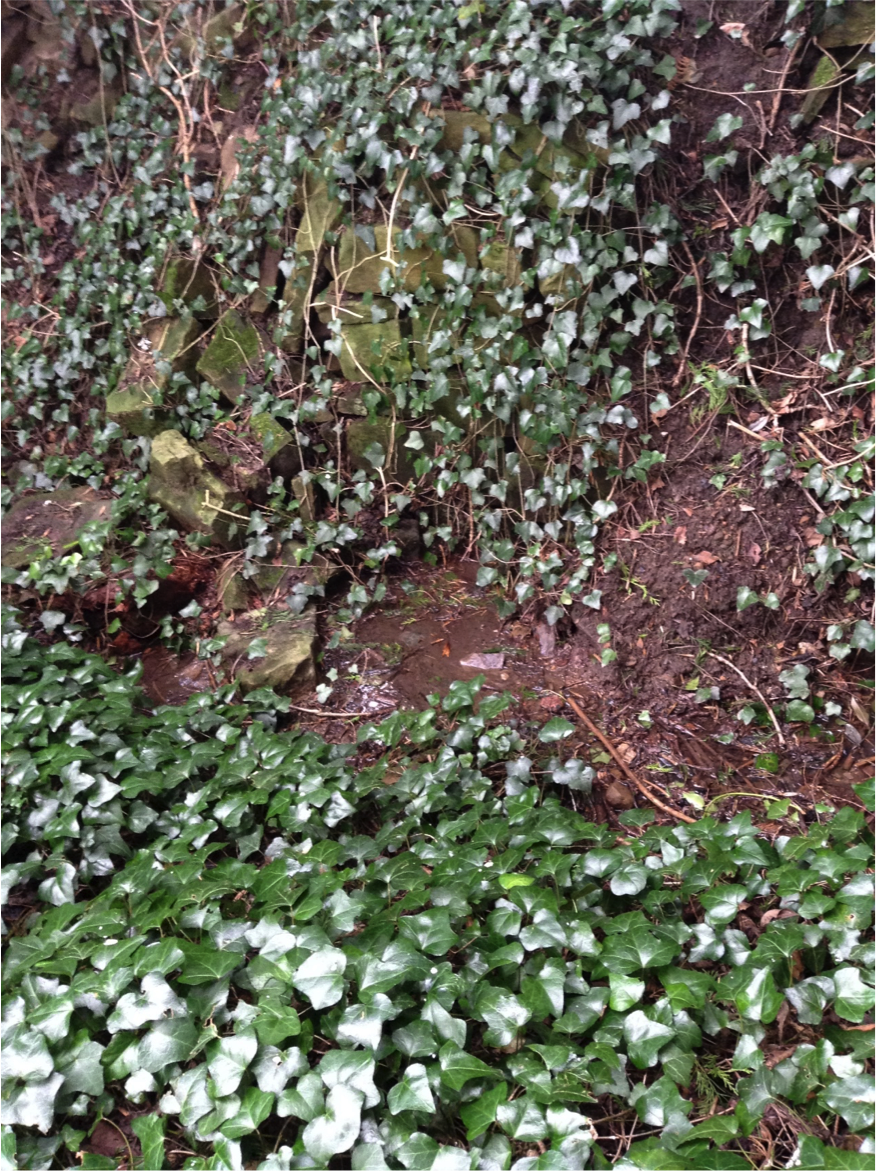
The ivy in the Hall grounds almost camouflaging the mudstone sandstone meeting at the surface where both outcrop.
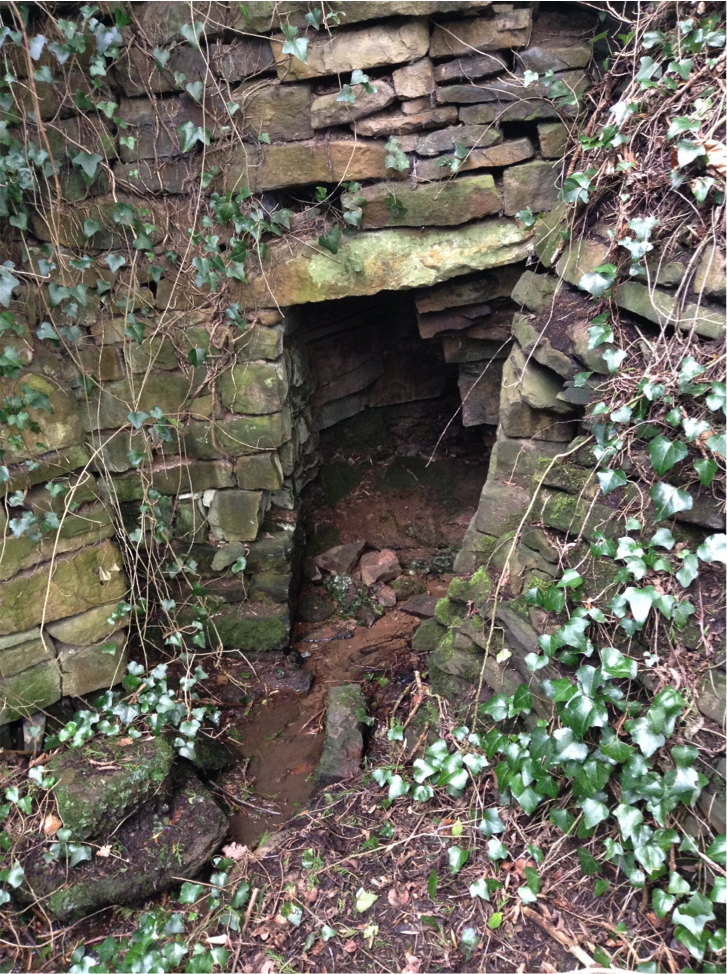
The ancient spring head in the grounds of Waingroves Hall, this site is of ancient foundation with large and important habitations going back to at least the 13th Century and was the location of a priory of the Knights Hospitallers. The spring originally fed the hall lake when it was the orders stew pond and somewhat larger than it is today.
Harvey Wood and Clean Rivers Trust thanks John Stamp and the Waingroves Community Woodland Group for involving us in their work and look forward to working together into the future.
Photographs with the author present by John Stamp others HW.
Clean Rivers Trust is grateful for the support of the Open Gate Trust.