Preamble
The issues of global warming are multifarious and are now recognised as of the greatest importance to the planets health and welfare. The need for action to limit carbon emissions is considered an imperative and at the Paris Summit in December 2015 it was agreed that all nations need to do what they can to drastically reduce future carbon production and find methods of sequestration that can be used for the long-term storage and containment of much that is now being produced.
The Project Base.
Clean Rivers Trust is a research and education trust working to clean rivers and protect the water environment. It has been involved with the decontamination of more than 2000 kilometres of rivers in the UK and has helped other organisations and other national governments clean up more around East Africa and Middle East. The Trust has worked closely with the mining and minerals industry from the early 1990s, treating minewater pollution from abandoned mines and specialised in the creation of wetlands as a sustainable answer to many pollutions from other industries as well.
The Trust has also looked at methods of funding minewater treatment such as using the heat available from some mines to be used to supply homes with both heating and hot water needs. The use of minewater as a resource to be available to industry for process and other non-potable uses has also been demonstrated and utilised by the chemical and pharmacological industries.
The Trust is a supporter of UNESCO’s Blue Carbon initiative which was launched to increase wetland restoration and replacement on coastal margins to act as amongst the most satisfactory carbon sequestration methods for long term carbon capture and storage. The Trust presented a paper at the Turkish Ministry of Health’s Conference in October this last year which took this message to many representatives present from the Middle East and further afield.
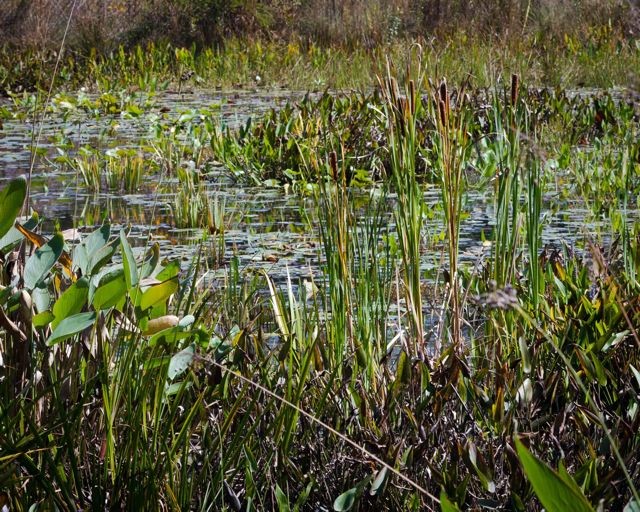
The use of inland wetland systems has been shown by researchers in the US to be similarly effective in carbon capture and sequestration. Such developments being of similar or greater carbon retention value to that of the rainforest though their long term facility is better due to the continuation of wetland habitat development whilst trees release captured carbon during dieback decay. The wetland holds the carbon within the ooze and muds indefinitely.
The projects are to evaluate and develop a partnership of local authorities, conservation groups such as the Wildlife Trusts and the RSPB, industry and other stakeholders to further develop thie wetland corridor that is at the present forming along the River Tame Valley from Birmingham to the River Trent. At present the development is modest but with continuing aggregate extraction from the area and the restoration concepts of future multi-faceted after use, nature conservation, habitat creation with the add-on of carbon sequestration and retention making this an almost obligatory option for future quarry after use. This initial scoping and development project is vital so as to bring all interested groups together to work sympathetically across traditional boundaries, both physical and of interests.
The projects have been discussed with officers of Birmingham City Council who are liaising with other local authorities, the Wildlife Trust’s project teams and other stakeholders.