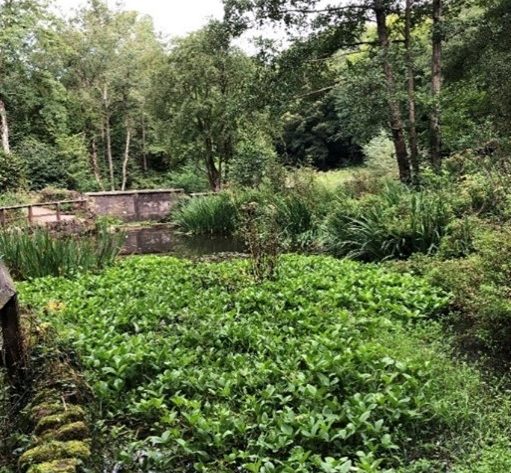
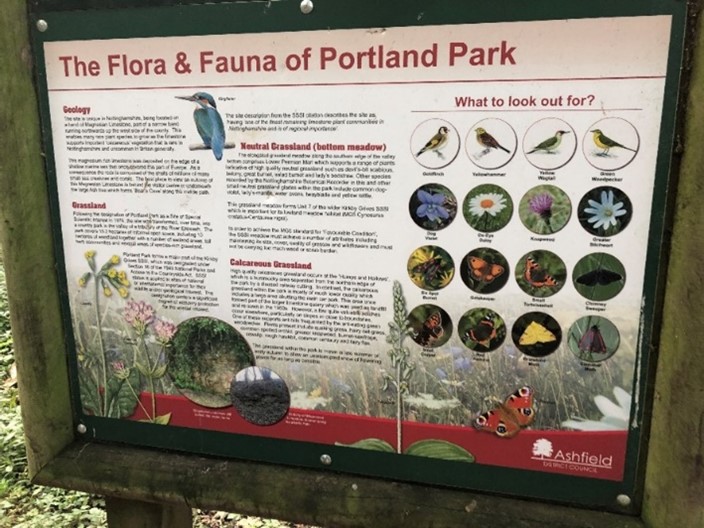
It was a surprise when visiting Portland Park, belonging to Ashfield Borough Council in Nottinghamshire with the Trent Rivers Trust to see the site of their proposed environmental and structural changes to the waters flowing through the site to find a luxuriant growth of water hyacinth (Pontederia crassipes). The last time I had met this plant it was growing on the margin and extending as a mat out into the waters of Lake Victoria. In Africa it is a hated growth that chokes rivers lakes and streams, ruining fisheries and impeding water transport. Here in the UK it is still something of a novelty even though it is a prescribed weed. It can be bought from many outlets in the UK and Europe though the European Commission banned its sale in 2016. It is loved by some gardeners for garden ponds but in the wild it is on the eradication list.
Originally water hyacinth came from South America, the Amazon Basin being its natural habitat, today it can be found worldwide and as already mentioned above a nuisance to most of the world’s waterways to a greater or lesser degree. It can, when not flowering be easily mistaken for frog bit but unmistakable when it shows its pale blue flowers. The plant is easy to propagate with each floating bulb like root or stolon which are attached to the mother plant by runners. The flowers produce thousands of seed which stay viable for up to 30 years. Often large areas of water may be covered by clones of one individual plant.
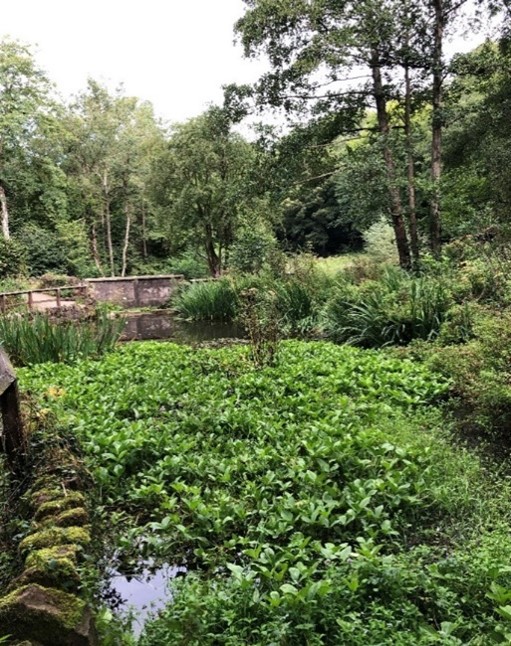
This plant does not do well in the UK or so the textbooks say, they die when temperatures get down to single figures. I do not know the streams that flow through the ponds of Portland park so I wonder if there might be some continuity between warm waters entering at some point close by related to the abandoned mines workings in the area. It is not that minewater is coming to the surface, but some form of syphon or other mechanism might be in play.
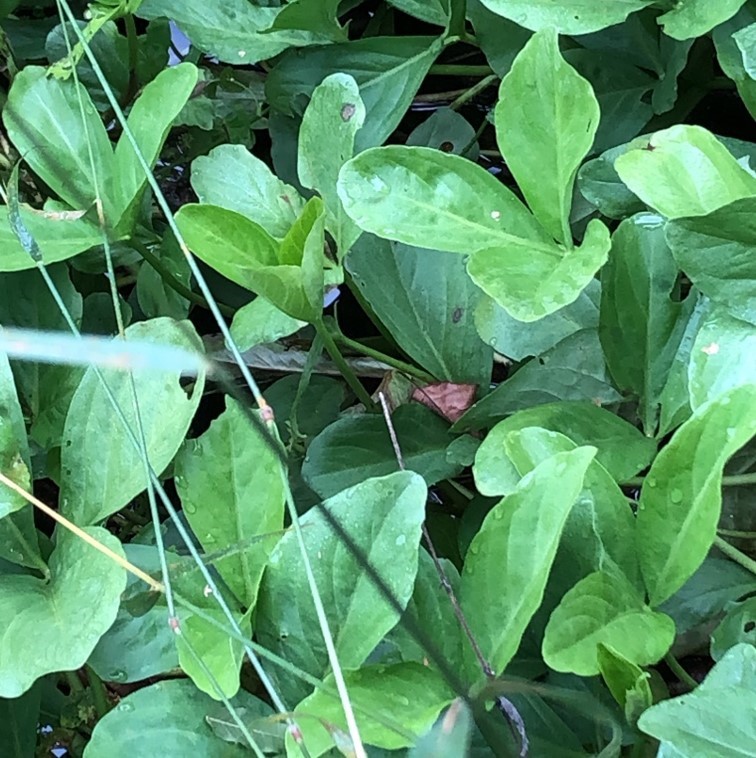
The appearance of this plant is not just a conundrum to be wondered at but a chance for real research. Issues as why it is able to thrive in such a location, one of the highest and coldest parts of Nottinghamshire.