Introduction.
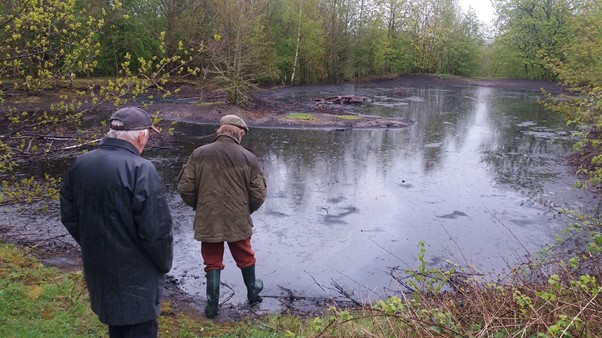
Clean Rivers Trust has been in discussion with several interested parties with regard to our methodology use of willows as part of a phytoremedial trial underway at Cinderhill, Belper, Derbyshire. The substances being treated being the wastes resulting from the recycling of sump oils during the 1970s. Other material present being waste metals, slag, fullers earth and builders’ rubble amongst other things. The site was viscus on the surface with an abandoned car reck protruding from the surface. The tar when squeezed produced copious sulphuric acid, a constituent part of the oil recycling process used in the 1960s and 70s.
There are several (at least 40 (Sky News and Amber Valley Borough Council) sites across the UK where waste oils and tars have been deposited in abandoned clay pits and stone quarries and are now being considered for treatment. It is now recognised as an unacceptable historic practice to maintain the presence of such sites which are a hazard to both wildlife and the local communities in which they are located. Several of these sites are recognised as IIA special sites of contamination under the Environment Act (1990). This meaning they are a threat to human health, water, and air quality.
Currently and historically such sites have been decontaminated by excavation and treatment with hydrocarbons taken for incineration in cement kilns, the acids removed, and other contaminants reburied on site in constructed cells and concreted over, other sites have seen the whole matrix of wastes mixed with cement and the capped off with concrete (Halifax, Nova Scotia). There are several other methodologies that have been employed including excavation and disposal at sea (Ministry of Transport/Derbyshire County Highways Authority, 1976) or reinterment in a concrete containment cell at a specialist landfill site. The costs of any of the options currently favoured running into tens and hundreds of millions of pounds depending on size and volume of wastes to be treated.
The Cinderhill tar pit remedial trial was granted to Clean Rivers Trust by Harworth Group in April 2018 when the Trust offered an alternative solution to that offered by their site consultants. That method was to cost conservatively in the tens of millions of pounds and would have required the removal of much of the site’s naturally regenerating woodland. The Trust offered to conduct a trial of a bespoke nature that could be targeted at the sites of contamination without the removal of any of the wildlife habitats that had already redeveloped within the site boundary. The area had already been surveyed for its ecological value and was noted for high densities of amphibians including several areas where there were populations of Great Crested newts.
The Trust put forward a proposal to Harworth that was based on phytoremedial methods that used a selection of methodologies that had been individually assessed over the last twenty-five years by the Trust during previous research projects.
The part of the site for the trial was an isolated deposit set apart from the rest of the contaminated site. This area was about 5002 M and totally unvegetated (the depth of the tar was accepted to be to 11 M in parts). The surface of the tar was flat, and precipitation run off was acidic (pH0 to pH1). The site border was notable for the number and variety of mollusc remains; their shells having been eaten away by the acidity of the surface water runoff.
The site was fenced several years prior to the project at the request of the Environment Agency to Fuchs Lubricants, an international company who had purchased the company Silkolean who were responsible for the acid tar originally. Fuchs at times maintained the fencing.
Project Requirements.
The parameters of the project were laid out by Harworth in conjunction with the Environment Agency, RSK Consultants and Amber Valley Borough Council.
The parameters and objects of the trial:
- Stabilise the tar surface so as to be safe to walk on.
- Remove the petrochemical smell coming off the site.
- Remove risk of human accidental contact with the tar or acid.
- Stop people having access so as to walk across the site.
- Neutralise the acid runoff from the surface.
- Break down the tar structure.
- Break down the PaHs.
- Green the surface of the site.
- The project was to be conducted over a two-year period. (The project has though continued now for four years and is about to enter its Fifth year.)
- The University of Nottingham was to monitor the site independently of Clean Rivers Trust and draft a report on their findings, this was funded by Harworth.
The bodies involved in setting the parameters required a full risk assessment and plan to cope with the expected outcomes:
- A plan of mitigation was prepared in the event that the acid tars allowed the tons of compost and trees to sink into and below the surface of the tar surface.
- Plans for the extraction of workers from the surface of the tar if rendered unable to move.
Materials.
The project was sanctioned to begin in the last week of May 2018 when the site could be laid out.
The ‘shopping list’ of materials was agreed for delivery the week prior. This included:
- Spent mushroom compost.
- Lime 50Kg. This amount was spread across the site over 4 years.
- Willow wands and cuttings. Makeup of the types of willow was decided in consultation with the growers, and included Scandinavian clones, also Salix fragilis, and several other varieties that the supplier thought of merit.
- Wheelbarrows.
- Site gas monitor.
- Water pump and pipework for irrigation.
- Locked container for secure storage.
- Tea bags and a means of boiling water.
Prior to Planting Actions.
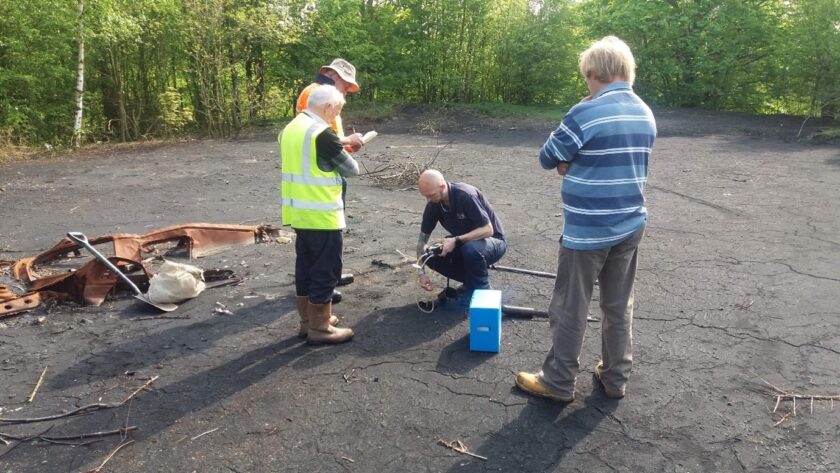
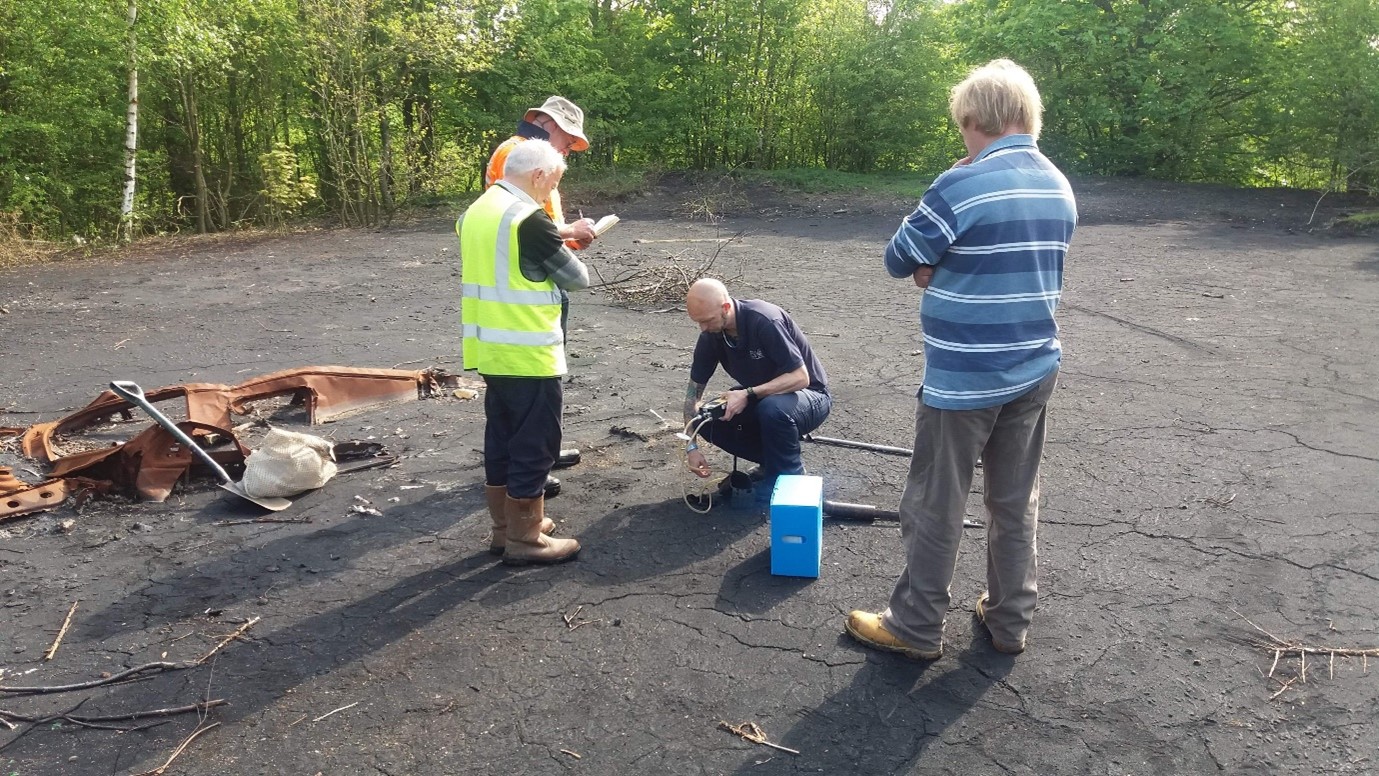
- Gas monitoring and sampling from the surface of the tar.
- Seal the old tar spill areas with wooden boards.
- Repair visible site fencing.
- Cut back low tree growth over the site to enable easy access to the site edges.
- Monitor acidity on surface of tar pit.
Methodology.
The work to lay the compost and place the willows in place was planned for the last week of May; the time span for the work force of 10 was shortened by a day due to the Spring Bankholiday, preparatory work was though conducted prior to the Tuesday start by volunteers (5) who prepared the materials in readiness for placement.
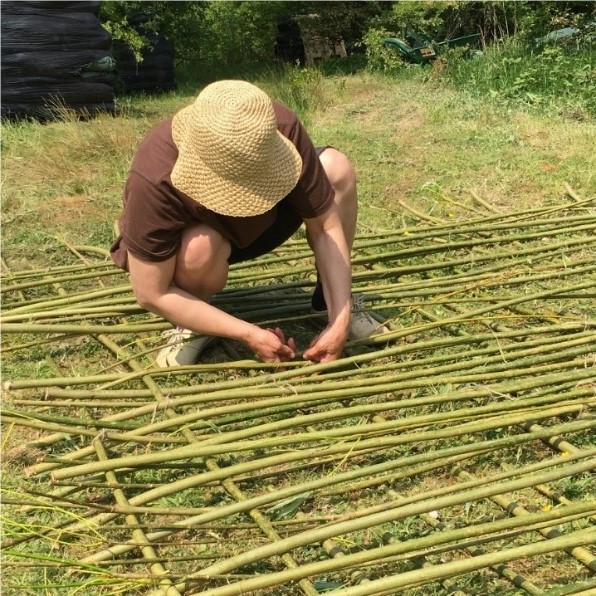
Tuesday saw the site half covered in compost which was completed on the Wednesday afternoon with the majority of the willow placement. The rest was completed by Thursday afternoon. The creation of willow mats using string was curtailed by group agreement due to the time it took to create them. A similar effect by lying willows flat on the compost in a grid formation was favoured for much of the site (the grid formation without being tied together did not fare so well during the three-month drought that followed the planting.) The whole of the three days taken for putting the willows in place was carried out in a mixture of light and torrential rain
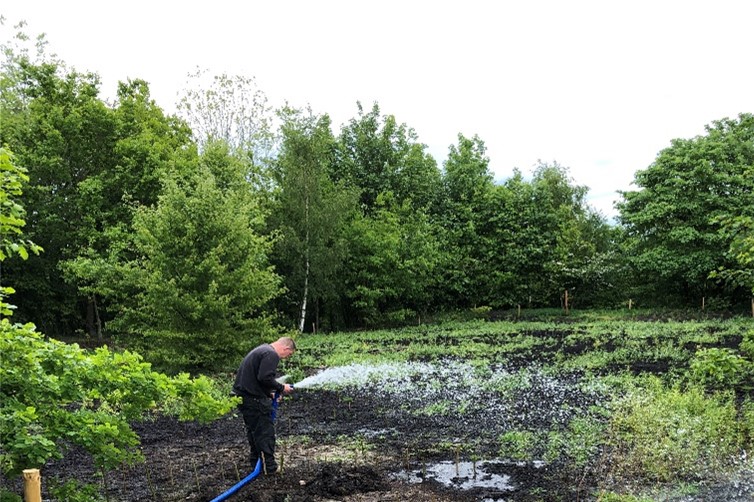
On the last day of the week of planting the site was checked and tidied up. The day was warm, and the site was irrigated from a nearby pond as planned. The next three months the site suffered severely from the drought even though it was watered with twenty tons of water at least twice weekly throughout the period.
Parts of the site planting were cooked by the heat with surface temperatures of 40oC. areas which were afforded some respite from the constant sun by shade from surrounding trees fared much better.
First Year Growth.
3rd Week of June 2018
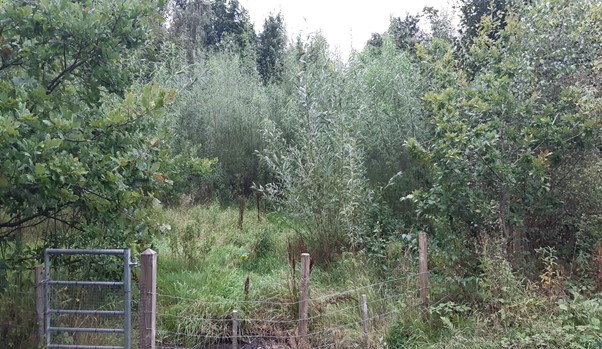
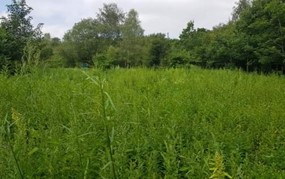
The willows sprouted an initial flush of green across the site with some parts achieving over 50cm of growth within the initial two months. The areas where severe weather had inhibited the growth where not stopping it completely was limited to 20cm. At the end of the first growing season the site was over 60% green, and it was agreed with Harworth and the Environment Agency to partially replant some areas and cover the willows with a top cover of compost. (The second layer of compost being part of the original specification for the plan.)
Mulching and Replanting.
This took place in January 2019. The willows used being Scandinavian hybrid stock that had demonstrated residence in the first year of the project.
The compost was laid across the site using a five-ton tipper truck that had no problem on the surface of the tar pit, demonstrating the work on site had already stabilised the tar surface across the entire site. Forty tons of compost was distributed across the site and raked into place by hand.
The replanting was of willow wands in places laid flat within the new compost and cuttings place vertically through the compost. Some being hammered into the tars below.
2019 Growth and Dieback.
All the cuttings and wands sprouted along with the previous year’s planting; rapid growth took place along with a rich grass layer of understory with other plants developing.
Early in the growing season it was decided to put a bore hole down at the western side of the site to see what was happening at various depths to a maximum of 4m. During the sinking of the borehole a visible cloud of gaseous material was liberated from a pocket within the tar. Instantly all the willows within a metre of the hole drooped and for four metres downwind the same occurred. Unfortunately, this defoliation was so severe that the willows did not recover. Those trees at the periphery of the gas cloud took on a spirt of growth.
The second-year growth demonstrated the attributes the willow possesses with regard to managing gases through their structure. (Willows expel gases they pick up via their root systems: vented via their branch, stem, and leaf nodes.) Several times in the growing year the willows at various points about the site were partially defoliated, one two or three plants at a time and after each event defoliated vigorously. The nature of the willow in the act of decontamination is to be used as a tool and not just a tree. Much of the work a willow does is to act as a delivery mechanism, transporting bacteria present and naturally occurring on the tar down with its roots. Waste gases being expelled via the roots and vented from the body of the plant like an exhaust.
Maximum willow growth achieved across the site was up to 2M, with an average of 1.25M.
A small amount of irrigation was required during the year. Eight loads of twenty tons of water were needed through the growing season.
Winter 2019/20.
The site was monitored regularly throughout the winter period with no actions needing to be taken.
Spring 2020 to Present (March 2022).
The site has been monitored with sampling of tar substrates across the site.
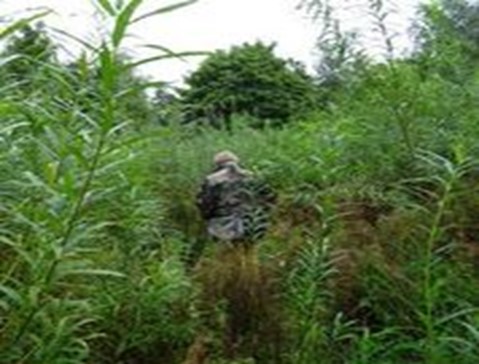
Willows vary in height across the site from 2m to >5M.
The site has suffered from gas venting from deep cracks one north south, the other from west to intersect the north south crack. The volume of gas vented must have been significant, the defoliation went beyond the site to effect trees beyond the site. The defoliation was felt to have killed a considerable number of trees across the site, but this early spring (2022) is demonstrating at least 90% of the trees have survived.
Whilst investigating the crack after the gas event it was found that the tar in the area of the cracks had mixed with the overlaid compost. This action appeared to have been carried out by worm activity to a depth of 1M. The understanding that worms are now present along with slugs demonstrates that the acidy has been neutralised to a considerable depth (1M).
This discovery suggested that a further dressing of the site with compost would be beneficial to the plants. This was conducted in the last week of February 2022 when fifty tons of compost was laid on the surface. This was wheelbarrowed between the tree as no available routes foe motorised equipment exist any longer.
Project Requirements Met.
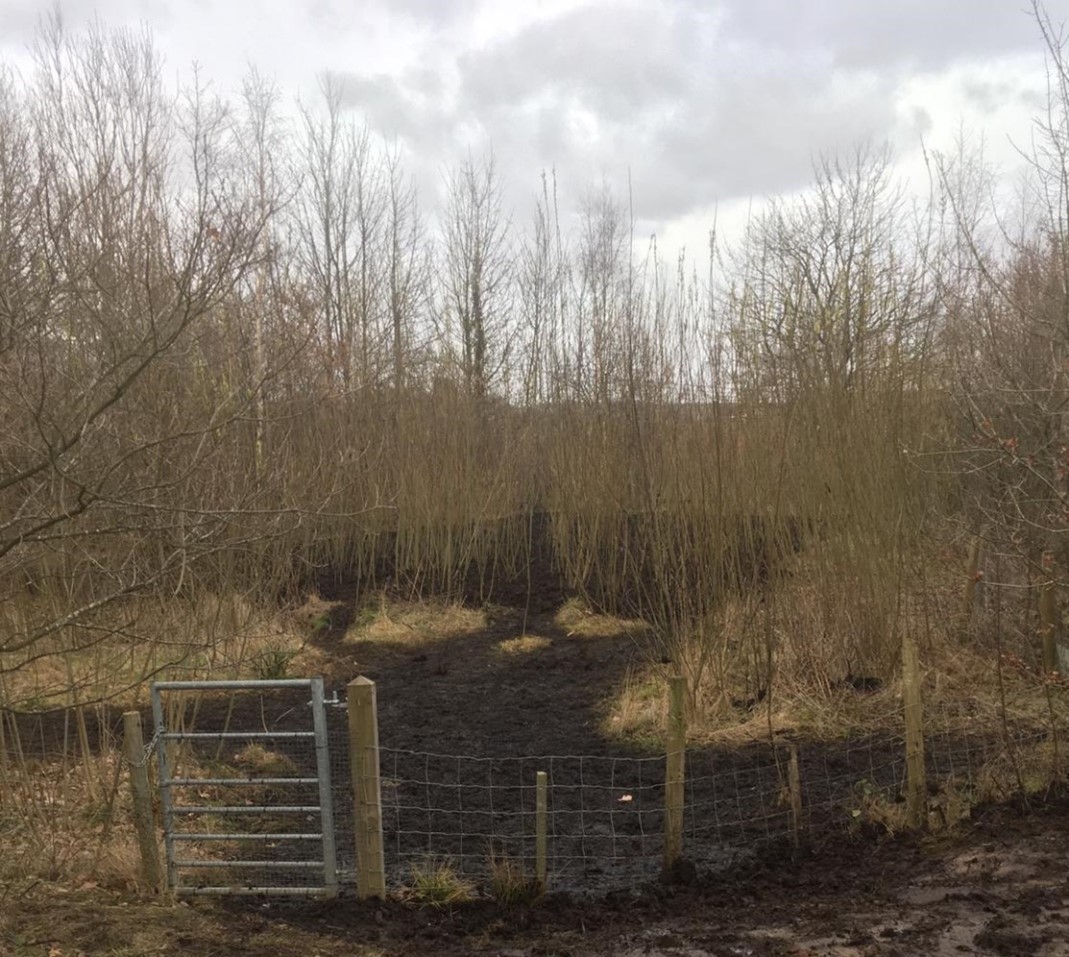
All the requirements of the project were met inline with the time scales set of two years. The surface area of the site is no longer carcinogenic and there is nor surface acidity. Water standing on the site after rain has been found to have a pH7.
The smell of hydrocarbons disappeared the day compost was spread across the site. The smell is only encountered today whilst digging beyond the root systems or boring into the tar.
It will take some time for the willow roots to penetrate to the bottom of the tar pit. This was accepted, as the link between the risk to human health and accidental exposure has been broken.
Misapprehensions.
- The weight of what is placed on the tar surface will make the tar well up and engulf the material placed upon it.
This was considered unlikely due to the distribution of the loads across the site surface. As the roots developed, entering the tar stability is increased markedly (Flanders Dredging Pond Stabilisation. 1986).
- Leaf drop allows contaminants to stay within the site.
The level of metals is small within the tars (Imperial College 2018). Any metals held in the foliage and body of the trees will if returned to the soils be held in a non-available form as was found at Tregembo Marsh, Cornwall (Brown. M. 1995).
- Willows will need harvesting and incineration or smelting.
As above the metals content of the plants will be low, as found in sampling in 2018 and 19 (Imperial College). Any build up will be in a non-available form within the developing soil structure. (Brown. M 1995).
- Willow roots will break the integrity of void holding the tar.
Willows grown in a clay lined hole will not leak around the roots as the clay and root create a seal.
- Loss of some willows will allow the decontamination to fail.
The loss of trees when close planted is to be expected as they outcompete each other for space and nutrients. In the case of willows, they can/will eventually grow up to thirty metres in height. A decision as to future care f the willows on site will need to be taken in the next couple of years as to leaving them to grow to their natural proportions or pollard and use the future waste wood as cuttings and whips for future projects.
Problems Met Throughout the Project to Date.
Environmental Betterments.
- Animal actions: sheep, deer, rabbits, badgers, and squirrel have been found to damage planting.
- Great Willow aphid has appeared at several times.
- Tapioca Mould.
- Tapioca moulds occurred once in 2022.
- Scepticism.
- Vandalism.
- Amphibians found on site, Great Crested newts, frogs, toads, and grass snake have been found on the site.
- Deer, badgers, and foxes have been seen on the site.
- Snails and slugs have been found across the site. A Ghost slug (Selenochlamys ysbryda) was identified on site, the first identification of this species in the East Midlands.
- Increased avian population.
Visitors to Site.
There have been 2 Community Open Days.
Environment Agency local teams, both contaminated land and water quality teams. National contaminated land team. Others who expressed an interest.
Local authority Science Officer.
Natural England.
MoD
Coal Authority.
Fuchs Lubricants.
Several environment consultancies.
Trent Rivers Trust.
Derbyshire Wildlife Trust.
Derbyshire Ecological Society.
Nottinghamshire Wildlife Trust.
Warwickshire Wildlife Trust.
Managing Director of Longcliffe Quarry.