Introduction.
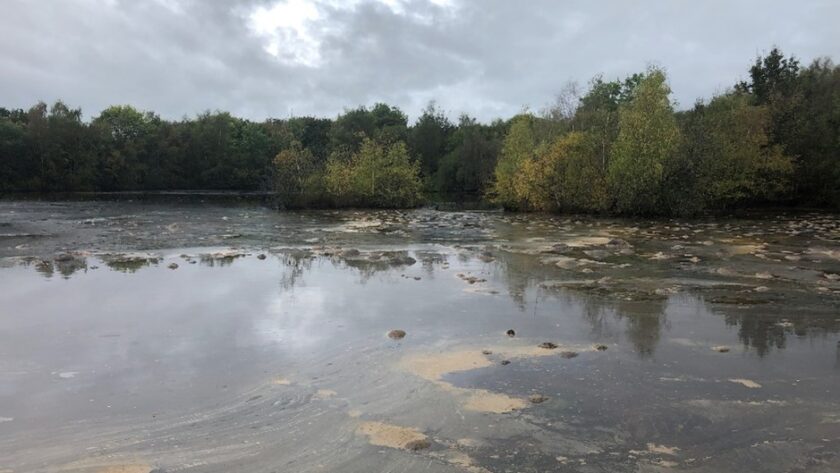
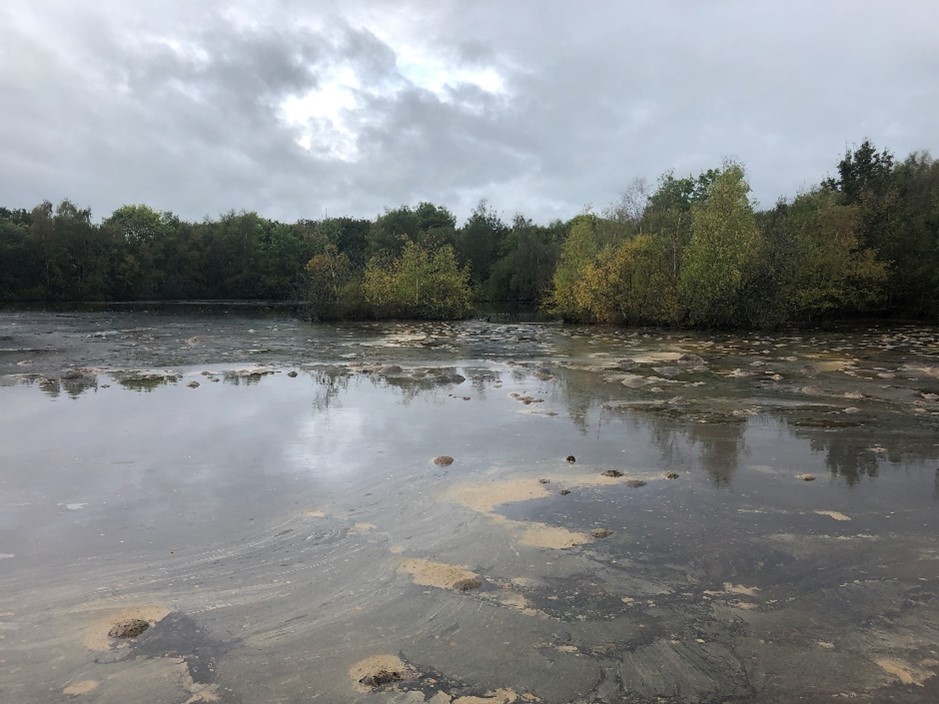
The tar pit at Hoole Bank was created within a worked-out brick clay pit in the 1960s. Since then, one attempt to cover the surface was conducted in the 1970s when a layer of brush timber was laid across much of the surface and other material, builders’ rubble and soil were deposited upon it. The added material sank within a month across much of the site raising the acid tar level correspondingly. This requires an earthen bund to be thrown up to retain the tar/oils within the site from overflowing the site. This bund, on inspection is not fit for purpose and is allowing hydrocarbon seepage to enter the local tributaries to the River Gowey, an ecologically diverse and important watercourse.


The tar pit, due to the bund has developed a large, standing water cover over much of the site. This water environment has allowed the bacteria that have spread across the tar pit to develop in a very noticeable manner. The water cover is stated (West Cheshire and Chester Council) to be 0.90 M deep across much of the site. The water is acidic (pH1.5 to pH2.5). The tar seepage beneath/through the bund and entering the local drainage system is pH0 to pH3.
Proposal.
Prior to any operations taking place a full walk over and discussion with stakeholders needs to be undertaken. This may/will impact the final methodology used and risk assessment.
2.1 Clean Rivers Trust proposes that the site is a project that they have the competency to carry out satisfactorily. The size in relation to that of our research site is not an obstacle. The size of the Hoole Bank tar pit may be considered an attribute in that it allows for the use of equipment and methods that will be justified due to its scale. The cap of water is also a considerable aid rather than a hinderance.
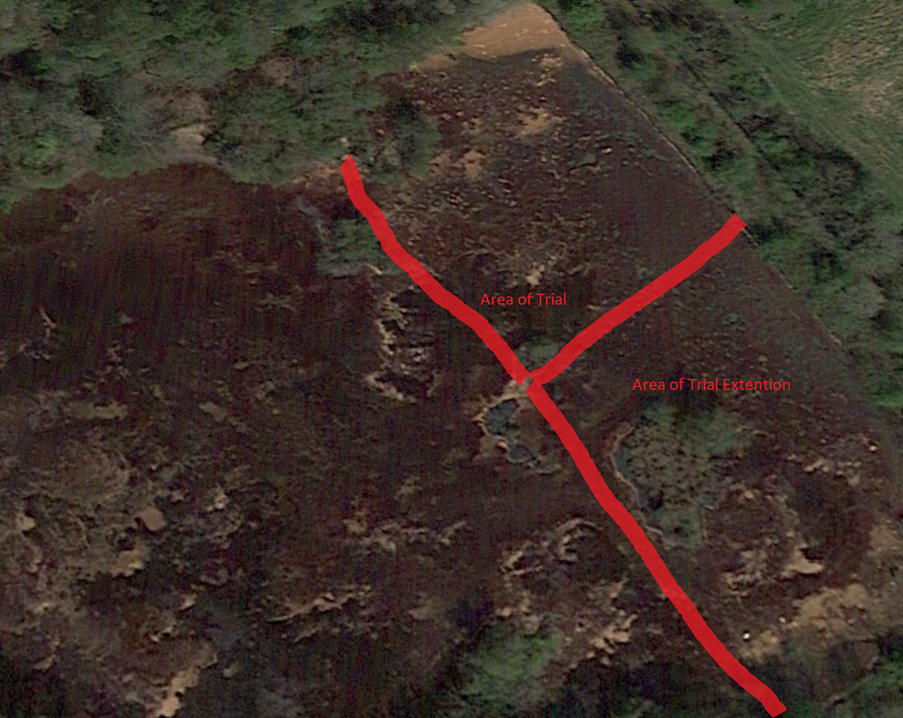
2.2 There needs to be a trial carried out onsite. The area best suited is marked out on Fig 5. It would be a reasonable expectation that as the trial demonstrates progress it might expand as indicated.
2.3 The initial work on the site will be the stabilisation of the bunding, especially around the edge of the working area. This task will allow a safety margin for those active on the surface of the tar. (Method Statement)
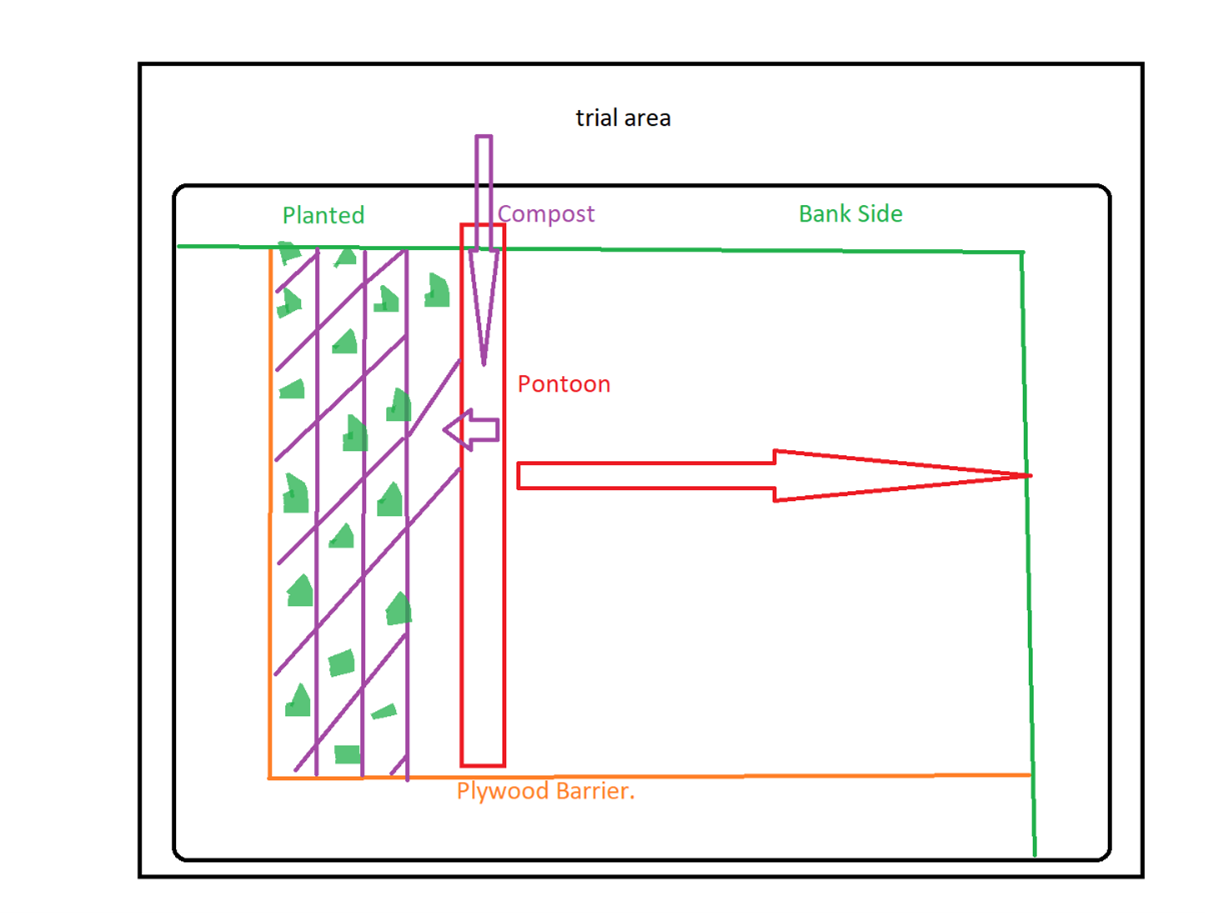
2.4 The area for the remedial trial may be marked out at this time: taped boundaries marked out, and boards (marine ply) installed from a pontoon punt, (with winch attached to shore (H&E Statement).
2.5 The boards to be fixed with stakes into the tar to give stability to the trial area margins during the placement of compost and willow planting.
2.6 The area of proposed operations needs to be surveyed.
2.7 The depth of water, condition of the tar and bottom contours understood. This is vital to the understanding as to the volume of compost the site will require.
Method Statement.
3.1 A survey of water depth above the tar using both sonar and avalanche probes.
3.2 The marine ply dividing boards will be fitted following tapes laid on the tar water surface. The boards will be placed using a punt or pontoon, dependant on water depth and condition of the tar.
3.3 The boards will be embedded into the tar surface and held in place by stakes and either rope or screws.
3.4 At this stage a full methodology can not be finalised but will involve a pontoon that can allow compost to be placed onto/into the waters in a safe ands controlled manner swiftly followed by planting. The amount of compost will vary per metre of travel depending on the tar deposit depth below water level.
Bank Stabilisation.
4.1 The bunding around the tar pit is in places not sound, leaking and of concern.
4.2 The bank side to be assessed and planted with willow cuttings that will stabilise the bunding.
4.3 This can be done prior to work on the tar pit itself or in tandem if it is felt that the majority of the bund can take the additional strains put upon it during the trial remedial works.
Health and Safety Statement.
5.1 All activities conducted on site will only be undertaken after risk assessments have been conducted with the participation of relevant stakeholders.
5.2 Until official access to the site is granted by the Environment Agency no further progress in this area can be made..