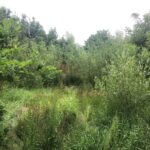
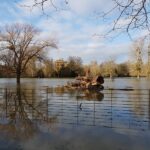
Belper is a lovely rural country town in Derbyshire. Easy to get to and a centre for walks towards Matlock or along the River Derwent also the Chevin and Firestone Hill close by the charming village of Hazelwood Hill. The area is a World Heritage Site with historic mills along this stretch of the Derwent, one of the great rivers of England, a major tributary of the River Trent and hoped a future spawning ground for Atlantic salmon as they return to this major Midland river system as it redevelops
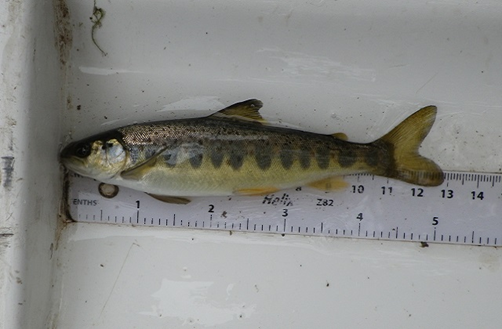
Salmon Parr caught at Duffield just downstream of Belper in 2016. (Environment Agency)
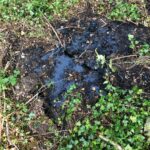
The local countryside is beautiful but there are horrors hiding in discrete places. Some are indicative of a major industry that has long departed from the area. The sites hold waste deposited by the Silkolene company, a branch of Dalton and Co, a company set up in 1908 to supply veterinary oils and medicinal products to the local vets. This company changed direction after the First World War with the increase in motor transport to refining mineral oils. With the outbreak of the Second World War re-refining of used engine oils became a vital part of the war effort and many millions of gallons were recycled in Belper. Oils were re-refined to standards to meet the needs of the RAF and after the war, the aviation industry and motor sports.
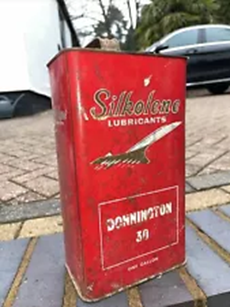
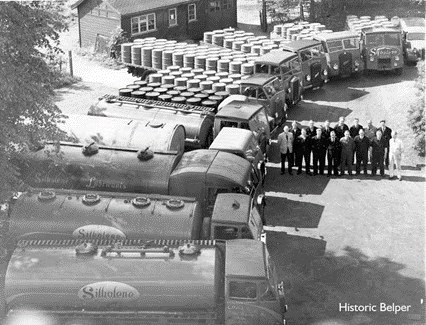
Much of the waste materials that were concentrated by the cleaning of waste oils was (it is believed) was burnt but by the 1960s the wastes were rerouted to landfill. Old quarry voids at that time were cheap to buy and other holes in the ground were also available to take the substances that were collectively known as tars.
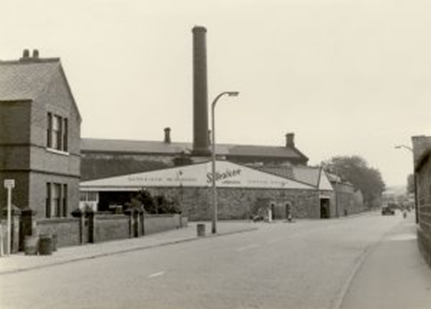
The process of cleaning or re-refining oils required the use of sulphuric acid that stripped away the waste fractions from the oils. The resultant waste being not just an oily tar sludge but also a highly acidic (pH0 to pH1) material. The wastes had their own tanker, small enough to travel on country roads and tracks that could negotiate the routes to out of the way holes in the ground that were used for the wastes’ disposal. It was hoped that at least some of these tars would solidify over time and would allow the sites to be covered over with soils and other materials hopefully ‘lost’ for ever. Several sites are today unlocatable. Few records of the early sites were kept and in one location is only identified by the hydrocarbon smell that is the name now given to a piece of woodland just outside Belper, Oily Wood. Reported sites at unspecified locations exist near Wolverhampton and Walsall in the West Midlands.
There are other repositories around this World Heritage site, Firestone Hill and the Chevin to the west of the town are considered beauty spots but tucked away in what are thought of as nature reserves several quarries are filled with acidic tar waste along with a World War Two ‘pill box.’
We have been assured that even the adjacent golf course has tar buried on site, though not confirmed.
To the East of Belper are another set of acid tar pits and an acidic lake, polluted by overspill tar. This site was used by Dalton and Company in the 1970s to lose many thousands of cubic metres of acid tar wastes. The last waste material being put into the lagoons at Cinderhill in 1978 when new legislation was passed by Parliament and enforced by Derbyshire County Council.
Dalton and Co. Silkolene were acquired in the 1990s by Fuchs, the Germany based international lubricants giant. The refinery at Belper was closed, and the company moved to Stoke on Trent. The acid tar is all that remains of the company in the area. This legacy is a major issue that needs attention.
Clean Rivers Trust is working on the site at Cinderhill, and results are more than encouraging. The other sites will be, we hope on our agenda going forward.