Introduction.
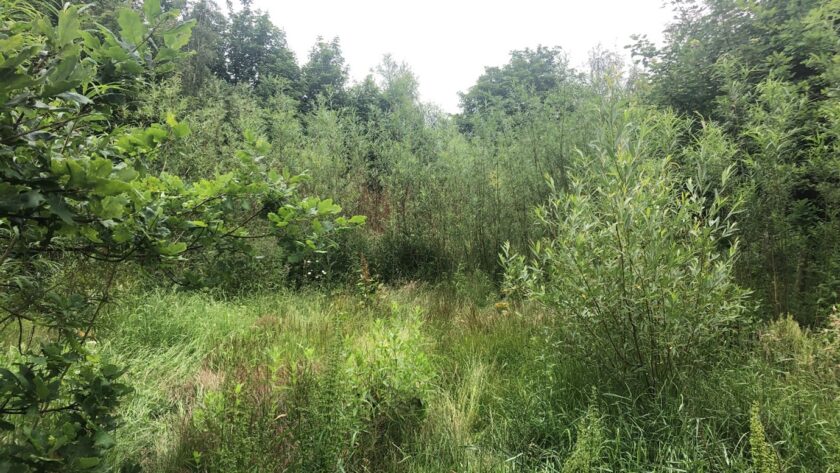
Our demonstration project now well into its third full growing season has over the last few weeks demonstrated the importance f the choice of willows, the planting and care of the plants in their establishment on such a difficult and toxic site.
Events.
Two weeks ago, we took a guest round the site to help them understand what we had achieved, what the site had to contend with in relation to the difficult conditions the trees had to grow in, the problems they were subject to and how such plants coped and still manage to flourish.
Acid tars are amongst the most inhospitable environments that one might wish to plant trees. The ground is by its nature acidic, pH 0 to 1, gas venting from the ground, some of which are extreme defoliants, and the plants are also taking up metals, including lead and chrome into their metabolism.
The visitor looks somewhat shocked that a 2 to 3 metre swarth through the site’s willows appeared to have very recently died off. We identified a crack in the tar and compost running north south through the cent6re of the apparently dead trees, a smaller east west fissure was also apparent. The site has been surveyed regularly over the last three years and prior to the planting. The site surface has been noted as having dropped by a minimum of 5 cm in depth since the outset. The stresses on the tar surface with the contraction of the fill was demonstrating the forces and stresses that the acid tar fill was under. Such contractions cannot go on without some form of major gas expulsion taking place. Smaller such discharges have been noted in the past, small volcano like ‘eruptions’ had been common in the early months of the project. The willows, we have noted, have the ability to wick and shed gases through their nodal system which can course localised leaf drop at times.
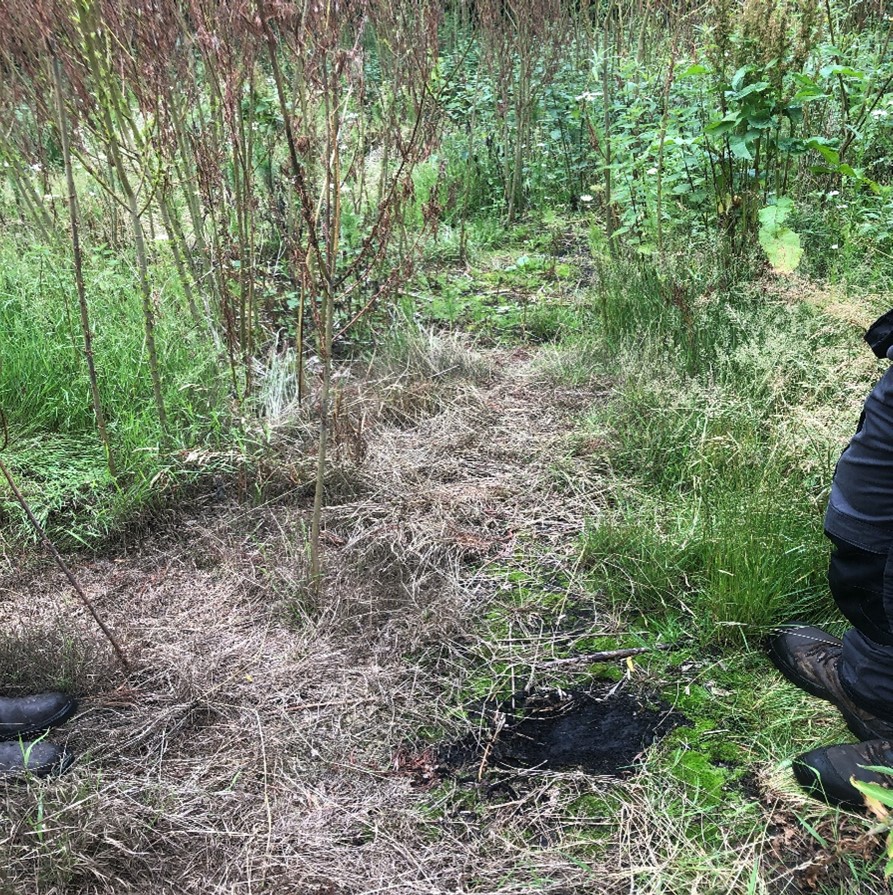
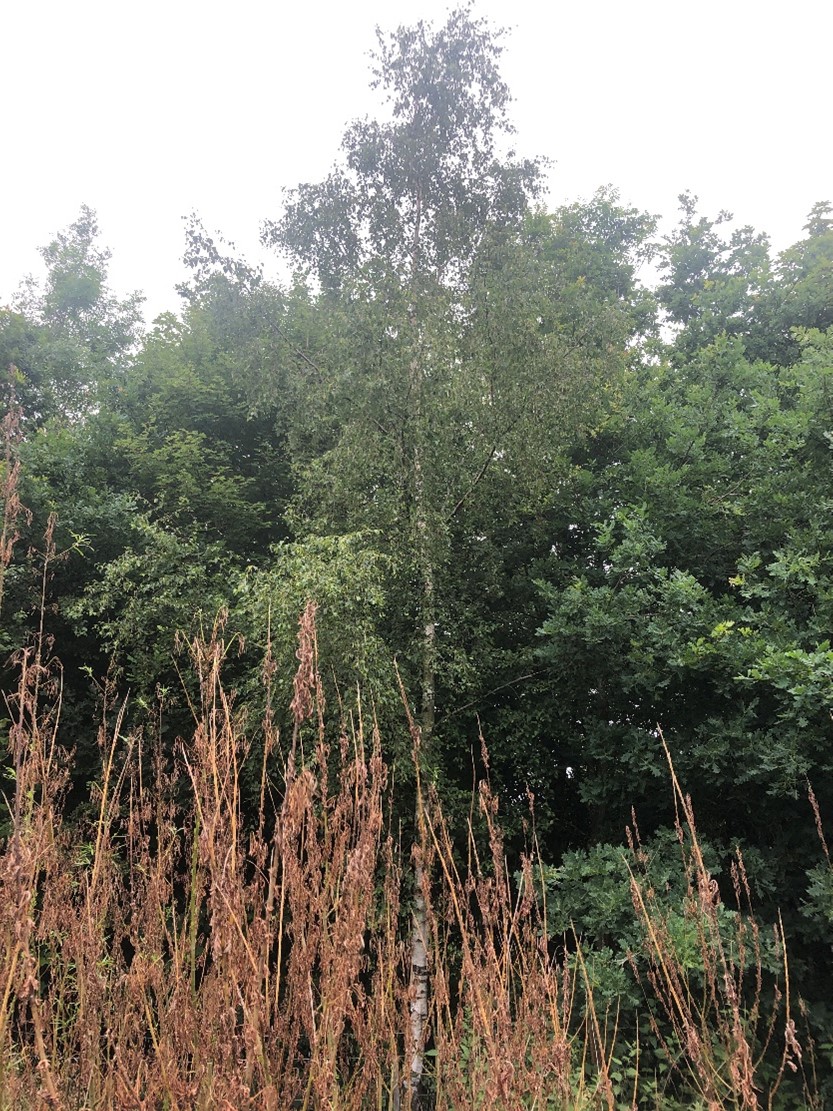
We realised that the event had not been a major gas venting from leaf nodes, though that was noted to have taken place at some other tree locations round the trial site. It had been an ‘eruption’ from a fissure in the surface of the tar itself. The grass and even the surface mosses had suffered along the tangents of what appeared to be destruction. Surrounding established trees, that surround the tar pit also appeared to have been affected, the silver birch in the 1st photograph demonstrating this effect well. This was the second such ‘eruption’ in six weeks, the earlier one had not been as destructive as the second but was notable in that it had apparently been triggered during a short period of drought. This second appeared after a month of little rain (2mm). A deep pair of cracks had developed both north south and east west that had allowed the surface to part.
This parting in the ground showed the thickness of compost had decreased from what was originally laid down and in one area there appeared to be only a couple of inches of cover, one small area showed the tar had solidified and had become crystalline whilst most showed the tar breaking up and mixing with the compost of the surface, producing a form of loam. The mixing being carried out by worm activity following the progression of the willow roots into the tar allowing the bacteria to start the process.
In the first defoliation event the trees sprang back into leaf swiftly and the effects on the vigour of growth was not marked. This second event was though more concerning. Die back of foliage has not been seen on this scale has not been witnessed before.
After the second event water was applied to the site in large quantities (40M3) to negate the lack of rainfall, which followed in the following days. After a week it was observed that new leaf buds were developing on some of the willows.
In the second week the majority of the willows were returning to leaf in a vigorous manner.
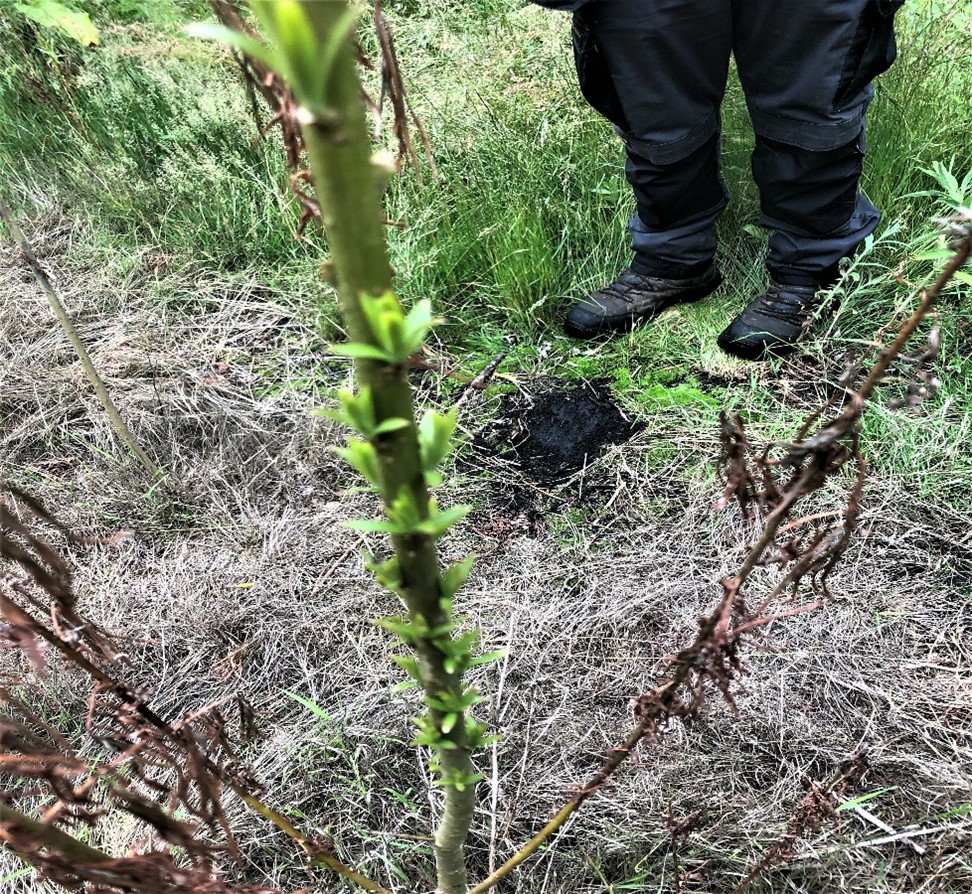
Many willows were found to have developed new leaf sprouts from the ground surface of the main trunk to the tips of their highest points, some being 3 and 4 metres in height. The grass and mosses were also observed to be regreening and recovering well.
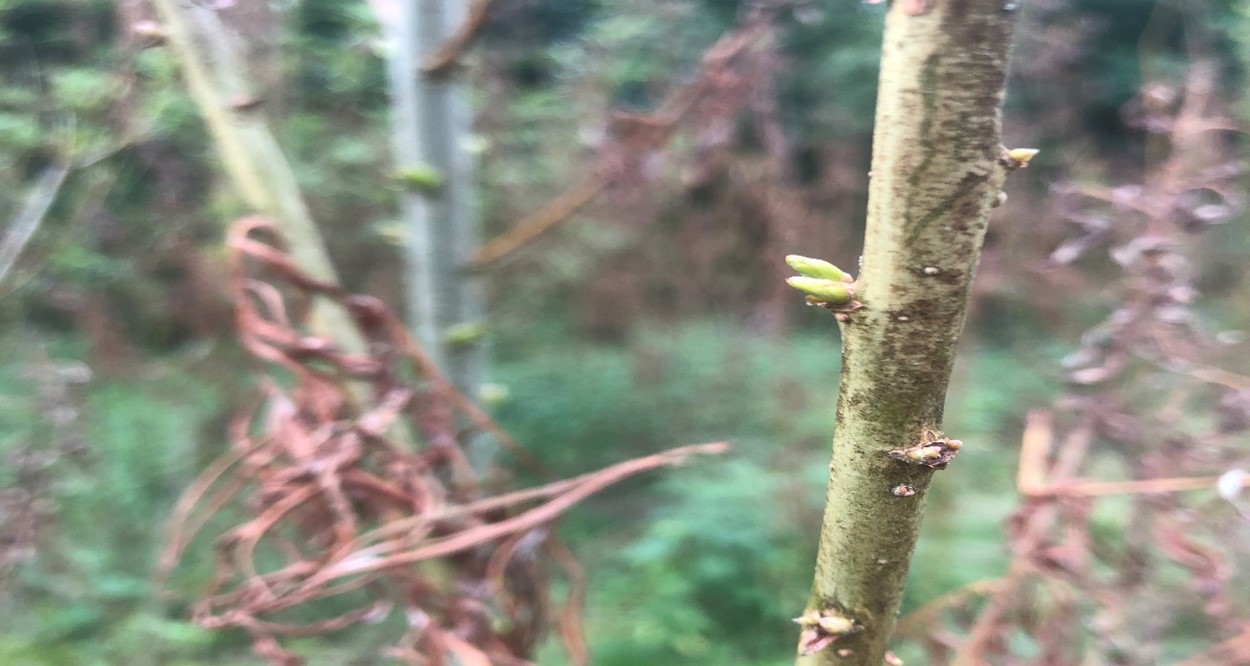
The willows surrounding the effected area showed no ill effects and their growth had been unaffected by the cataclysmic events that had taken place only centimetres away from them with increases in both height and girth of the young trees.

Specification of Trees.
This area of the process can not be downplayed. The need for a robust and able plant being desirable due to the unusual and difficult environment they will be forced to thrive in. Over tree years the Trust has trialled a large number of species of willows and other tree varieties put forward in the literature and by horticulturalists and experts in phytoremedial works. We have worked with nurseries and others and have developed a base of understanding that has allowed a select group of willows, mostly biotypes used in the wood chip industry for power generation to go forward for use.
These types have a range of abilities, most are swift to grow and as per most willows manages acidic conditions well. These though appear to do best with the highly acidic conditions expected on an acid tar filled pit (pH0 to 1). Some species that did poorly at the outset have managed to settle into their location after two years of acclimatisation, particularly the Japanese form which in its colour and fine branched structure appears to be a highly decorative addition to the planting.
Native Crack willow has not achieved its hoped-for position in the most hardy and would not be considered a suitable candidate species in soils with a pH of less than 3.

One species that grows around the periphery of the site, Goat willow has not been trialled due to it not being easy to plant as cuttings. The possibility of seed germinating on the site is though anticipated.
Planting.
The use of woven mats of willow wands (up to 2.5 metres in length), the laying out of individual wands and placing of individual short (60cm) cuttings have all been trialled and all have demonstrated their value or not in different locations within trial area.
The Trust is putting together an inhouse tool kit to aid future projects going forward.
Nurture.
The willows need to be ‘farmed’ and as such need to be monitored at regular intervals. This needs to be almost daily after planting through to weekly or fortnightly depending on weather and the state they are in at the previous visit. They need to be cared fore as one would any crop.
The importance of farming is not to be neglected.