I was six years old when I first met the River Deben. The first stretch I was to become familiar with was that which bordered the village of Bromeswell and Bromeswell Common. Bromeswell is a well spread village with, at that time, only three new houses in it, several others had been there for at least half a century, but most were much older. The parish church was set to the eastern edge of the village with the river flowing some way off behind houses and a number of hedges and large willow plantations. To get to the river you passed down the lane past our house, past Mr Edward’s holding and small but ancient farmhouse, around a corner with an expanse of willow plantations, coppiced carr, I know now, but appearing as ghostly silhouettes at dusk to a child. You passed the Crooked House and on the right-hand side of the road, its surface grassed in the centre tar and pea shingle in the tyre furrows which melted in the heat of the summers.
The Common had two entrances to the river, one was a muddy affair with thickets of blackthorn beautiful in May blossom time, rough grass, reeds, and mud. The second opening was broader, more open and separated from the first by a stream. This again was rough grass, but there were only thorns growing to the one side, the tussocks of grass stretching away along the bank of the Deben towards Wilford Bridge with its sentry box where traffic was stopped to try to regain runaways from the Hoseley Bay Colony or borstal. The Track from the road to the riverbank formed a large S and arrived at the river’s brink. A little step, miniature cliff of no more than 18 inches. In part that drop had disappeared altogether eroded by the summer visitors who swam from here. This edge of the river was not mud but a beach, a few well washed pebbles, but really a little sandy beach with fossil shells.
The river is tidal at Bromeswell. The rise and fall of the waters though are small except at spring tides when it invaded the grasses and flooded the far bank almost to the railway line a half mile distant. The tidal reach travels up to the edge of the village of Eyke. Beyond that one explored as far as Ufford where I fished at seven years old after cycling the miles on my own to a red brick humped bridge over the much-shrunken river. The common saw fishermen with nets descend in summer at near full moon to catch Grey mullet from the waters. The fish came upriver to clean around this time of year. The catches were modest but worthwhile for Mr Green the local willow grower. The day after the fisherman had had left the scene one saw the signs that some of the catch had been cleaned and scaled on the bankside, cooked over a fire on the edge of the river, scales were scattered, like confetti at the waters edge..
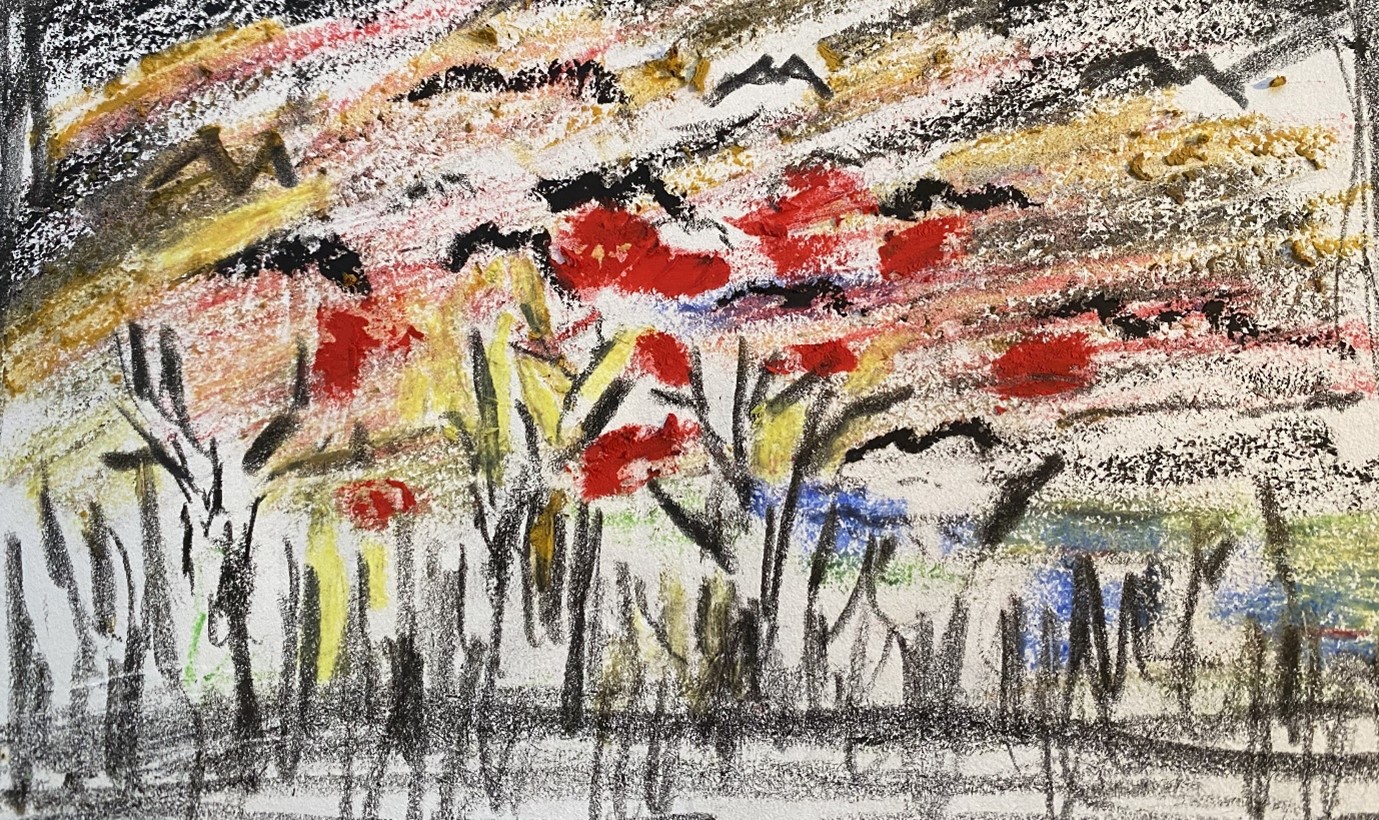
The sunsets of the tidal river remain in my memory, they have been present for sixty years, I painted what I thought was my first real picture on one particular evening of red, violet, black and gold. The only thing that I remember of the scene that I could not represent in paint was the cry, that haunting call of the lapwings or peewit massed across the sunset in silhouette tumbling and rising. The memory survives, unlike the picture.
Memories of the winter of 62/63 again drag the Deben into mind. The harsh cold and walks down to the quay. The ice along the shoreline great blocks of ice in places where after breaking up had refrozen. Right out into the main river channel flat ice with swans having to be broken free from the ice frozen about them. Ducks landing on what they hoped was water finding themselves skidding on the ice to panicked halts.
I loved the area about the old, dilapidated tide mill, red rust and oxide painted corrugated iron clad, creaking in the winds whistling up the river from the sea. Behind it lighting a welcome cigarette safe from view of anyone who might report the heinous act to the school. Similarly smoking along the river wall to Kyson Point. That wind, that wind always seemed from the east in my memory, short trousered legs frozen, red knees but always happy to follow the glow of that cigarette.
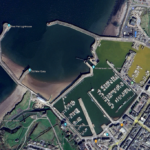
The sound of the sea wall was that incessant metallic tic tacking of the wire halliards vibrating against masts in the breeze. It was an incessant sound coming from dinghies tucked up on the banks or in parks or pounds along the river from the mill to the yacht club set halfway to the Point. There used to be a decaying MTB moored just off the bank close by. No one visited it, so sad. It was school lore that it had been built at the local boat yard in the 1940s.
The river wall path was bleak, set up above the mud, reeds to one side with the church, St Mary’s and the old windmill set against the sky. The other direction was mud, river and more mud and reeds on the opposite bank with small sandhills topped with Scots pine leaning slightly away from the prevailing wind. The site of Sutton Hoo, where no one could go as it was very private and a forbidden goal. Thoughts of longboats coming upriver, grounding on the mud. it made one conjure with the whole issue of history and past peoples’ lives.
Mud and the river are synonymous: I have nearly drowned thrice in my life so far and the second time was when as a seven-year-old I followed otter footprints through reed beds on the edge of the river at Bromeswell. Between two stands of reed, mud, my legs went in and then much else, to my chest. The cloying morass grasped me, a friend I was with found a rotten willow limb and managed to throw it out to me. After a lot of wiggling, I managed to pull myself along the branch till one leg came out and then the other.
My father would walk most evenings with the dog when we lived in Bromeswell to the river, on the way there and back he would show me birds’ nests, in hedges and on the ground, he named each bird we heard, thrush, night jar, water rail, teal, oystercatcher, nightingale, all much more common then. We watched badgers and otter by the light of the moon. Surprised heron would lift from streams and ditches, as did mallard as we passed..
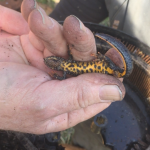
A small stream in Bromeswell introduced me to the communities of life beneath its waters and along its narrow banks. Toads including illusive though noising natterjacks, frogs, newts abounded, caddis fly and their miniature log like lava, wrapped in grains of sand and twigs. Fresh water shrimp, water beetles and water boatmen that skated the surface of the stream. In slower water stickleback and minnows abounded and often came home with me in jam jars.
All this was, as I have said, sixty years ago. Today all is not well on the river. I was fortunate to have had the best of fortunes to have known the river and its surrounding country with friends though more often on my own, it taught me much about the natural world that cannot be learnt from books. The Wildlife Trust and other conservation groups now regulate the access and activities that might be conducted. Worse still much of the wildlife has gone or numbers of species cohorts shrunk. We are to be guided to admire nature from afar. It is though all we deserve as it is us, each of us that has brought this upon ourselves. We have poisoned and polluted streams and rivers to the point that much life has moved on and away from what was a form of Eden.
For the last forty years I have learnt how to find solutions to the destructions humankind has carried out in the name of progress and modernity. I learnt the problems fast, where they come, or came from. This has always been what nature taught me, ask questions; rather than say someone should do something, the question is, for me, what you can do about it. For thirty-two years I have worked to find solutions to pollutions others are unable to counter.
Issues like acid minewater, agricultural fertilisers, sewage additives, heavy metals, acidic tars, PCBs, PAHs, and much else: there is though much more to be achieved as each solution comes into use two more problems raise their heads above the parapet.
The important thing about nature is that its processes have a healing element. Each pollution might be horrendous but there has not been one so wounding that nature cannot fight back. I have had to learn, understand how nature acts in extremis. Acids flowing from long abandoned mines in Cornwall have found methods to bring about amelioration, the same with sewage and its tertiary treatments. In both these cases forms of wetland work. The need is to understand how to speed natural processes up rather than use chemical solutions. Nature likes help to engage its adversaries, but again this speeding up needs one to be aware of nature functions. What I learnt on the Deben when I was six years old I use today.
I trained as an artist; my father though opened my mind and taught me to see. Psychology and science I have also studied, these have combined with the arts to allow a holistic understanding of putting together methodologies and being able to engage with people to encourage others to help put ideas into practise. I have been able to use what I have learnt in my early life to the advantage of the environment today and into the future. Much of what I learnt was on the banks of the Deben.