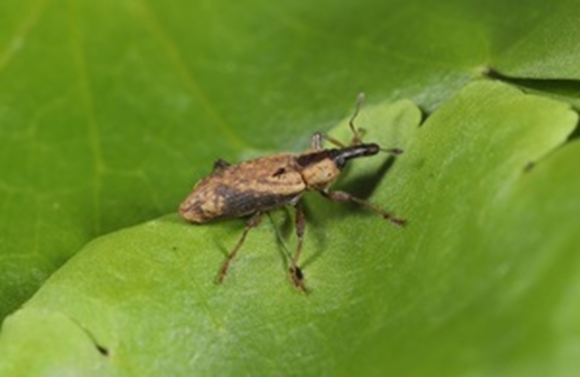
DEFRA, the Environment Agency and the Canal and Rivers Trust has introduced a non-native weevil to the River Soar in Leicestershire to destroy the problem of fast growing Floating pennywort (Hydrocotyle ranunculoides). The Floating pennywort originally brought to the UK as an ornamental aquatic plant is to be controlled and hopefully destroyed by the South American weevil which was sourced from Argentina. The pennywort was banned from sale in the UK in 2014, but still for sale openly on the internet from nurseries.
The Trust is concerned that such an intervention is being put in place, the use by all involved with the introduction of the insect use the term ‘wonder weevil’ which is an unspecific description of type, There are thousands of weevil species that destroy many food plants including palm weevil that are a concern in other parts of the world with regard to food supply and would concern gardeners in the UK.
Listronotus elongatus is now a licenced alien species that is tasked to demonstrate its predelection for Floating pennywort, which suposidly only devours this plant. It has evolved in South America to consume a North American plant. The preference for Floating pennywort may and very likely does masks an earlier preference of food stuff which is at present is unknown and will only become apparent once its present food source is near eradicated. As in Argentina the insect has not eradicated its food source plant; such behaviour is unlikely to happen in the UK. The trumpeting that the super weevil will remove the plant pest and then die off itself is not true. The fabrication of such a myth was spearheaded by the Environment Agency to cover their backsides as they issue consent to let it loose on Britain’s rivers. The Scottish Environmental Protection Agency are being tight lipped about the whole affair.
The Trust has experience of aquatic plant infestations in East Africa where we have encouraged Water lettuce and Water hyacinth from several lakes where fishing, irrigation and transportation were being impeded. The methods used have involved physical labour on the part of the communities the action would benefit. Trawling plants from the surface of the water, raking and other physical methods. Once the initial clearance of the plants was achieved an ongoing management of the plants. The rivers of this country have suffered pest species for years, mink, Signal crayfish, coypu, zander, Mitten crabs, Himalayan balsam and more besides. Is this well trumpeted friend about to join the list in a few years?