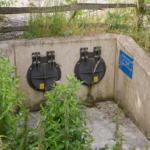
Photographs by Hugh Price.

Parton beach, just north of Whitehaven on the west coast of Cumberland (Cumbria) has been the site of a minewater discharge to the sea for more than 40 years. The ochre staining on the rocks from the culvert mouth is to some extent cleaned twice daily by the rising tides and the actions of the rocks and shingle that are shifted by storm events coming up the Solway Estuary. This pollution is little talked about up till now but due to the pollution that is now occurring in Whitehaven Harbour it needs to be brought into focus. Both pollutions are from the same source, abandoned coalmine workings that are likely to be physically interlinked either the ground or even possibly beneath the seabed.
The mine at Parton was Countess Pit and along with Parton Drift and several other entrances all mined the several seams of coal that dip down from Cleator Moor in the east down to many fathoms beneath the Irish Sea.

The most noticeable pollution problem with minewater is it’s loading of iron that, when the water meets the air starts oxidising out of suspension and coating stream or riverbeds with iron hydroxide. Other metals such as zinc and aluminium may also be present and add to the polluted mix that smothers all life apart from a few microbial groups which may naturally attempt to break down the pollutants

The Coal Board Culvert is 1 mile and 245 yards long from the mine workings that are flooded. The workings are at a higher elevation than the beach outfall as it drains the coal measures of Countess Pit and other interlinked mines by gravity flow. The mineworkings above this point would also fill with water and discharge inland if the culvert and outfall were not in place.

The knowledge that the Parton discharge has been an accepted pollution to the Solway Estuary by regulators bodes badly for the pollution at Whitehaven Harbour. They are remarkably similar in volumes and similar in loadings of pollutants, but the one is only known to a few, mainly local people but the other is known to a growing number. Both pollutions are now unacceptable and there is now an opportunity for both to be removed at the same time. The pumping via a borehole into the mine system between the two locations with a small, low-cost treatment facility could remove two pollutions for the price of one.