Cinderhill Tar Pits.
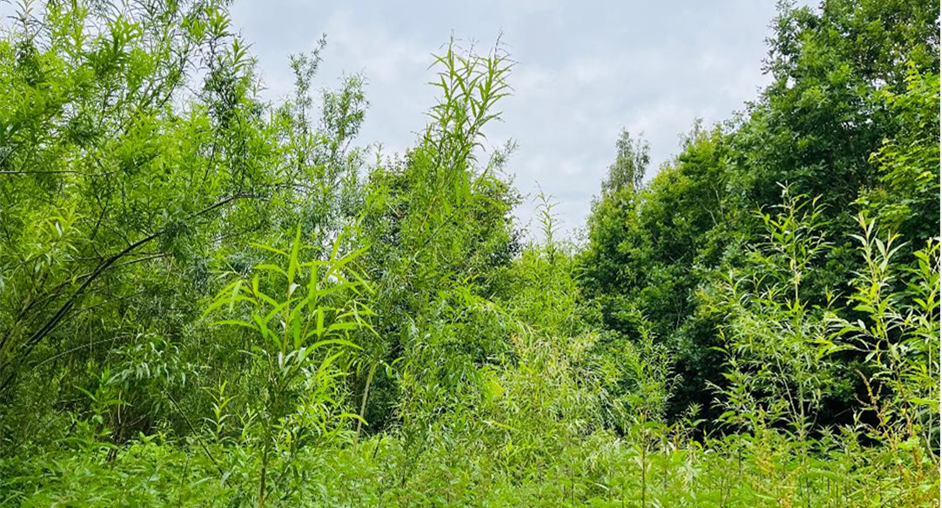
The site is now green, trees both planted and now natural generation of seedlings. Nettles, huge docks and thistles, even Himalayan balsam. Trees, willows, and poplar which have been growing since the site was planted are up to 30 feet tall, some which were destroyed by vandals and overdosing on contaminants are regrowing with some putting on four to six feet in a month.
Cinderhill Biodiversity.
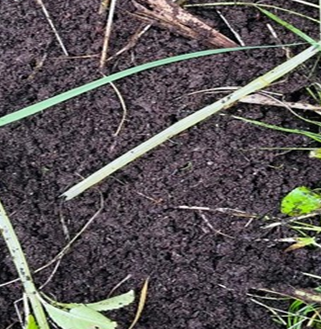
he remarkable changes taking place are not just the changes in the tars brought about by natural bacteria and fungi. Life on the surface is developing: the first ants’ nest has been established on the site in the last few weeks. A small test showed that the nest was at least 0.75 metres in depth. This is only the latest part of creating this new ecosystem. Slugs, snails, newts, frogs and toads, earth worms, birds, deer, foxes, and badgers all pass though the site rather than passing around the edges.
Cinderhill Acid Lake.
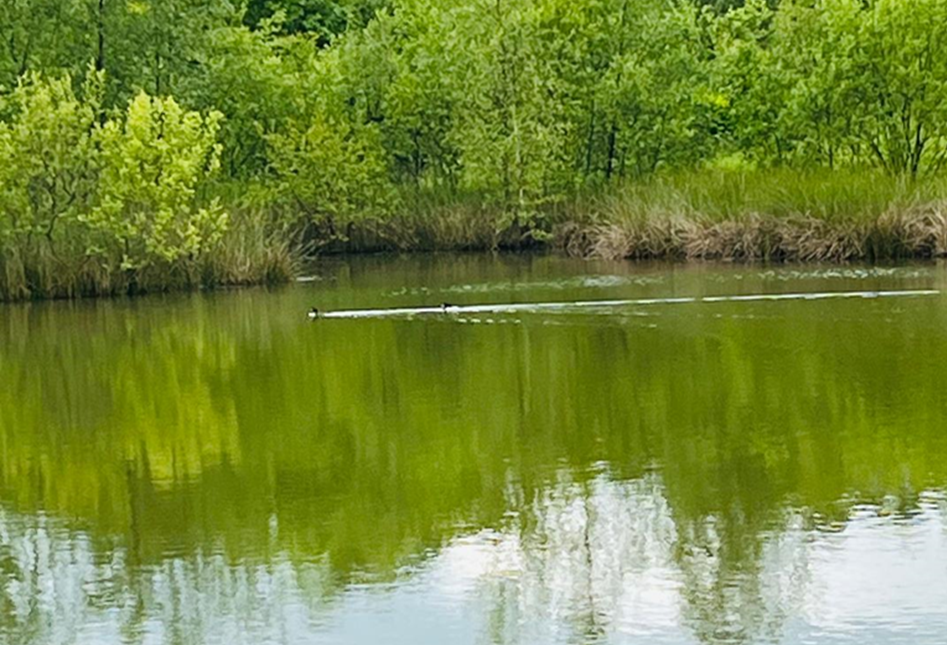
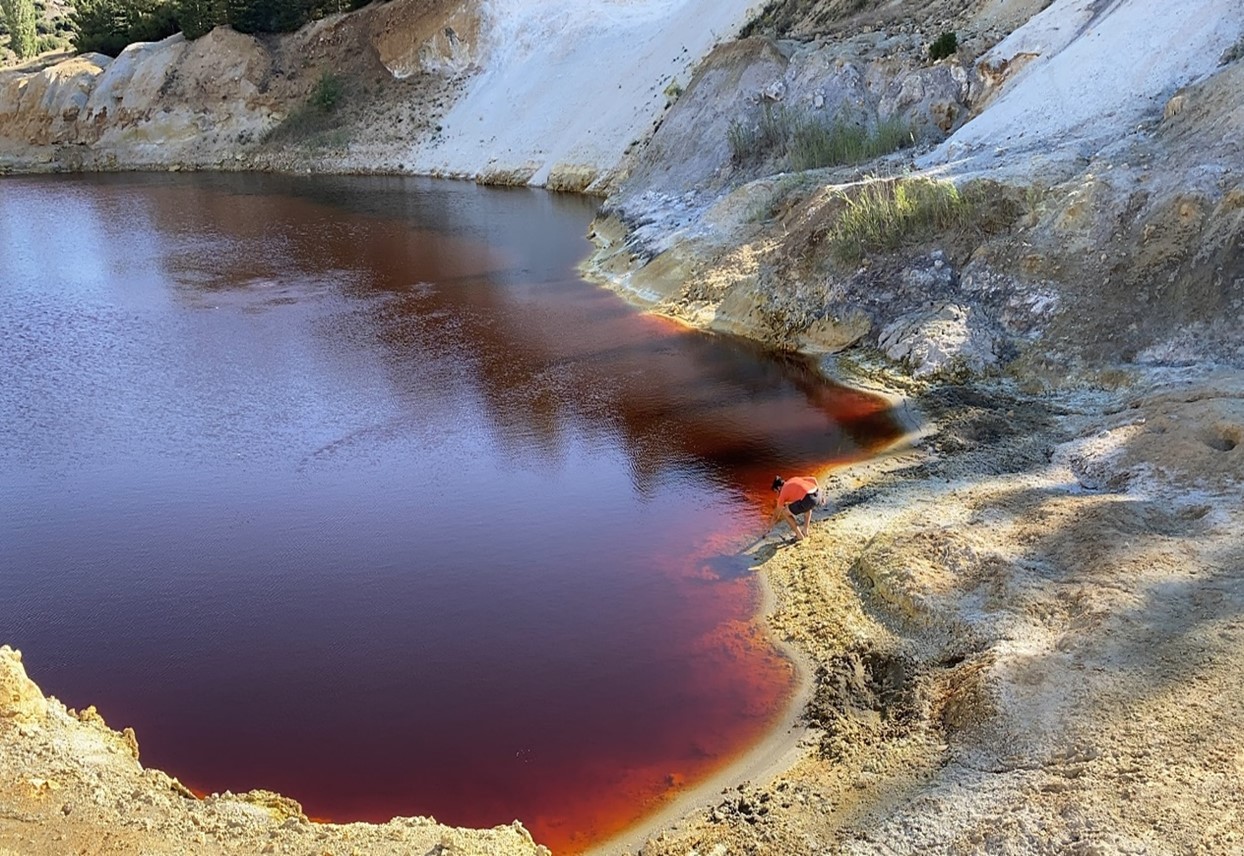
The colour of the water has changed, the pH also and has been assessed weekly and shown to be stable at pH 7.8. The blanketing slime bacteria have gone, and juvenile fish have been observed. Wildfowl have been seen along with their young plus cormorants have been observed fishing. Duck, and geese have nested in the developing rush and reed fringes. The island set on dumped cars off the western bank has really developed well with goat willows, and rushes. This is a very safe nest site that has developed.
Vandalism.
On our visit to the site on 21st August we found the fence to the tar pit bent and twisted, the posts nearly broke. There were tracks of a quad bike leading to the fence and fence damage demonstrating a concerted attack on the fence by driving the machine several times at the wire panels. The bike did not get in nor did any person.
The fence is going to be replaced where damaged.
Journal Coverage.
1 Brownfield.
Cinderhill and its contaminated land designation is now rising up the political agenda both locally and nationally. The Special Status 2a of the land on which our project is set and the plans now with the council for determination by Harworth for neighbouring land has highlighted the lack of both engagement with the methods of low-cost remedial work by local authorities and the public plus the need to separate the planning application site from the remediation of a site that would quite quickly benefit the community.
2 ENDS
We have talked to their journalist regarding the tar pits and planning issues for the developer outside the land we are working on.
Cinderhill Planning.
The local authorities are now requesting the rerouting of footpaths that have passed through the site for more than 40 years and the fencing off of the sites that is already fenced off. The company that purchased the original polluter company who put the acid tars in place have fenced off the tar pits in agreement with the Environment Agency. The further fencing is superfluous, and it is impossible to stop the public accessing the area, as we know. Cordless angle grinders are used to cut through and remove panels of fence presently and another set of fencing will not be a deterrent for people who have always walked over this land.
Harworth have gained their planning permission for 300 houses and a large industrial unit beyond the Tar Pits site. There is a possibility of further support for work on the site and other areas, but we may need to wait for a while till agreements are settled with officers of the local planning authority. We have a meeting planned with Harworth for the end of September.
Whitehaven Harbour.
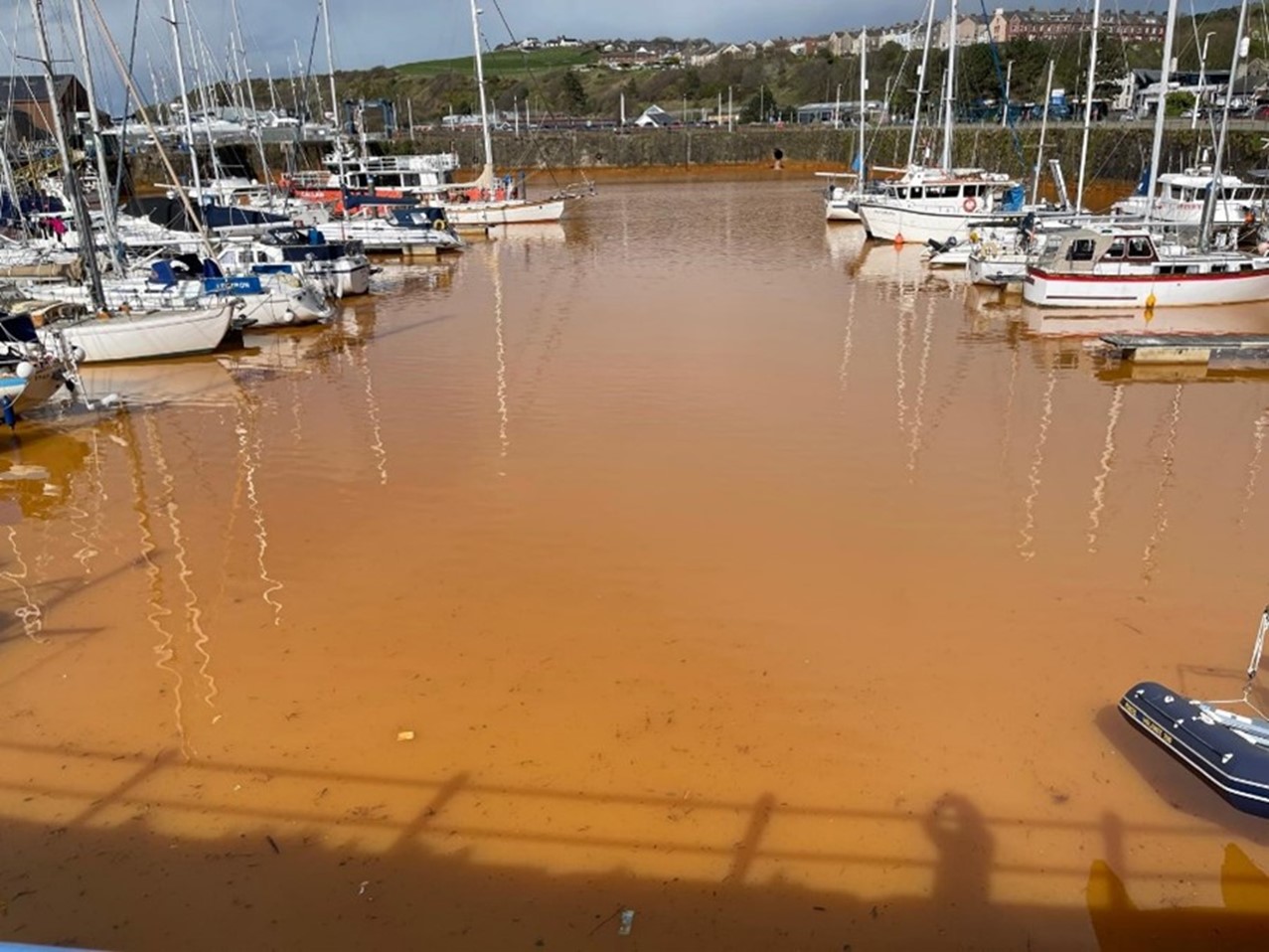
We are staying connected with the situation almost daily with boat owners, the Harbour Authority and other interested parties contacting us. Whilst out of the country we have had meetings via the internet including with Network Rail.
The new MP for the area has continued with a ‘taskforce’ plan which though not present at the meeting it has been reported to us from several who were there that it was a talking session with little action outlined going forward.
We have had meetings with Network Rail which gave us a better understanding of their situation and stance with regard to the way forward and will involve us going forward.
Floating Water Meadows.
The project looking at the value of floating water meadows and carbon sequestration continues, Meetings and emails flying about developing the plan.
It should be completed by the end of September.
Enzyme Research.
SSG Environmental are presently conducting further trials in Kuwait and are also conducting a project in the US.
We have introduced SSG Environmental to Steve Skills a specialist in algae and enzymes we first met in the early 1990s when he was helping the late Edmund de Rothchild with a series of projects. They may work well together.
Severn Trent.
We had a particularly useful meeting with Severn Trent on 15th August covering a myriad of subjects. Another meeting is to take place in early October.
Sixfields Landfill Site, Northampton.
We were asked by Farley Engineering to report on the hydrogeological make up of this quite complex waste site that shut in the 1990s. It is now a retail park and the Cobblers Football stadium.
The report was well received.
Water Supply to Farley, Matlock.
We have produced a brief regarding the water source for the community at Farley, north of Matlock, Derbyshire. The gathering ground for the water supply may be impacted by the development of Farley Moor as a log cabin holiday centre due to lack of mains sewerage provision.
We have been contacted by councillors and several groups across the UK who have similar schemes being put forward by the same people and have linked them up.
Derbyshire Dales Council has asked for our attendance on the Planning Committee meeting on 10th September.
Blackwater Estuary Oyster and Whitstable Oyster Fisheries.
Both the Blackwater Estuary Essex and the oyster beds off the northern Kent coast are suffering severely from pollution both from chemical, sewage, and other contaminations. Both areas are major economic centres of oyster farming and are now having to go through major upheavals to clean oysters prior to sale, if allowed. The Environment Agency are not telling the owners what the main contaminants are. We have given some advice and also consulted with the Shellfish Association and Fishmongers Company.
We have also advised the media on the subject.
River Glaven, Norfolk.
Advising on aspects of pollution from poor estate management and lack of EA responses. Also looking at ways to stop otters killing cygnets to feed young.
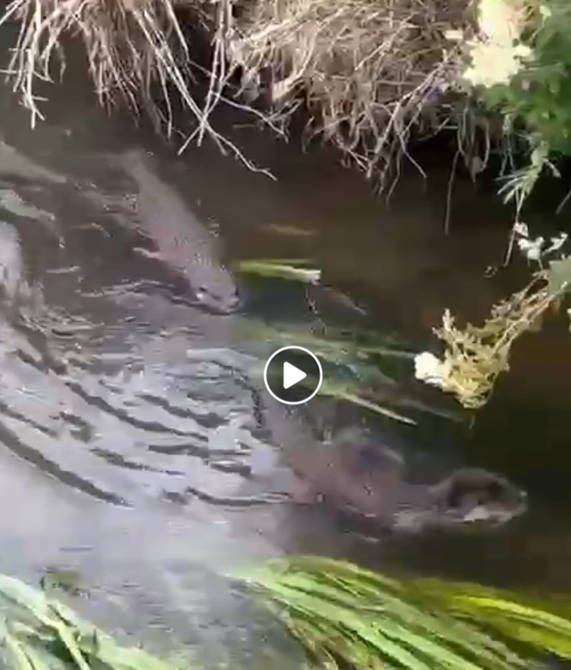
Two young otters on the Glaven filmed (still) on 18th August 2024. A nearly daily sighting.
The Future of the Water Companies.
We have been asked by several journalists for our views on the subject of the future of the water companies, not an easy one to answer as the politics and the realities are never going to be satisfactory.
River Enborne, Berkshire.
The river fails the chemical standards set by the Environment Agency. The contamination is similar to many smaller rivers across England, fire retardants are ubiquitous across the country.
Looking at the use of historic floating meadows in the county and possible use for carbon sequestration and pollution catching sites.
Hesketh Bank.
The EA have not replied to our requests for detailed information regarding the ochre in the drain closest to the Ribble Estuary. They have been pressed several times, but they say that the information would likely cost more than it is worth.
Co-opt Project.
Universities including St Andrews, Liverpool and Plymouth are coming to the end of a project foundered by the government on the ways to limit the effects of global warming on the coastline of the UK. Much is being invested by the researchers on rewilding all coastal areas. This may have been disliked across the fenland of East Anglia, but its ideas have been put forward to the local authorities of Lancashire along with the farmers at Hesketh Bank and their neighbours.
The project had used questionnaires sent out to a random 500 people in the Preston area. Sadly, not one landowner who might be impacted by the proposed schemes. The Rivers Trust and the Ribble River Trust, RSPB and Wildlife Trust were. At a meeting for various Lancashire councils, two farmers attended as parish councillors, they pointed out that the stakeholders most integrally involved with productive land loss had not been talked to. They were told that sampling was random and the vast majority of those who responded were in favour of larger saltmarsh coastal restoration. They have already given up common grazing of the salt marshes and were able to argue that they need to be involved in future research. We have advised the farmers as they are the people finding iron rich waters in the New Bank Drain at Hesketh Bank.
Crayfish Plague?
We were contacted about crayfish deaths in the River Wye at Builth Wells. We have talked to several people who had been swimming in the river and were concerned. Natural Resources Wales when informed put out a ban on going near the river saying it was likely to be Crayfish Plague. There are though many other things that might have coursed this and putting out a warning is highly unusual.
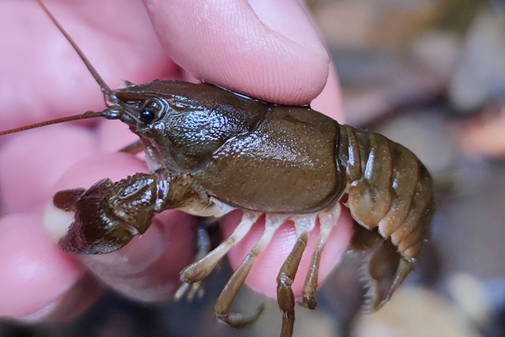
Healthy native crayfish.
Birmingham Metropolitan College (BMet).
Have had meeting with staff at the college. Have agreed to help them put together a sustainability program with them going forward into the autumn. Also looking at ways to help water engineers and other asylum seekers who need to find employment to match their knowledge and skills in particular those involved in water issues and the environment in their native countries. There are a surprising number with MSc/MA and PhD qualifications amongst those attending the college.
Kilburn Trunk Sewer, Derbyshire.
Paul Reeves who used to work for the Environment Agency and now Severn Trent Water has contacted us regarding minewater entering through an old mineshaft the trench for the new sewer going through the village.
The story is complicated in that it appears that the bed of Bottle Brook (a tributary of the River Derwent emanating from Ripley) has also collapsed into old mineworkings feeding the water flow from the sewer excavation. Severn Trent have had to pump from the mineshaft mor than 300 litres per second 24/7 and have a large fleet of tankers permanently transporting the ochre water to various sewage treatment works around the clock for two weeks. Now the Bottle Brook flow into the mines has been stopped the pumping is at 50l/s.
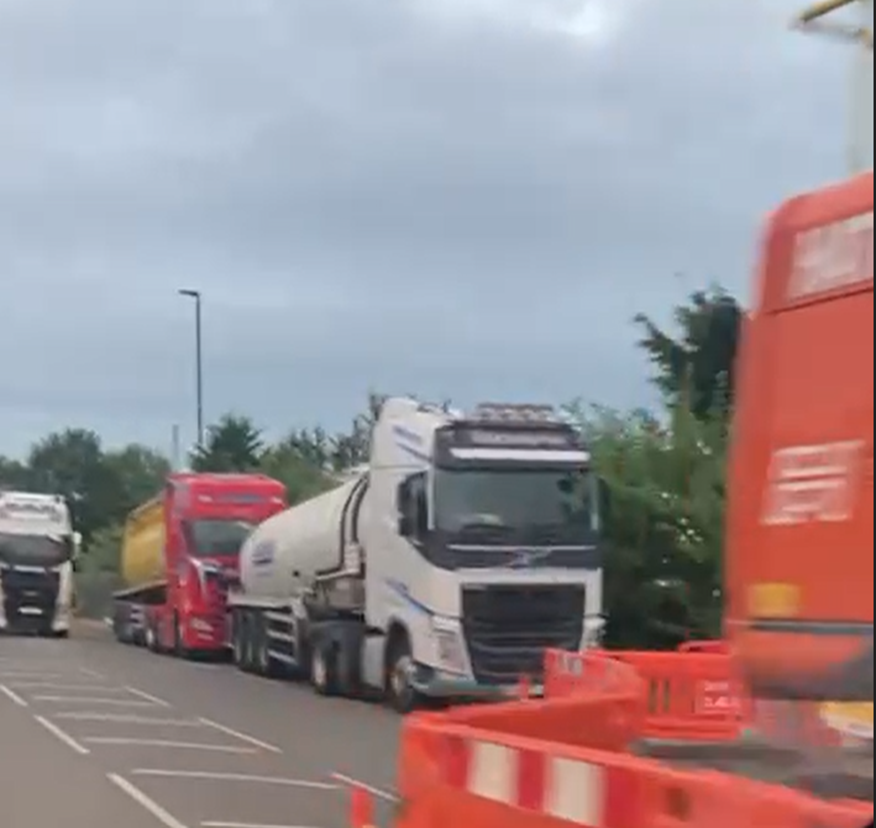
Even though Severn Trent have spent in excess of £1 million in tanker costs alone the Bottle Brook is still receiving a discharge from the Coal Authority mine collapse at Denby of more that 2mg/l iron continuously and STW are expecting/hoping the EA to flag it up with the Coal Authority as an issue for action. The Coal Authority though have not attended site meetings or been showing any interest after more than two weeks. They have though put two pipes over the mineshaft where the brook to carry the Brook over the now filled mineshaft where it flowed down into the workings.
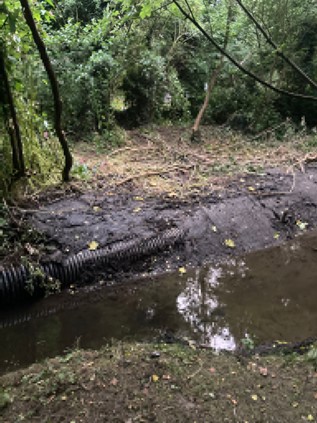
Low flow in the Bottle Brook with Coal Authority pipe in place to relieve higher volumes over the mine cap. Some water may well still be entering the mine system. The pipe is only held in place by one stake which is already moving, and the fill and pipe are looking as if they are collapsing.
West Wales Metal Mines.
The Coal Authority and Natural Resources Wales have requested our involvement in finding solutions and giving a background to the problems that are developing. The Welsh Government funding for this work on an ongoing basis is likely to be curtailed if the major consultancies are too heavily involved. It may be a better move to involve the communities and interest groups to take on such projects as stand-alone remedial works.
A meeting on 15th August was valuable to understand the scope and we are to be ‘stakeholders’ for consultation rather than work with the scheme.
Walsall Canal Pollution.
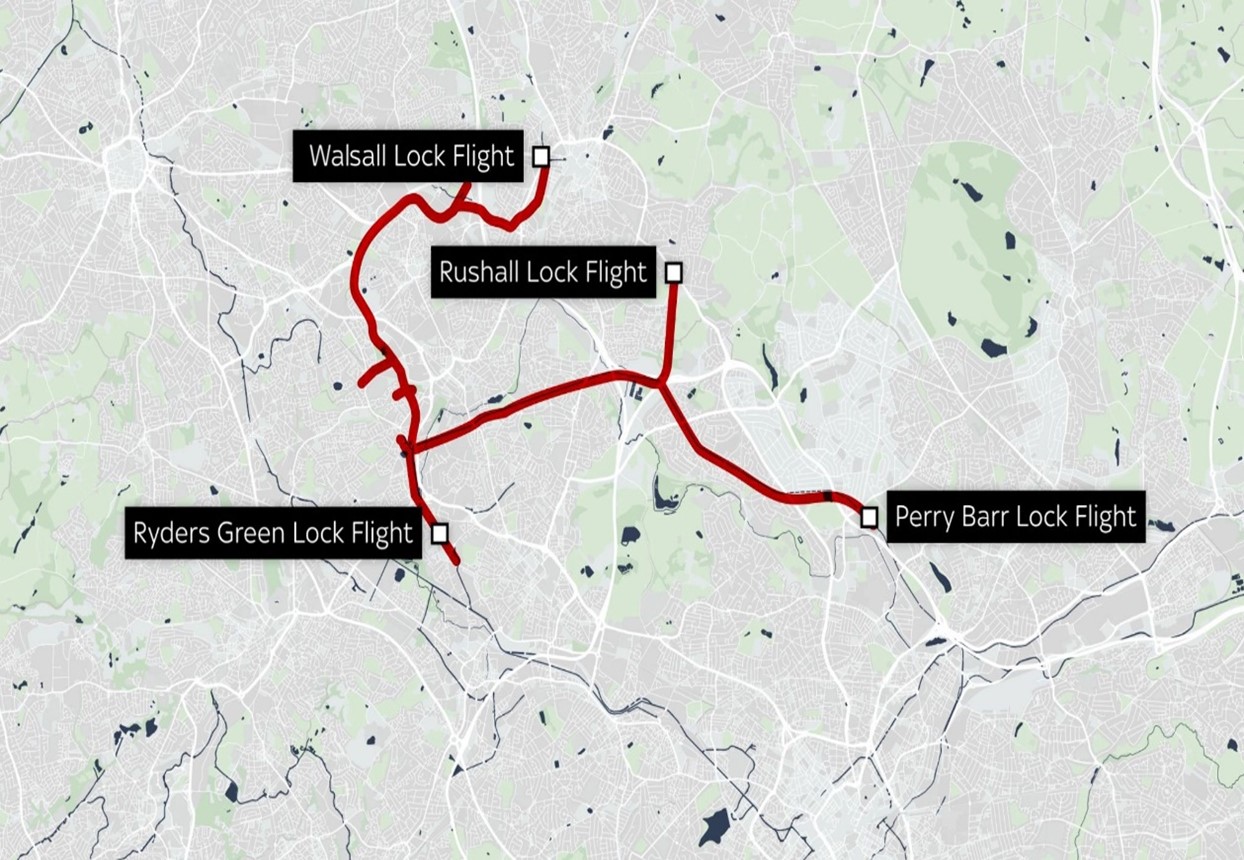
On returning to the UK on Monday 12th August we received several notifications of fish mortalities near the centre of Walsall. Pleasingly the company responsible had acted responsibly and had reported the event to the Environment Agency. The main and most damaging material involved being Sodium Cyanide used it metal finishing and historically a common pollutant to Birmingham canals and rivers.
The Environment Agency have temporarily put a no-go area in place to protect the public entering the area (see map). This measured around12 miles of canal. This shrank to 1 mile around the source on the 19th of August.
Arsenic and Ochre.
The Coal Authority (CA) have been nominated for a Brownfield Award 2024 for best innovation in the last 20 years for the repurposing of mine waste to remedy arsenic pollution in the Mersey Gateway Regeneration Project. We are delighted as we first took the idea to the CA in 1998 and again in 2015/16.
The original idea was backed up by our being commissioned in 2018 by the CA to supply refined and fired material for testing. No more was heard till this news appeared on Facebook 20th August 2024. Their partners being RSK, CE Geochem, AECOM, and Remed X (RSK).
Biochar.
Have had conversations with Prof. Colin Snape about the work he has been conducting with ST. There is much more that we can do, taking in several different directions.
Newark Archaeology.
The two principal archaeologists have been helping our MSc student on water meadows. They have also been working on several other water resource and leachate from civil war burial locations. Plague bodies required interment that did not leak to wells or out into the public domain. Work is at an early stage, but some findings will be made public shortly.
Yemen
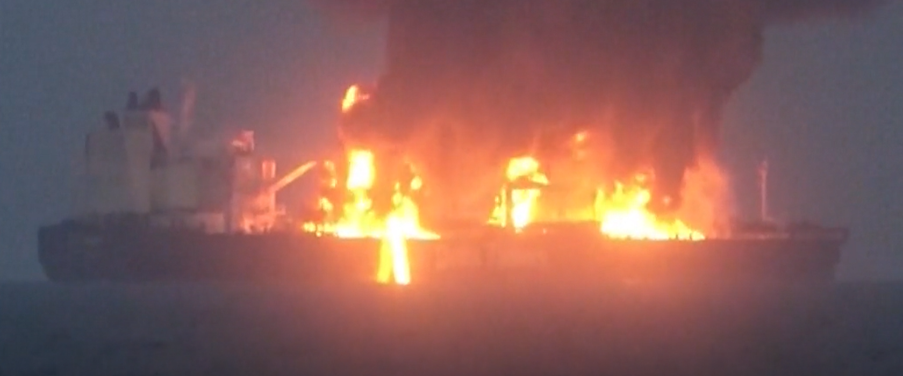
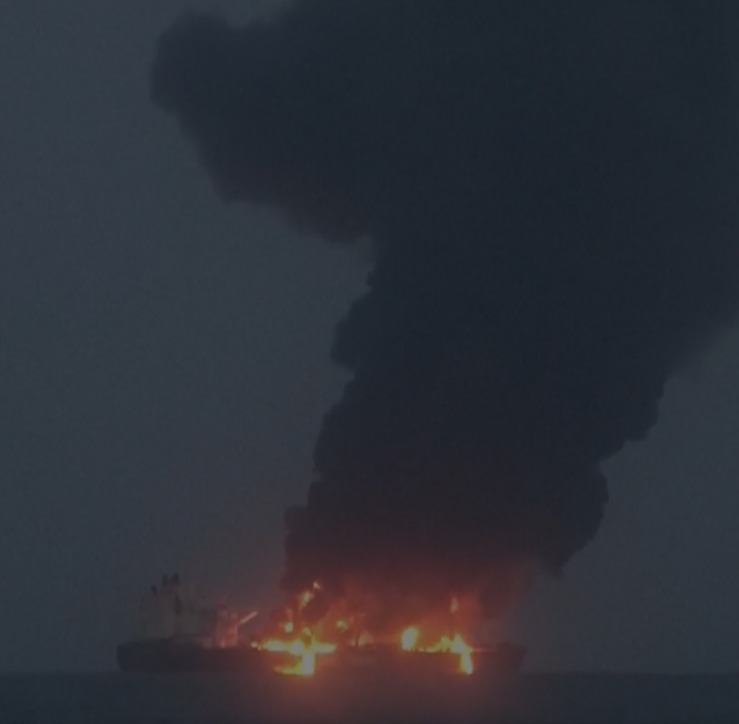
The Houthi Government in west Yemen has agreed not to attack salvage operations in the Red Sea of the crude oil tanker Sounion. This is the second tanker off the coast of Yemen that has been removed from the area in just over a year. The first was due to neglect whilst this was due to a drone strike by Houthi forces in support of the Palestinian cause in the Gaza Strip.
Blue Carbon.
We had an email Friday 30th of August (below). The questionnaire was started but the information was so detailed and time consuming much was not completed. The idea is sensible but not sure who actually will benefit.
Trustees may like to have a look?!
Dear Sir/Madam
I am contacting you on behalf of the team of Tecnoambiente, an environmental consultancy specialised in marine environment. We are currently working with the IUCN in the development of the Mediterranean Blue Carbon Strategy, which aims to lay the foundations at regional level for the development of blue carbon.
To this end, as part of the process we are inviting organisations with expertise in the field of blue carbon to participate by contributing their knowledge, experience, and vision on some of the issues raised.
To facilitate maximum participation, we have developed an online questionnaire that should take no more than 10 minutes to complete (please click here ). Should you wish to discuss specific aspects not covered in the survey in more detail, we invite you to contact us by email to arrange a personal interview.
Your input is invaluable to this Mediterranean blue carbon strategy, enabling us to gain insights from leading organisations working on this subject. By participating, you will help us identify the most pressing needs and challenges facing blue carbon in the Mediterranean region. We appreciate your contribution to this important initiative.
We will keep you informed of the Strategy’s progress and forthcoming events so that you can monitor the process and contribute to its development.
Best regards,
| Marina Cobos Pardo Sustainability & Communication Consultant TECNOAMBIENTE |
| T. 630 639 132 marina.cobos@tecnoambiente.com |
Delegación de Andalucía
C/ Newton 15, Letra E. Parque empresarial
Jerez de la Frontera, Cádiz, Andalucía
Turkiye
Kızören Sinkhole, Konya.
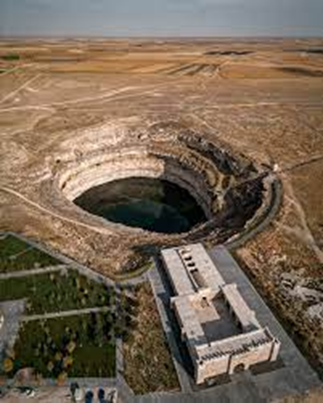
The above sink hole is linked below ground to another some distance away that turns pink with bacterial bloom depending on the temperature of the water. The building (Obruk Han) was built by the Seluk and maintained by the Ottoman as a lodge for camel trains on the Silk Road. The water from the sink hole with clear water is used for public supply.
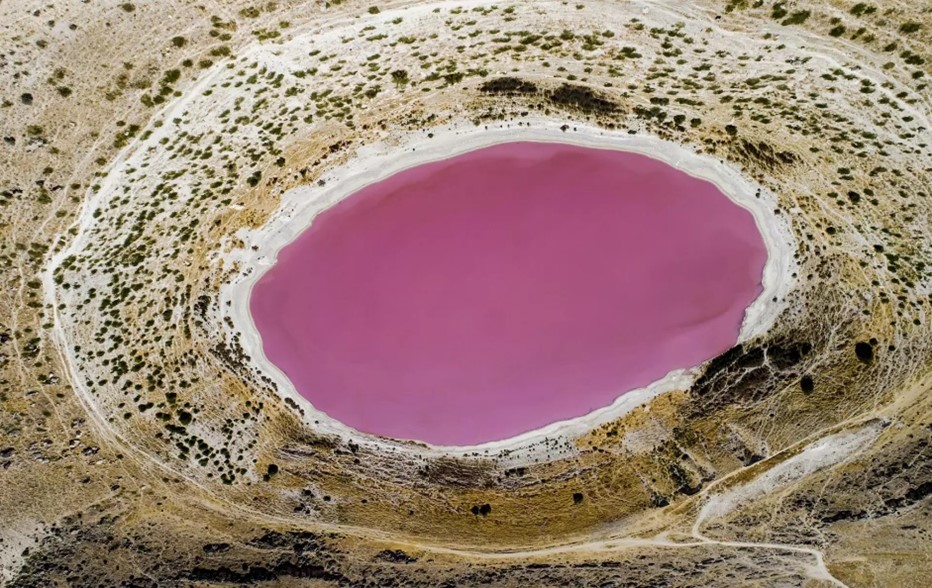
The link between the two sinkhole lakes was not realised till recently.
Sulphur Mine Pollution to Burdur Lake
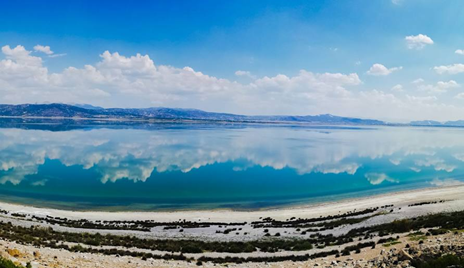
Burdur Lake
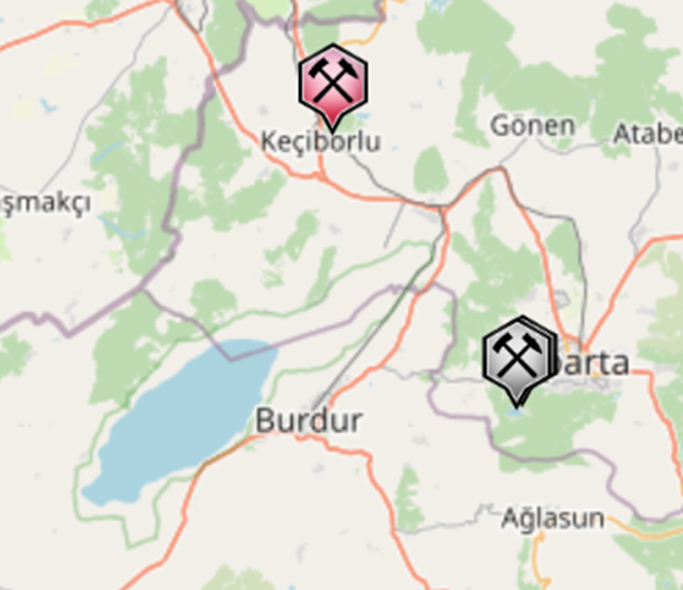
Burdur Lake is one of the largest salt or bitter lakes in Türkiye which is suffering from several major problems. Burdur’s new sewage treatment works has been in operation now for over a year and is improving nitrate and phosphorus levels in the water. The industrial enterprises are though still discharging some waste materials into the water directly, but the municipality is working to rectify the problem. The main issue now is the shrinkage of the water body which is now only half the size it was. Abstractions of feeder streams for agricultural use are a main problem alongside higher temperatures and drought.
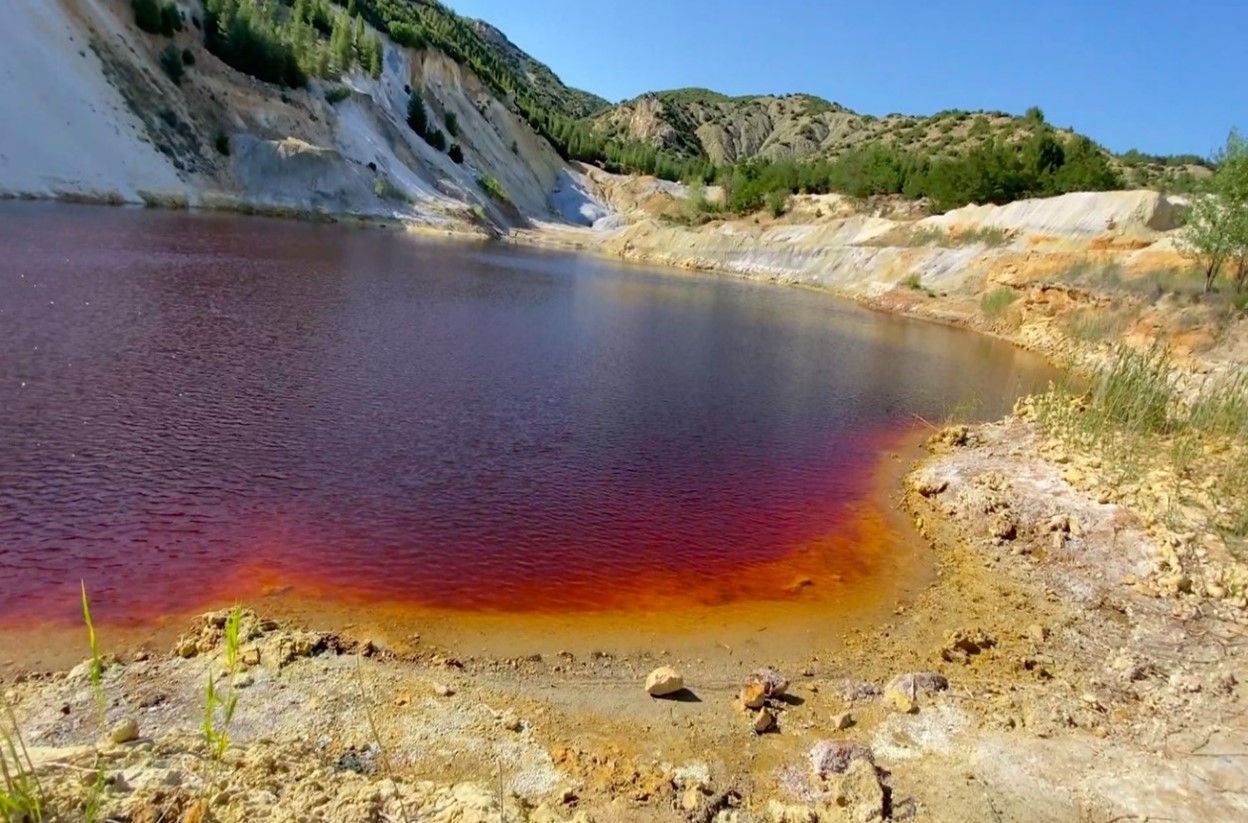
One other pollution that impacts the water supply to the lake is drainage from sulphur mines around Keciborlu. The discharges are high in metals and are acidic. There is no state body in the country that takes responsibility for historic environmental effects from mining.
Refugee Camps’ Sewage.

The projects are getting on well with vegetable growing starting to become popular and the heating of communal spaces and warm water for washing during the winter has worked though: more improvements are scheduled.
The UK Foreign Office state the area to be a no-go area for British citizens due to threat of kidnap and terrorism/war overspill..
Appendices:

Cinderhill raises question: what happened to Part 2a sites?
The decision by Amber Valley officers to back a development skirting a well known contaminated special site instead of fully remediating it, raises the question: what has actually happened to Part 2a sites?
10 June 2024 / Brownfield, Remediation, UK
There was a time in the 2000’s when there was a feeling that the contaminated land regime had at least something of a handle on contaminated sites with particularly difficult sites passed from local authorities to the Environment Agency and deemed Special Sites.
A question was asked at a recent event: what happened to Part 2a sites and Special Contaminated Land Sites? And after some silence, the consultant said: “there’s no money, so no-one is looking at them.” The audience concurred and no further questions were asked.
The decision of Amber Valley Council to back a development on the edge of tar pits which avoids fully remediating a Special Site, Cinderhill, really begs the question: are we leaving the toxic legacy alone for future generations?
The well-known contaminated land site known as Cinderhill near Denby is set to have 300 homes and 74 acres of warehouse and industrial space around it.
The reaction of the Holbrook Parish Council is significant in that it says the underground water can easily travel through mining tunnels across large areas of the site and run-off and surface water could get into the Bottle Brook via the decommissioned mine shafts and the polluted area of the Tar Pits and if any highly toxic material reached the Bottle Brook because of local flooding, it would pass to the River Derwent and to the River Trent. The concerns are shared by both neighbouring parishes of Kilburn and Denby.
Holbrook PC also points to the ecological danger of disturbance of the Cinderhill Tar Pits that would result during the construction, followed by continuous ground vibration from traffic that could potentially bring acid tar to the surface.
The site was deemed a Special Site by the Environment Agency under Part IIA of the Environmental Protection Act 1990 in February 2007 as it was contaminated with hazardous substances following historic industrial use, before becoming a dumping ground for unwanted materials and objects.
The council said: “The tar pits comprise about 10 hectares. They are the result of previous activities in the 1960s and 1970s comprising the excavation of clay and the infilling of some of the resulting void with water materials including tars.
“These activities were carried out with the benefit of planning permission but the restoration requirement of the permission, including the capping of the pits in the early 1980s, was not carried out to a sufficient standard, resulting in tars seeping out at the surface.
“The area has been left in that condition for a number of years.”
The plans put forward by the Harworth and Pegasus Group have been recommended by council officers with councillors making a final decision this week.
The companies say the investment is £455m and 1500 new jobs will be created along with 60 affordable homes.
Previous development proposals, which outlined construction paying for remediation have failed. But this proposal involves fencing off the tar pits site and building around them.
Haworth to its credit has been working with the Clean Rivers Trust on a phytoremediation research project to try and stabilise the acid tar and neutralise the high acid content. It won a Brownfield Award. But this is a long-term remediation solution.
The Environment Agency expressed its disappointment at Amber Valley’s officers’ decision: “Previous iterations of development proposals made by the applicant in this location had included the Cinderhill Tar Pit Special Site area, however, in the most recent proposal, this area is no longer included.
“The Environment Agency supports the regeneration/remediation of brownfield sites through the planning process, and therefore we have expressed our disappointment that the tar pit area is no longer included within the development boundary.
“We have not objected to the proposal as it is ultimately the applicant’s decision as to the extent of their development proposal. In making our consultation response to this planning application, the Environment Agency’s Groundwater and Contaminated Land Team consider the risks posed to Controlled Waters only. Our response has indicated that we believe these risks can be adequately managed through conditions attached to any permission granted.”
In November 2007, the Agency determined that, provided good quality fencing was maintained around areas of the tar pits being accessed by the public, … ‘this should be sufficient to break the significant pollutant linkages identified in the determination of contaminated land document issued by Amber Valley Borough Council’.
The Amber Valley Borough Council Scientific Officer has also recommended a condition requesting prior to commencement of development, a detailed investigation of any contamination and assessment of the potential risks, including a Remediation Method Statement.
This, is alongside the conditions recommended by the Environment Agency requesting: details of a verification report demonstrating the completion works following the successful implementation of the remediation strategy and other conditions, such as restricting drainage systems for the infiltration of surface water to the ground and the use of piling or any other foundation designs using penetrative methods unless these works are first agreed prior to such works commencement should be added to ensure that the site.
Denby Parish Council backs up Holbrook PC when it said: “a significant proportion of the land covered by the proposal is former coal mining. There still exists underground tunnels, meaning the underground water can easily travel across large areas of the site.
“This serves to spread contamination should the tar pits ever leak. Should planning permission be granted, the following conditions are recommended: Long-term legally binding agreements and conditions must be in place which commit the developer so that it continues to monitor brook courses in the area for potential contaminants/seepage for an agreed number of years after completion, if the development goes ahead.
“The Local Plan gives substantial weight to the remediation of the tar pits on condition that the ‘developer’ inserts a new A38 link road, and no piecemeal development on the tar pit site, etc. How can a developer just bypass what a Local Plan says for its own finances?”
The psychological effects on future residents on having a toxic legacy on their doorsteps, should not be underestimated.
Council officers write: “Although the tar pits are now excluded from the planning application site boundary, associated risks still need to be managed.
“Borehole testing (around the perimeter of the tar pits) have confirmed that there is no leaching of acid tars from the clay lined pits into the groundwater.”
Over 170 objection letters have been submitted to the borough council over the plans, along with opposition from the parish councils of Holbrook, Kilburn and Denby. Objections not only include the danger of contaminated surface water reaching the rivers Derwent and Trent, but the creation of urban sprawl, and traffic congestion.