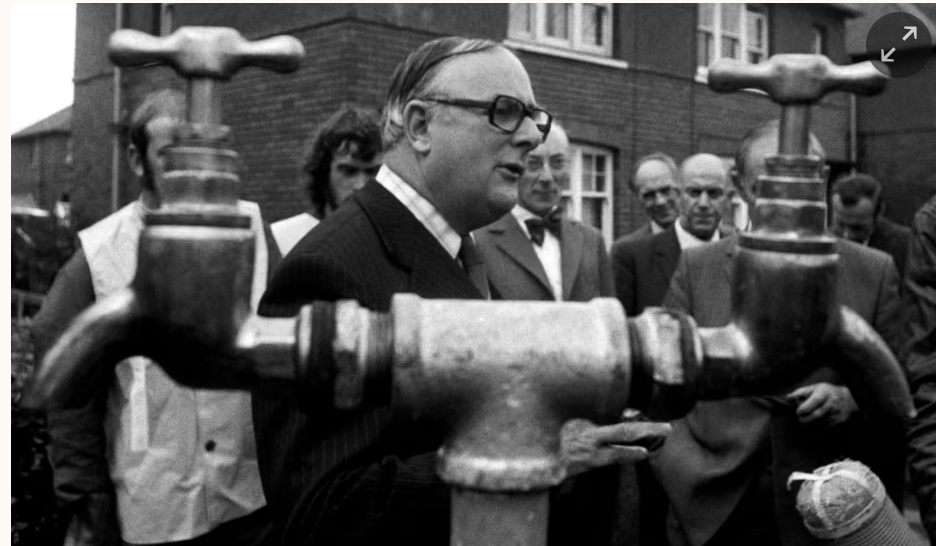
Denis Howell, Minister for Drought, 1976
The Trust attended a meeting in preparation of the Launch of the campaign this summer,. and will continue till 2030. It is remarkable the volume of water used per day by a household and the expected shortfall that is forecast to threaten the population of the UK and especially England and Wales by the 2050s.
The purpose of the campaign is many faceted, drawing attention of the population to their shortcomings in their consumption of water, demonstrating best practice such as awarding a grant to the Royal Horticultural Association to investigate best practise for gardeners in a changing climate.
A similar grant to the giant to the consultancy RSK and their offshoot Water Research Centre to create a ‘Water Warriors’ organisation that is to engage with schoolchildren and encourage them to educate their families in wise choices in water use. We have previous experience of using pester power when we went to primary schools in part of Nottinghamshire in the 1990s where we informed them if the wrong things going or being put down drains. This approach then resulted in some negative feedback at the time.
This summer with record temperatures both in the UK and across Europe could not have been timed better and the 50th anniversary of the famous drought of 1976. Then water was in the hands of the water authorities who had less than two years previously taken on the supplying of the pubic with potable supply and treating their wastewater. Previously these public utilities had been the responsibility of the local authorities across the country.
In the late spring of 1976, the water authorities realised that in many area of England and Wales there was going to be a major scarcity of supply. The problem in some areas saw standpipes in several urban areas. People queuing with buckets to get a daily ration to drink, wash and flush lavatories. Other areas had supply limited by cutting water pressure or availability to set hours. People horded water. There was talk of harvesting icebergs from the Arctic and towing them to Britain.
The water authorities started advertising in newspapers, railway stations and on the sides of buses using catchy, to some, and remarkably memorable for mainly the wrong reasons, slogans. ‘Save water, bath with a friend’ and ‘save water, share a flush’ still come to mind. What ever the jingle their value was little, but water wastage became a national fixation with nosey neighbours reporting on over users to the water boards who prosecuted. A maximum fine for watering your garden with a hose being £400, today that would be more than £3,500.
Today the Water Efficiency Campaign is more professional and is not led by the water industry, it appears to be a broad church, full of ideas and looking for more.
June 2026