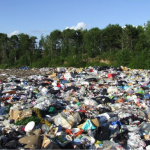
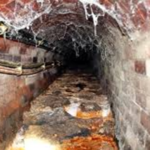
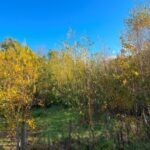
This large body of water is a remnant of open cast coal and clay extraction in the 1960s, many others close by are filled with acidic tars, one of these tar pits has seeped tar into the lake since the 1970s. this seepage has had a detrimental effect to the water quality for 40 years and led to the local authority (Amber Valley) having it registered as part of a Section II Scheduled Contaminated Site.
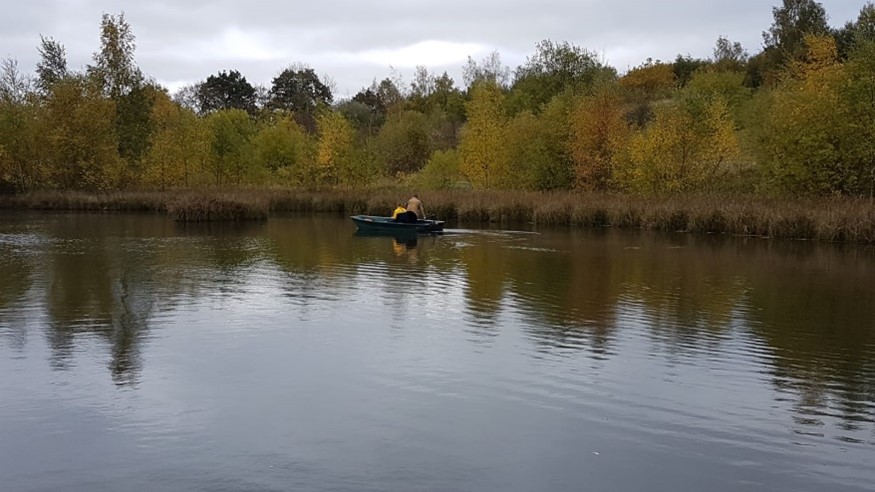
Sampling water and mapping the lakebed.
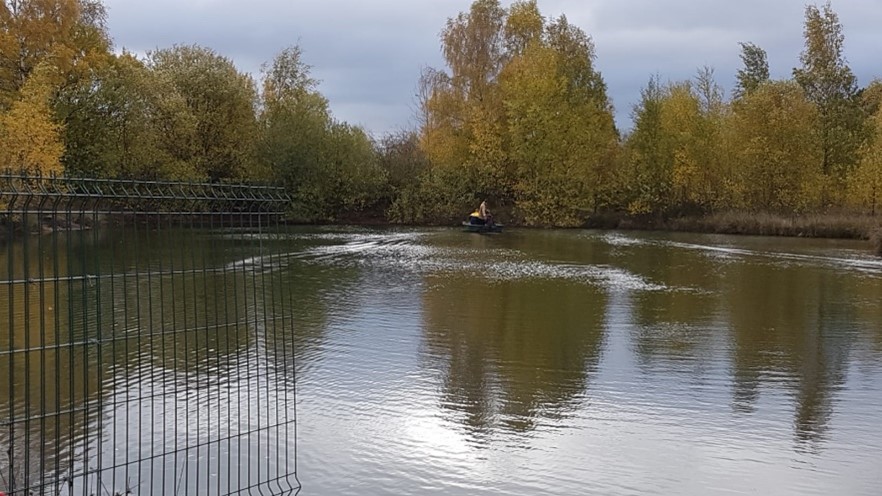
Contaminated area fencing up to the water’s edge.
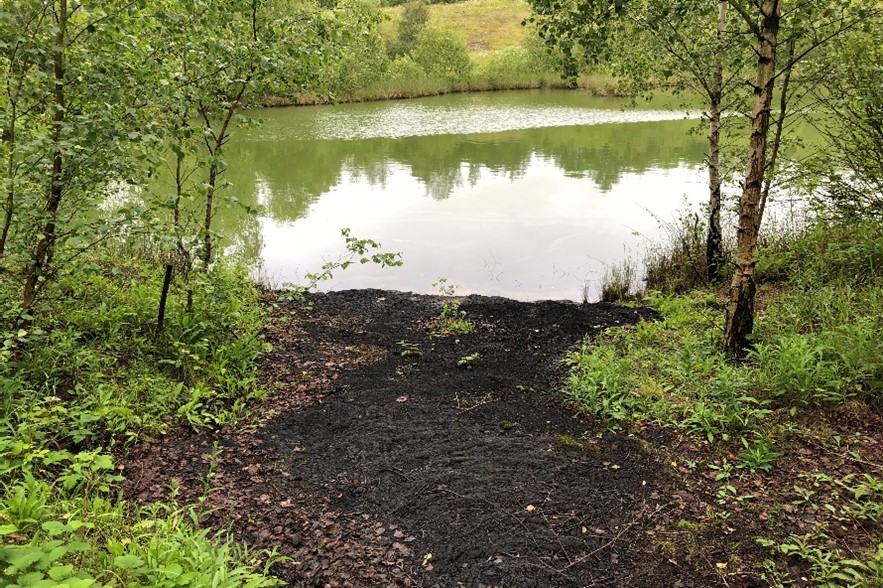
One of two tar seeps flowing into the lake from an adjacent tar pit.
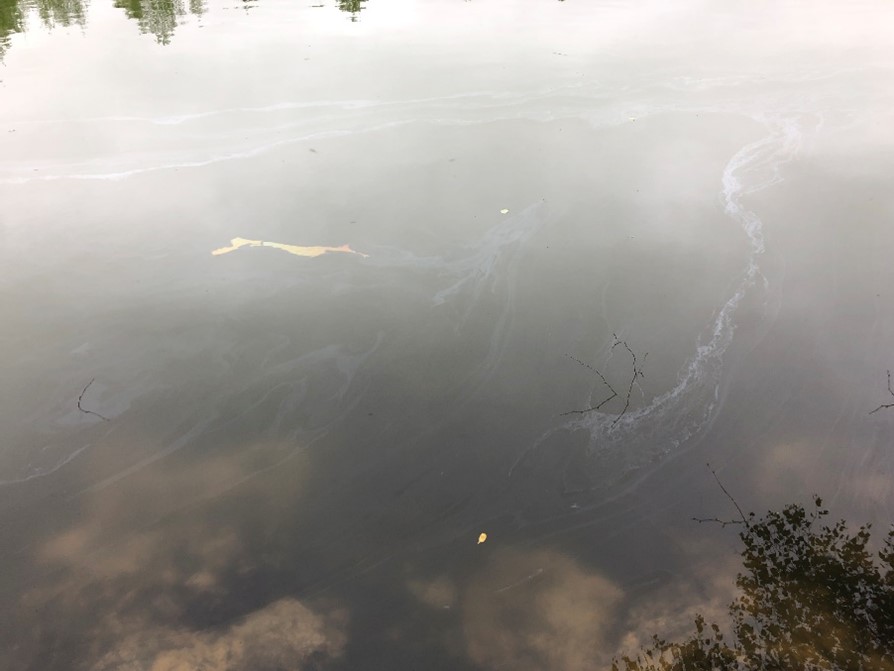
Oil? No, bacteria, algae, and other good things.
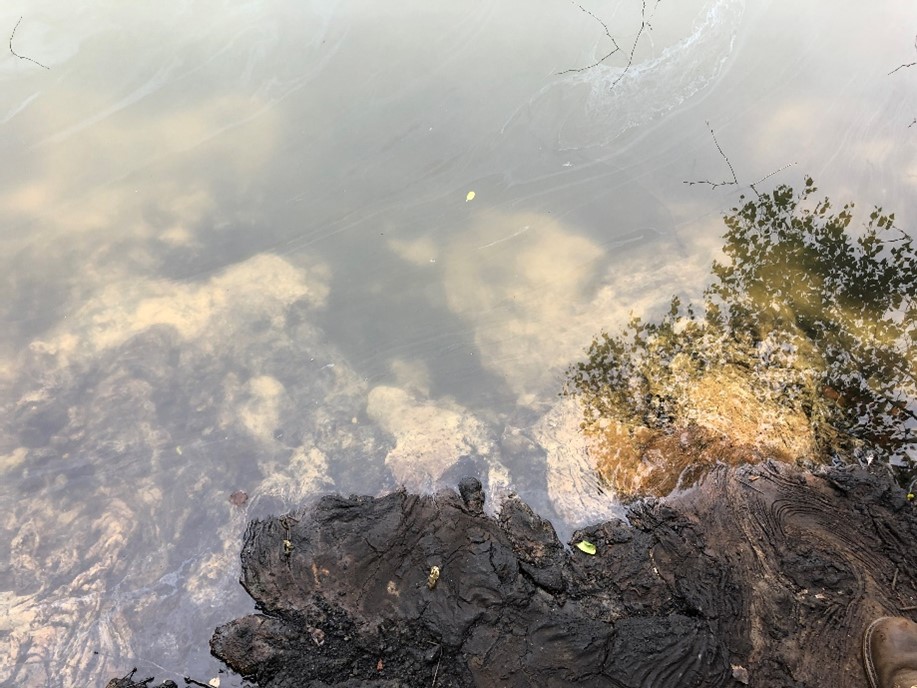
Clean Rivers Trust has been working on a trial remediating an acid tar pit close by the lake and have monitored the water quality, water retention and ecological condition of the water body. We have further removed the tar flows into the lake. (This needs to be worked on further so as to ensure the work already carried out is a permanent fix. Half the lake has a thin tar layer across the lake floor, but it is expected that this will not to be a long-term problem once ongoing management can be put in place.)
The water has now been monitored for 2 years, originally the water was 3.5 to 4 pH and since our works removal of the acidic seeps entering the lake the water has achieved a pH of 6.5. The lake is not in wonderful condition at present, dumped cars are to be seen just below the lakes water level. The one small island in the lake is based on one such vehicles. The silts have been sampled just off the bank where acid tars moved into the water. The silt, tar brought to the bank was remarkably prolific in life. The most numerous insect fauna present being dragon fly larvae.
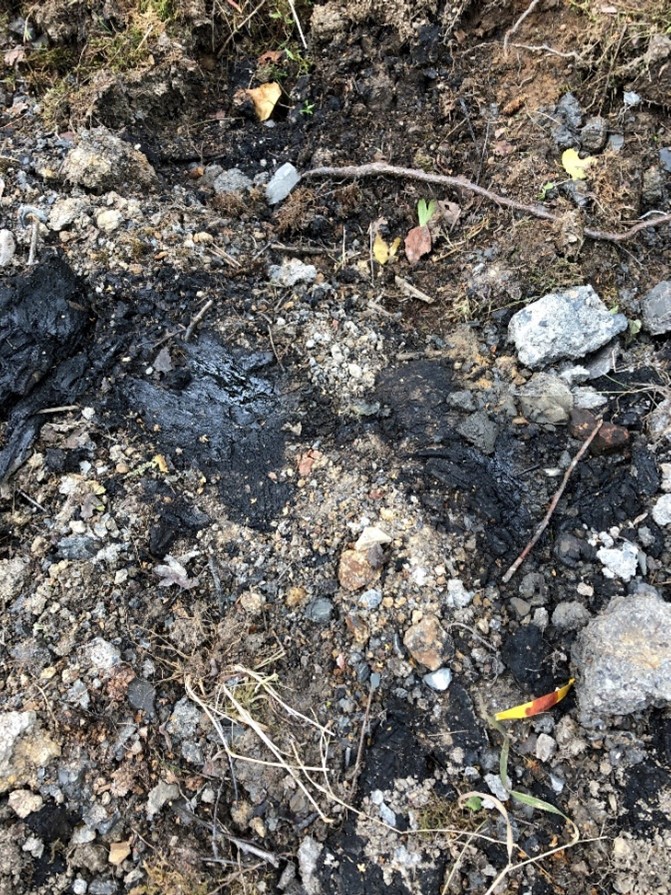
Tar leaching into the lake.
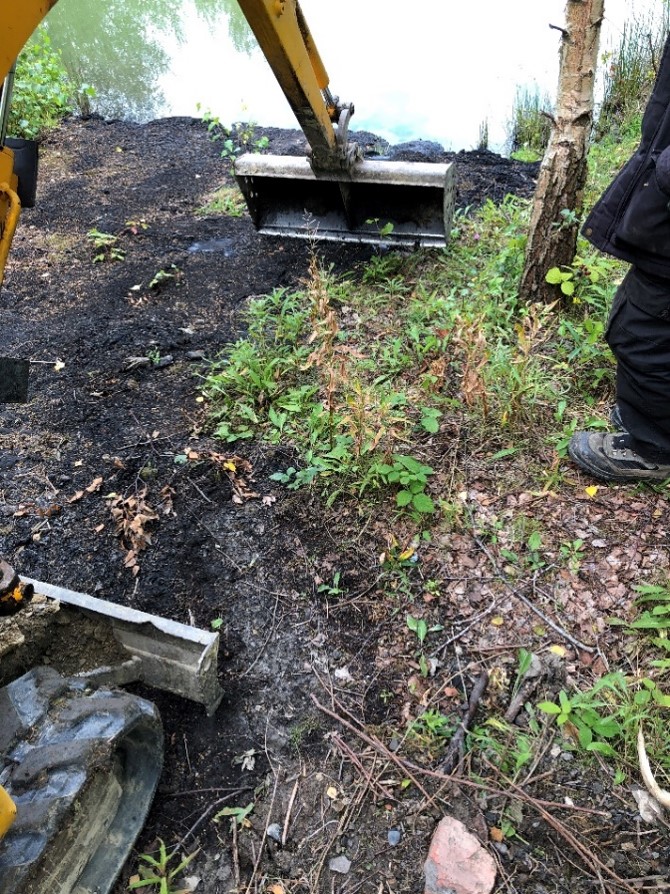
Tar moving towards the lake being removed. The depth of tar was shown not to be thick and easily pulled back from the lake edge. The final solution will require a limestone barrier and fill to ensure no further acidity can enter the water plus the stabilisation of the tar pits beside the lake.
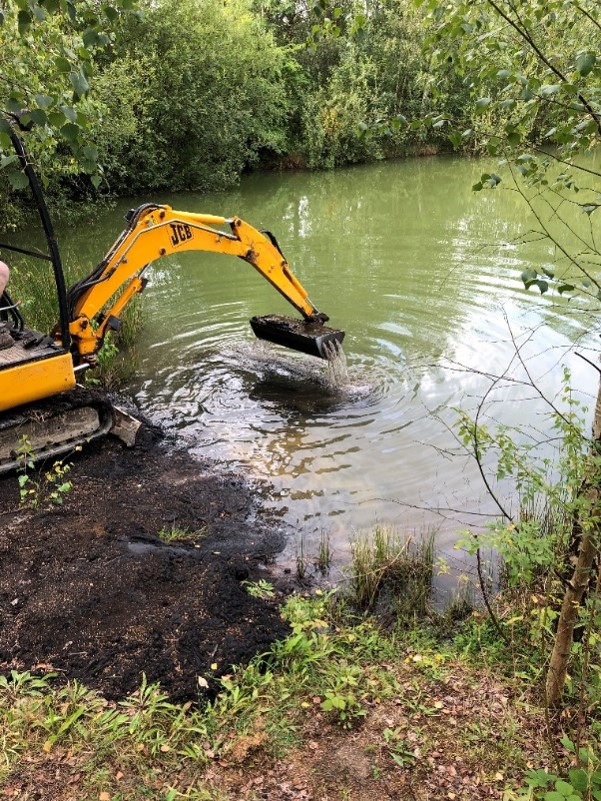
A sample of surface sediments from the lake being removed.
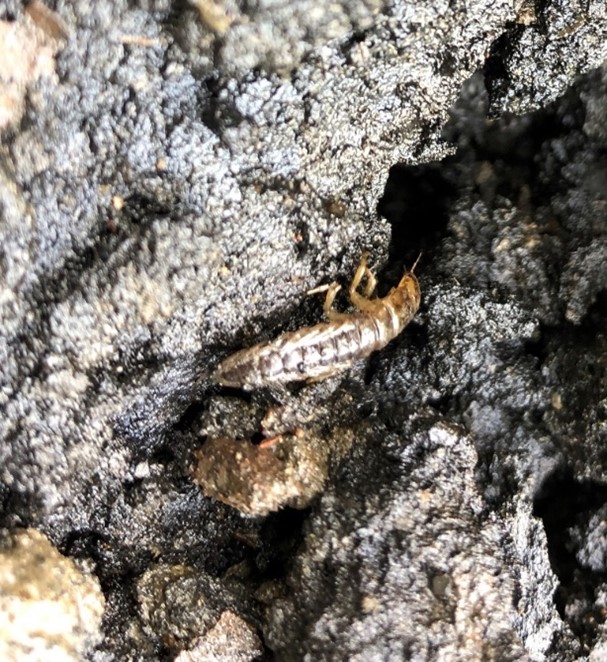
One of several hundreds of dragonfly larvae taken in the sampling of the lake sediments. This exercise was overseen by staff from the Environment Agency and with the permissions of Natural England. The larvae were returned carefully to the lake sediments after being surveyed.
When surveying the bottom with sonar it was noted that there were several fish present within the lake. It is not known as yet to species or numbers. The need for the lake water to be clarified has been agreed with the Environment Agency and will be carried out when funding is again available. This will allow for water weed and other aquatic plants to establish themselves.
Apart from the abundance of dragonfly larvae the lake has a developed algal flora which allows for an understanding of the water’s condition. On the lake some of the water’s surface is home for protozoan scums which are feeding on the natural bacteria within the lake water.

Whitish-grey scums appear often in still waters. They form a shiny, almost oily film on the surface of the water (A, B, C). Sometimes they will also appear as a “foam” (D). When examined with the compound microscope, these scums reveal a diversity of Protozoans that include: Amoebozoans with or without shells (E, F), Ciliates (G) and Flagellates (H). These organisms feed on bacteria that have been concentrated in these areas by the wind blowing over the surface of the water. Generally, unless the water is receiving a source of sewage, there are no safety issues with water that contains Protozoan scums. (https://www.townofchapelhill.org/home/showdocument?id=28866)
The Protozoan scum initially appears in acidified still waters such as those that have received minewater or leachates from landfill.
The protozoa are an indicator of greatly improved water quality but are also the main reason the water looks ’murky’ and unpleasant. To clear the water markedly requires a small addition of Siltex a natural quarry product quarried in Suffolk. This will raise the pH moderately and remove the bacteria out of suspension; so, removing much of the food for the protozoa. The cleaning of the water allowing light into the water column and encourage water weeds, fish breeding and increase fish stock and their predators such as kingfisher and otter. Both are noted resident species of the area.