Introduction.
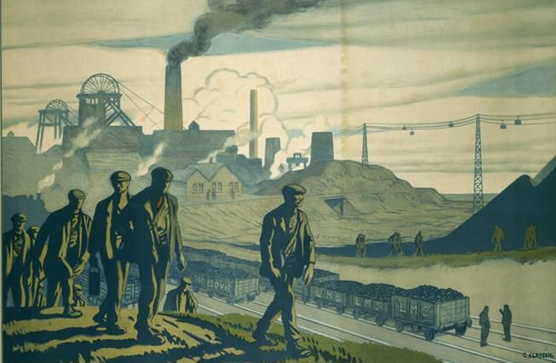
Mines and mining legacies have been both a burden and a boon to society from the earliest of times. Pollution caused by mining and at its cessation has been a perennial handicap to the industry. Society has required mining for most of its raw materials, from Grimes Graves, flint mines first sunk in the Neolithic period to produce flints for arrow heads, scrapers and other sharp tools to the lithium needed today to produce energy for electric automobiles.
Such effects may still be seen at mineral extraction sites across the UK and elsewhere. Even the site at Grimes Graves on the Norfolk Suffolk border 4,500 years after mining ceased is still scared by the bell pit pocked landscape that also sports a unique flora due to the chalk spoil spread around the site. Apart from being an Ancient Monument it is a SSSI due to the herbage of the area. Even at this extremely early mine site Cornish Greenstone axes and hammers have been found, the material mined or quarried hundreds of miles away.

Similar landscapes litter the country, mostly the remnant of shallow coal workings, often from the Middle Ages and Early Modern periods, though coal cinders have been found in archaeological investigations at Homestead Fort on Hadrian’s Wall. Far earlier, during the period of Roman Occupation. Mining in this area was hardly necessary as poor coal was at the surface and two outcrops of better-quality coals were and still are located within half a mile of the fort. Apart from warming Roman toes coal was used for iron, copper, and bronze working. Remnant traces of Cornish tin having been discovered in the 1980s at a Roman smelting and founding yard at the fort. Cornish tin mined at one end of the country and brought north to be amalgamated with Pennine copper to make bronze.
As most commodities that are won from the earth are found in veins, seams, or loads, layers, or pipes the material once discovered is followed by cutting, digging, breaking, or bursting it away from its surrounding rock. The materials, coal being the most widespread of mined materials in the UK being a prime example was most often identified at its outcrop, at the surface. As coal was easy to break out from the surface and a useful, heat generating material it soon became of value to the communities that were developing in the areas where it was found. As time passed and need for the mineral increased the layer or seam of coal was followed deeper into the earth. Once these drifts became unsafe shallow shafts and bell bits allowed the seams to be followed deeper until the natural water tables were met. From this point various stratagems were implemented to allow mining to continue; bucket chains raised water away from the mine face, drainage tunnels, soughs, adits were driven through the surrounding strata to take growing water quantities away from ever deeper workings and transfer the mine drainage to streams and rivers. The greatest boost to the mining industry that enabled coal and all other minerals and metals to be won at increasingly greater depths and control the often-incessant inundation of the working mines was the invention of mechanical pumping.
The mines brought out coal, metals, fire clay and much else depending on the geology, it brought out waste, rock and stone, spoil, it brought out water which was sometimes of a quality that it was used to supply or supplement the supply for local communities. Much though was not of a quality, much was acidic, iron rich, salty and was drained into rivers and streams across the country to their detriment. Many of the major mining areas saw their rivers turn to red polluted streams.
The benefits of mining were vast, industry and the modern world developed, coal from the UK was transported around the world by the start of the 20th Century to power the navy and commercial shipping. Metal and coal were being mined wherever it was found globally. The trade offs between economy and the environment were understood, the Royal Commission on River Pollution published a report on the effects of mining on rivers in 1874 that demonstrated and illustrated the dire state of many of the UKs rivers. With the advent of electrical power across the country powered by coal the situation worsened further and many of those rivers that avoided mine waste or drainage now suffered from thermal pollution and the rivers died.
Realisation.
Clean Rivers Trust had been working on issues of minewater since its foundation in 1990, the Wheal Jane pollution in Cornwall during 1990/91 had stollen the winter headlines for a couple of days and the issues surrounding management and remediation were of the moment. The Trust was also talking and starting to work with British Coal to understand the issues of minewater across the country (RJB Mining ended up taking our report to heart and worked with us to find ways to clean and discover uses for minewater). There had not been a full evaluation of the issues since the 1960s and a report published by the National Coal Board. No one had registered it as of any importance at the time. When Michael Heseltine announced the 1994 contraction of the industry and the reprivatisation of the rump the Trust became involved with the two companies that were to take the industry forward to its eventual and inevitable conclusion, closure of all coal mining in the UK.
Standing on the top of a snow-capped spoil heap in the winter of 1996 looking across a minewater lagoon, watching part of the 1.2 million gallons a day of mine drainage from Annesley Bentinck Colliery steaming in the frosty air all that heat dissipating and wasted. The water was coming up out of the ground at 27oC. I could see Radcliffe on Sour’s cooling towers in the distance and beside me was a column of steam to rival theirs. With visionary support from the directors of Midland Mining the Trust looked at what alternative energy options might be available across their mine sites in Staffordshire and Nottinghamshire. There was methane for sure, the Silverdale Colliery supply was already being sold to a tile works to fire their kilns in Staffordshire. There was wind, but county councils objected to the idea on aesthetic grounds. At Annesley today there is a wind turbine but there was the potential for so much more. The heat was the common factor, in both Staffordshire and Nottinghamshire the potential was needing to be understood.
The Trust loves research, it is good at it and soon found a project that had been reported by CADET energy research that had taken place in Springhill, Nova Scotia in 1986. Taking heat from a deep abandoned coal mine and providing space heating for a can production company. We took this scheme to all parties, Coal Authority, Department for Energy, Environment, Department6 for Trade, and Industry. All could not believe it, then all came back with the same united response that Gas was cheep and this idea had no future. For twenty years Clean Rivers Trust has championed the project in the UK. We have seen an amazing shift over the last few years and government departments and the tentative Coal Authority moving forward with a few schemes. The officials have said that heat from British mines may not act as that in Canadian mines.
In 2010 the Netherlands opened its own minewater heat project at Heerlen which despite some teething problems works well and provides heat and hot water for both dwellings and Industry. Several European countries are now bringing the
The only two schemes in the UK prior to the paradigm shift were carried out without the Coal Authority’s knowledge in Scotland in 1999 and 2002, the only trial the Coal Authority has been able to carry our on its own being at Dawden. Further projects are at long last in their planning stages today. The Coal Authority have given sanction to one scheme in the North East of England that allows a wine importer to operate a climate control operation in their cellars.
Today look on Google and you will find hundreds if not thousands of individual references to minewater heat. You will now find many ‘experts’ in the field: beware there are few true experts in this field, and they will be honest and say that they are still developing a better understanding of the methodologies needed to take the schemes further, more efficiently.
One piece of advice that the Trust will pass on; do not let minewater and air mix, at least not before you remove the heat from the water.
In Conclusion.
Over six thousand years of mining has taken place across the UK and many of the most useful devices to humankind have originally been invented to speed up the processes of mining. It has made wealth, sustained poverty, heated and powered the nation. It has despoiled the environment but could not be stopped until now. Yes, there is one tungsten mine in Devon, a few small one man and a dog operations and hobby mines in the Forest of Dean, but nothing on the wow scale there used to be.
The Coal Authority are charged by the Government with dealing with the nation’s mining legacy, subsidence, minewater, ground stability: they are also responsible for licencing new mines, one in Cumbria might just make it through the planning hurdles but there again……… They get a grant from central government to operate and other funding for specific projects. The only income generated for the Authority comes from searches when property is sold or when a researcher needs copies of mine plans. The organisation must not expect that minewater will make them rich, the needs of the communities in which many mining operations historically took place are poor, from Kent to Ayre. The closure of the coal industry has left poverty, not just that of fuel in its wake.
Now is the time for communities to gain green energy from the same source as that which in many instances despoiled the landscape and lives of their forebears.
It is an exciting time, but the expectations of the Coal Authority and Government need to be tempered with a generous spirit and an eye to the future.