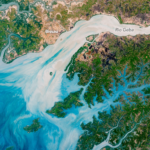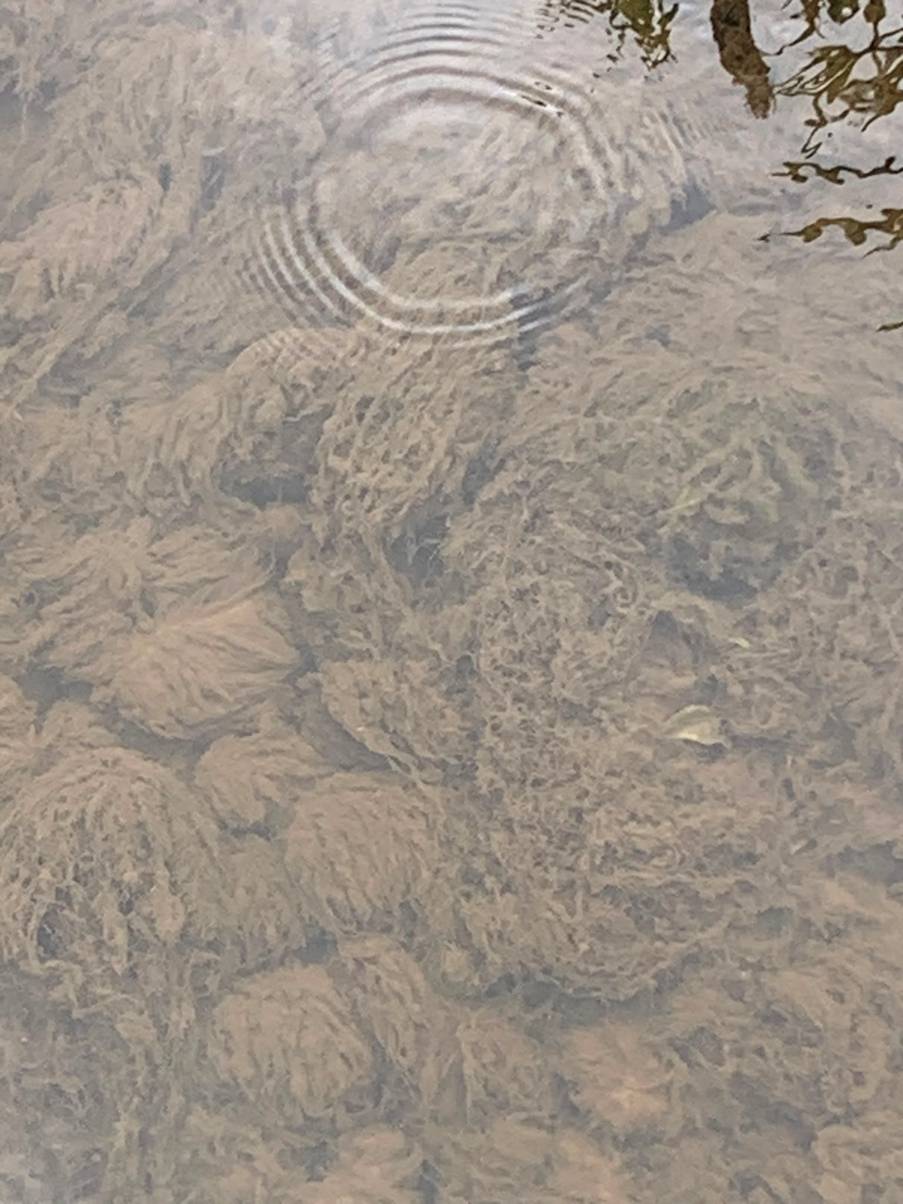
Filamentous algae in the River Glaven at Letheringsett Ford 12/06/2026
The problems on the River Glaven are numerous and require some action on the part of those responsible for the developing poor water quality.
This present short outline continues to look towards Anglian Water and their inadequate quality of discharge from Holt Sewage Works or as they call it Water Recycling Centre. Such terminology is a sad joke in this instance as the river down stream of its outflow is now subject to a developing manifestation of slime weed or Filamentous algae (Also known as Blanket weed or Pond moss).
Filamentous algae blooms significantly degrade the health of small UK rivers such as the Glaven, by choking out native vegetation, causing nocturnal oxygen depletion, and disrupting fish habitats. These blooms, commonly referred to as “blanket weed,” typically proliferate from May to September due to elevated levels of phosphorus and nitrogen from agricultural runoff and sewage effluent.
Ecological Impacts
- Outcompetes native plants: Dense mats smother key riverine plants like water crowfoot (Ranunculus). On rivers like the River Wye, blooms have historically wiped out up to 90% of native ranunculus beds.
- Suffocates aquatic life: Algae consume vital dissolved oxygen at night and during decomposition. This dramatic drop in oxygen levels can lead to localized fish kills.
- Blocks vital sunlight: Thicker surface mats shade the riverbed. This prevents lower-lying macrophytes and benthic organisms from photosynthesising.
- Traps sediment and silt: The fibrous structure of the filaments accumulates loose silt. This blankets the gravel beds needed by salmonids (trout and salmon) for spawning.
- Alters invertebrate communities: The monoculture limits food variety for macroinvertebrates. While some generic species find shelter, specialised river insects dwindle.
Human and Economic Impacts
- Disrupts local angling: The thick, stringy weeds foul fishing lines and lures. Deoxygenation and chemical pollution also force fish away.
- Creates foul odours: As massive piles of algae rot on the riverbanks, they release strong, offensive gases.
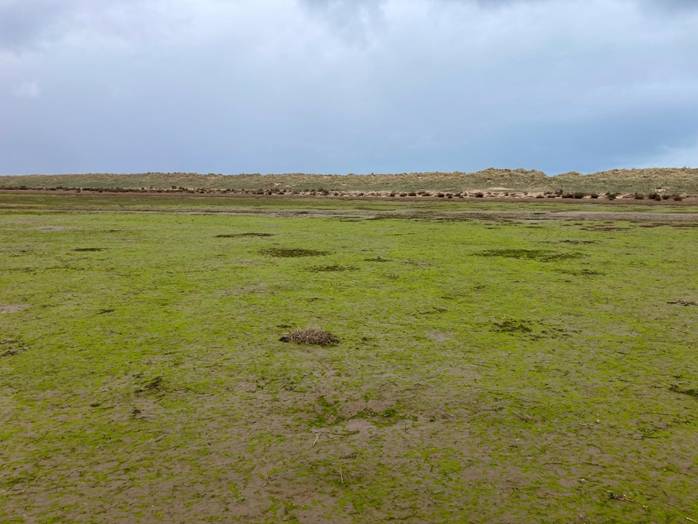
River Glaven estuary near Blakeney covered with Filamentous algae. June 2026.
Actions.
Active sampling is being conducted over the coming months regarding nutrient levels, nitrates and phosphate both up and down stream of Holt sewage outfall to get a clear view of the current water quality issues. We are to put forward a request to Anglian Water to rectify the shortfall in discharge quality that is already understood. We are already aware that a wetland has been designed to carry out tertiary treatment from the treatment works (2022). If this works is deemed unsatisfactory by the water company to meet its needs at the site, Clean Rivers Trust would be happy to work with Anglian Water, the Environment Agency and the Norfolk Rivers Trust to rectify any design shortfall and help see it put in place for the benefit of the river and the community who have asked us to become involved.
Ongoing.
The Trust does not see the problems of the River Glaven are all based round the discharge from Holt Sewage works, though the effects are clear to see. The River will be examined from all points of view. Agricultural, urban, and rural point source and diffuse pollutions entering along its short length.
Research into its historical uses and that along its course will be completed. Historic pollutions will be examined along with the known impacts these had on the historic biodiversity of the area. Recent activity to increase the regions aquatic diversity will be considered alongside these issues.