Coal Authority.
The Coal Authority have put in place several solar installations to help with the costs of pumping and treatment of minewater at their treatment sites across the coalfields of the UK and are further considering similar works at metal mine water treatment works that they are now installing and managing for DEFRA and other government departments.
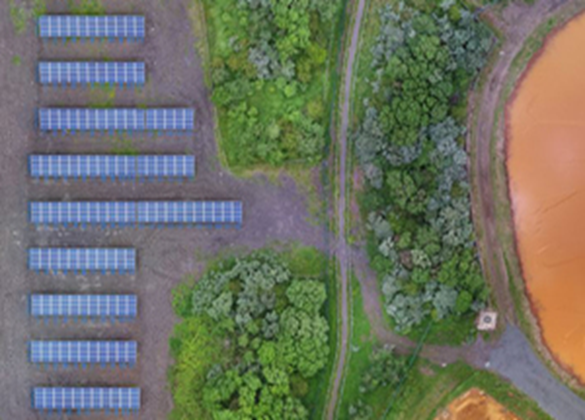
Bates minewater treatment site in Northumbria (CA).
In 2017 the Coal Authority appointed ‘HBS New Energies as a principal contractor’ (HBS) for installing solar power installations at their sites. There are now several such operations in place including Deerplay, Bates, Chester South Moor and Old Meadow. HBS handed over to the Coal Authority after the project 317.065 kWh, today (2024) 1.4 gWh of energy1 the Coal Authority are producing 1.4 gWh of energy and have generating an income of £60,000 from the sale of excess energy and saved around £200,000 in energy costs (CA).
The Coal Authority used other consultancies including Carter Jons Infrastructure and Energy, to carry through the solar projects with other partners in other parts of the country. These partners are where the investment funding comes from as there is no available investment funding available to the Authority itself.
The Authority is desirous to also cut its carbon emissions and the development of solar farms on their sites is seeing several hundreds of tons of carbon saved annually.
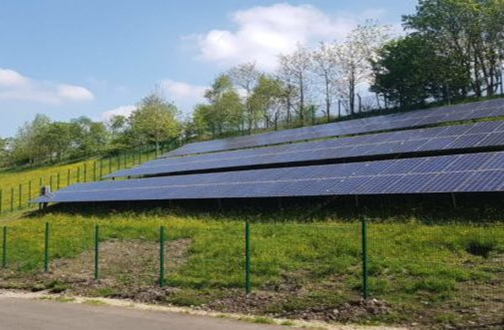
Deerplay (HBS)
Going Forward.
As minewater treatment is a major fiscal commitment for the Coal Authority: the central government support for them is always at risk. The treatment of water from abandoned mine is an ongoing commitment that is likely to go on indefinitely or forever. There are over 70 coal mine waters being treated at the present time by the Authority and metal mines are now being tacked on at a limited scale in West Wales, the Southwest of England, and the Pennines, funded by the Welsh Government and DEFRA. Such funding is reliant on the availability of such funds being available from the Treasury going forward.
Notes.
1/ The Solar panels are set low to the ground and grass where it grows is cut manually, it may be better to set solar panels at height off the ground where grazing of sheep may be viable.
2/ Criticism of wasted land is often aimed at solar installations. It has though been demonstrated that these schemes do create greater biodiversity than neighbouring grass land that is managed for hay.
References.