Cinderhill Article Appeared on the Brownfield & Regeneration Network Online Newsletter.
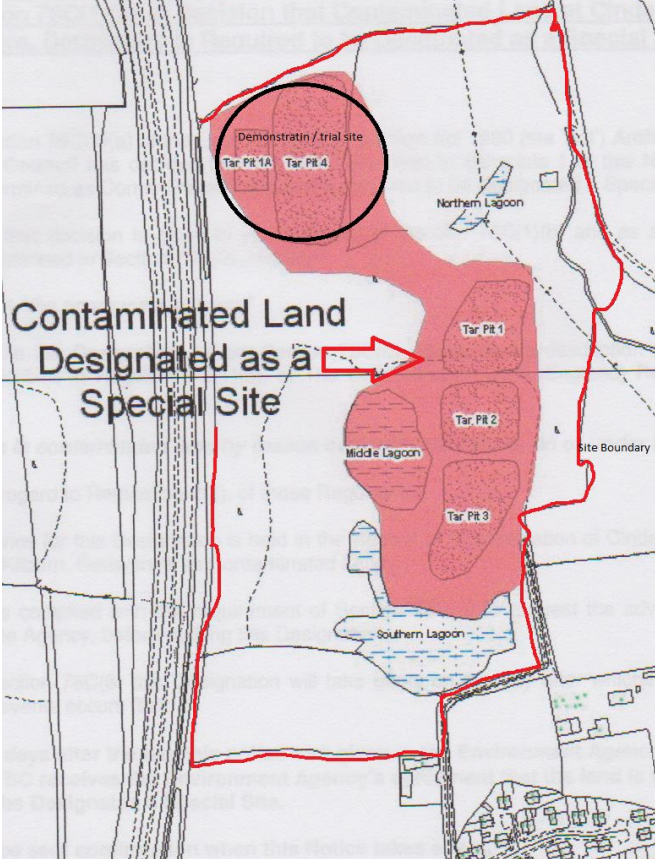
An article appeared in my inbox 14th June 2024. It is a useful and thought-provoking piece that needs a reply from an organisation noted in the piece and who has known the site for more than 10 years. For the last 6 years we have lived and breathed it. We have studied its setting within the landscape, its geology and hydrology, flora, and fauna. We have studied its industrial past: coal mining, both deep and opencast, clay quarrying and mining, willow growing for basket making, sanitary ware, brick and tile making, agriculture and waste disposal. We have had to look at the various uses that the site is used for at the present time.

Cinderhill raises question: what happened to Part 2a sites?
The decision by Amber Valley officers to back a development skirting a well known contaminated special site instead of fully remediating it, raises the question: what has actually happened to Part 2a sites?
10 June 2024 / Brownfield, Remediation, UK
There was a time in the 2000’s when there was a feeling that the contaminated land regime had at least something of a handle on contaminated sites with particularly difficult sites passed from local authorities to the Environment Agency and deemed Special Sites.
A question was asked at a recent event: what happened to Part 2a sites and Special Contaminated Land Sites? And after some silence, the consultant said: “there’s no money, so no-one is looking at them.” The audience concurred and no further questions were asked.
The decision of Amber Valley Council to back a development on the edge of tar pits which avoids fully remediating a Special Site, Cinderhill, really begs the question: are we leaving the toxic legacy alone for future generations?
The well-known contaminated land site known as Cinderhill near Denby is set to have 300 homes and 74 acres of warehouse and industrial space around it.
The reaction of the Holbrook Parish Council is significant in that it says the underground water can easily travel through mining tunnels across large areas of the site and run-off and surface water could get into the Bottle Brook via the decommissioned mine shafts and the polluted area of the Tar Pits and if any highly toxic material reached the Bottle Brook because of local flooding, it would pass to the River Derwent and to the River Trent. The concerns are shared by both neighbouring parishes of Kilburn and Denby.
Holbrook PC also points to the ecological danger of disturbance of the Cinderhill Tar Pits that would result during the construction, followed by continuous ground vibration from traffic that could potentially bring acid tar to the surface.
The site was deemed a Special Site by the Environment Agency under Part IIA of the Environmental Protection Act 1990 in February 2007 as it was contaminated with hazardous substances following historic industrial use, before becoming a dumping ground for unwanted materials and objects.
The council said: “The tar pits comprise about 10 hectares. They are the result of previous activities in the 1960s and 1970s comprising the excavation of clay and the infilling of some of the resulting void with water materials including tars.
“These activities were carried out with the benefit of planning permission but the restoration requirement of the permission, including the capping of the pits in the early 1980s, was not carried out to a sufficient standard, resulting in tars seeping out at the surface.
“The area has been left in that condition for a number of years.”
The plans put forward by the Harworth and Pegasus Group have been recommended by council officers with councillors making a final decision this week.
The companies say the investment is £455m and 1500 new jobs will be created along with 60 affordable homes.
Previous development proposals, which outlined construction paying for remediation have failed. But this proposal involves fencing off the tar pits site and building around them.
Haworth to its credit has been working with the Clean Rivers Trust on a phytoremediation research project to try and stabilise the acid tar and neutralise the high acid content. It won a Brownfield Award. But this is a long-term remediation solution.
The Environment Agency expressed its disappointment at Amber Valley’s officers’ decision: “Previous iterations of development proposals made by the applicant in this location had included the Cinderhill Tar Pit Special Site area, however, in the most recent proposal, this area is no longer included.
“The Environment Agency supports the regeneration/remediation of brownfield sites through the planning process, and therefore we have expressed our disappointment that the tar pit area is no longer included within the development boundary.
“We have not objected to the proposal as it is ultimately the applicant’s decision as to the extent of their development proposal. In making our consultation response to this planning application, the Environment Agency’s Groundwater and Contaminated Land Team consider the risks posed to Controlled Waters only. Our response has indicated that we believe these risks can be adequately managed through conditions attached to any permission granted.”
In November 2007, the Agency determined that, provided good quality fencing was maintained around areas of the tar pits being accessed by the public, … ‘this should be sufficient to break the significant pollutant linkages identified in the determination of contaminated land document issued by Amber Valley Borough Council’.
The Amber Valley Borough Council Scientific Officer has also recommended a condition requesting prior to commencement of development, a detailed investigation of any contamination and assessment of the potential risks, including a Remediation Method Statement.
This, is alongside the conditions recommended by the Environment Agency requesting: details of a verification report demonstrating the completion works following the successful implementation of the remediation strategy and other conditions, such as restricting drainage systems for the infiltration of surface water to the ground and the use of piling or any other foundation designs using penetrative methods unless these works are first agreed prior to such works commencement should be added to ensure that the site.
Denby Parish Council backs up Holbrook PC when it said: “a significant proportion of the land covered by the proposal is former coal mining. There still exists underground tunnels, meaning the underground water can easily travel across large areas of the site.
“This serves to spread contamination should the tar pits ever leak. Should planning permission be granted, the following conditions are recommended: Long-term legally binding agreements and conditions must be in place which commit the developer so that it continues to monitor brook courses in the area for potential contaminants/seepage for an agreed number of years after completion, if the development goes ahead.
“The Local Plan gives substantial weight to the remediation of the tar pits on condition that the ‘developer’ inserts a new A38 link road, and no piecemeal development on the tar pit site, etc. How can a developer just bypass what a Local Plan says for its own finances?”
The psychological effects on future residents on having a toxic legacy on their doorsteps, should not be underestimated.
Council officers write: “Although the tar pits are now excluded from the planning application site boundary, associated risks still need to be managed.
“Borehole testing (around the perimeter of the tar pits) have confirmed that there is no leaching of acid tars from the clay lined pits into the groundwater.”
Over 170 objection letters have been submitted to the borough council over the plans, along with opposition from the parish councils of Holbrook, Kilburn and Denby. Objections not only include the danger of contaminated surface water reaching the rivers Derwent and Trent, but the creation of urban sprawl, and traffic congestion.
Commentary.
The Role of Special 2a sites.
The passing of responsibility from local authorities to the Environment Agency was at first glance a good thing. As a national organisation who the government called the Guardian of the Environment, but there was no funding to go with the responsibility. When the Environment Bill 1990 was passing through Parliament it was believed that funding sources would be shortly developed after the Bill became an Act. The expectation was that polluters would either have to clean up their pollutions (the polluter pays principal) or be fined and funds pooled to create a reserve of money which could be accessed as is the case in the USA and Super Fund. This did not materialise, and the governments and the regulator shifted the emphasis that anyone who wished to develop contaminated land would have to remediate the site themselves prior to development taking place.
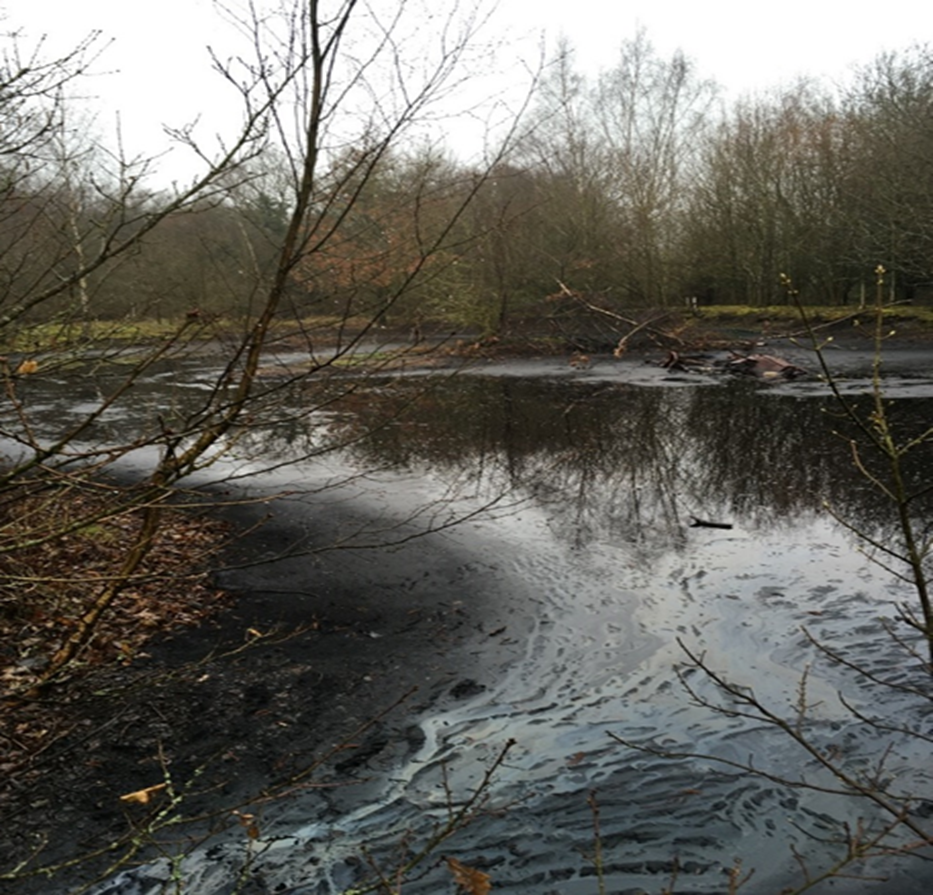
This has escalated as the Environment Agency has had to cut back on expenditure due to government cutbacks in their grant in aid. The lack of fiscal aid and a slowdown in redevelopment of land both for residential and employment brown field sites. Today many local authorities are stuck with 2a sites with contamination problems which they have had determined as special sites, many of which had seen the Environment Agency advice the councils not to go down the designation route. Often such categorisation makes sites unpopular to developers as the clean up regimes required by the Environment Agency are more stringent than a normal brownfield site with some contamination. At the same time, the local authorities are liable to feel let down by the Environment Agency as they hold back from either forcing a polluter to remove or treat their pollution or if that is not possible as the site might have been orphaned stepping in and funding a clean up themselves with state aid. This muddle has been escalating since the early 2000s.
In the case of the Tar Pits at Cinderhill the Environment Agency (since about 2006) ensure the majority of contamination at the site is fenced off. This was paid for by the company who purchased the oil recycling company based in Belper in the 1980s. They continue to maintain the fences which are subject to regular vandalism and destruction. In 2007 the local authority, against the advice of the Environment Agency) commissioned a report on the contamination at the site and on the basis of the Report the government declared it a Special Site of Contamination II (a). The council have been disappointed that the designation has not had the Environment Agency spirit the contamination away.
Development Plans.
The Tar Pit site was included in a plan to develop part of a large area to the east of the A38 in 2006/7. The council and the developer agreed the plan with the agreement of the Environment Agency to cover the tar pits on the site with concrete covers so removing the need to remediate the contamination. The planning permission was granted in outline but in the High Court Friends of the Earth legal division challenged several technicalities and the permission was rescinded. The developers walked away. This developer planned to build housing around the Tar Pit site.
No further interest was taken by developers until Harworth Group in 2017. Their plan has at no time proposed to develop around the Tar Pits or lakes. This area they initially proposed to keep as public land/nature reserve. The Tar Pits area was eventually removed from the planning equation as the public and regulators put forward the view that it was all one site. The tar pits from that point were removed from the application. The development could then be the focus of discussion and not the contaminated land.
Parish Council Objections.
This set of objections included flooding, mine water, surface water run off from the tar pits via Morels Brook entering the Bottle Brook. All good points if you are not aware of the complex conditions of the site and its linkages below ground and oat the surface. In one instance the pumping of mine water a number of miles distant.to remedial activities a number of miles distant that influence the water regime below the area.
Mine workings, many of which receive surface drainage from land to the west, north and south of the site flow naturally with the dip of the strata towards the east and southeast depending on the seams of coal at varying depths. Research conducted over the last six years has traced mine water movements to the Coal Authority pumping station, Shipley. This research was helped by the Coal Authority and its maintenance program as when the pumps were not functioning for a brief period water was observed to rise to the surface at a number of mine entries in the area.
The pumping station at A Winning is also influencing part of mine water flow north of the tar pits site. The pumping of the mines at the two locations ensures no serious surface water flooding via the historic workings. The concerns that contamination may enter the workings beneath the site is highly unlikely as the lagoons that were filled with tars were not lined with clay but are set in clay. This clay bed will bot separate or crack, both possible if the lagoons had been purely lined.
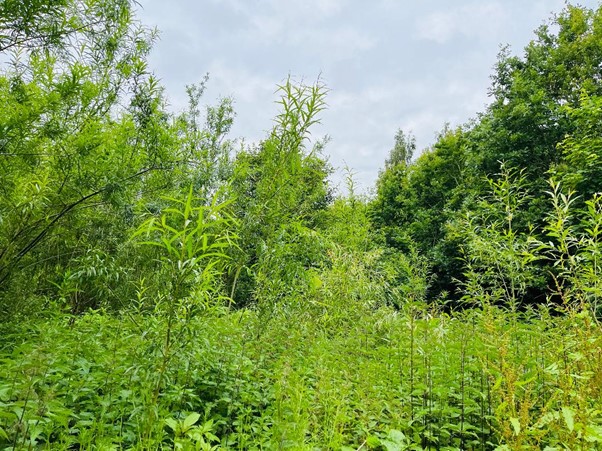
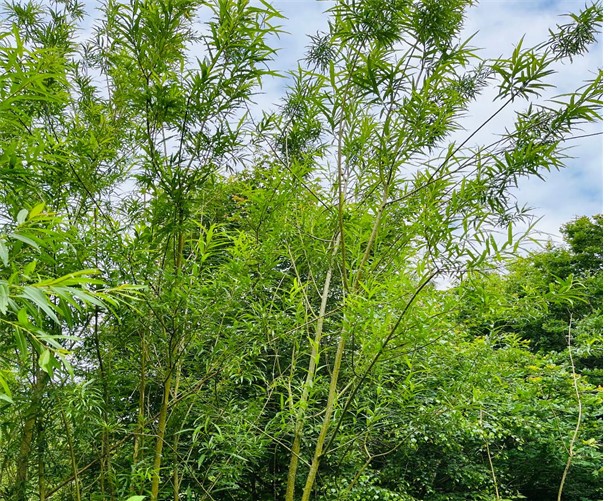
Surface water flooding to the parishes close to the site is unlikely due to the work that CRT have undertaken at there research site which is now holding all its water on site due to the tars breaking down into soils to a depth of 4 to seven metres with a large and growing diverse earthworm community. Prior to the remedial work being undertaken the runoff from the tar was pH 1. Today the soils and water are a pH7.8.
The tar pits receive constant vibration from the heavy traffic on the A38 and has now done so for many years. This only ensures that the tar/acid matrix housed in the lagoons. The clay in which the lagoons are set will not be adversely affected by either the construction proposed by Harworth or future traffic. No surface water or contamination leaves the site by any route.
Harworth and Clean Rivers Trust.
CRT has worked with Harworth for more than 6 years on Cinderhill. Prior to that research was carried out at the suggestion of the Environment Agency who then saw the Tar Pits as one of the largest environmental problems in the Midlands.
The Trust has worked on several projects for the use on mine water heat from abandoned mines across the UK and Europe. We brokered a link with Harworth and the Coal Authority on a site in Northumberland in 2010.
We have investigated many sites were Harworth have interests since their foundation. We have always been grateful for their support and interest in our ideas.
Demonstration of Success or Failure.
Regarding the Tar Pits project and the use of phytoremediation on the scale already undertaken has been verified independently by Harworth who commissioned two independent overviews of the work so far undertaken. One was conducted by the University of Nottingham who are still actively monitoring progress. The other being Paul Nathanial, a leading expert in contaminated land remediation who practices globally.
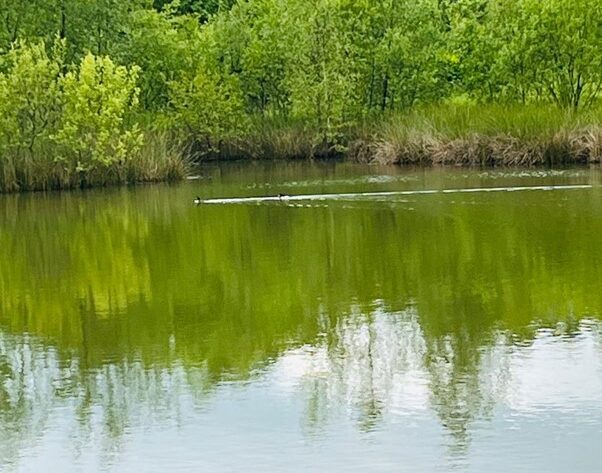
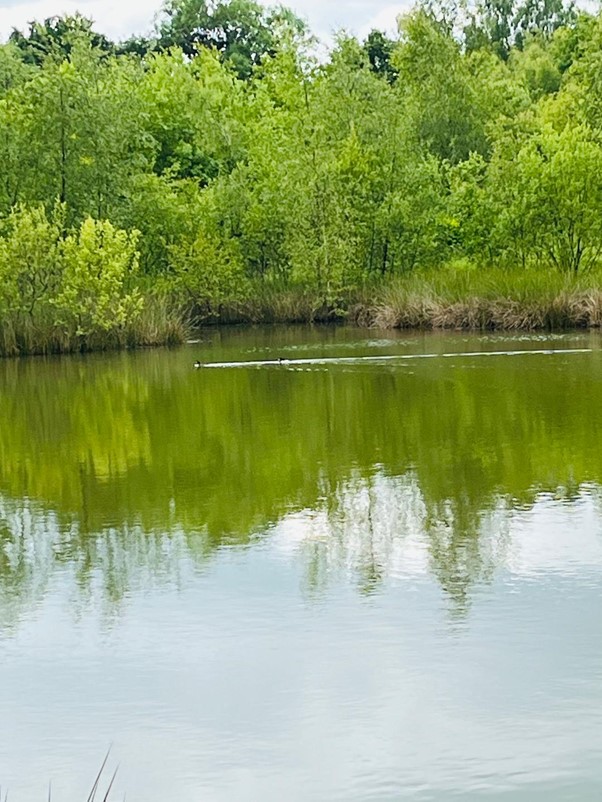
We have also brought the Middle Lagoon which was an acidic lake (pH3) to a standard of water quality never expected. An environmental consultancy had put forward an option to drain the water body and fill it in. This last week a survey showed that duck, geese, and grebe have all successfully nested at its margins and a sustainable young fish cadre is developing in its water. None have been present in the lake water for the last 40 years since it was formed.
Future.
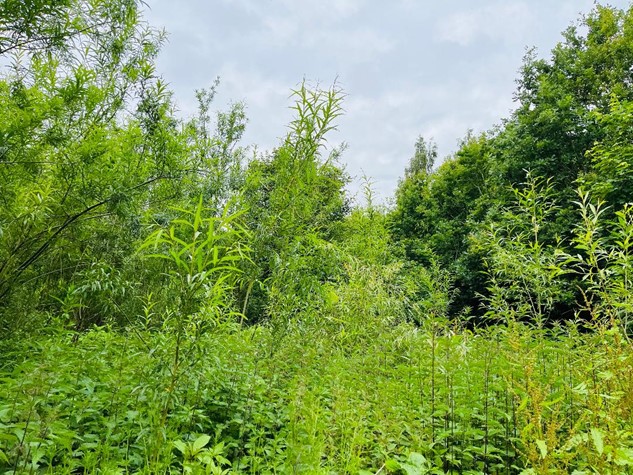
One hopes that the phytoremediation of the rest of the Tar Pits site is allowed to continue. Costs are low and other methods such as removal and relocation elsewhere are hugely expensive. The site is developing into an area of importance for nature with many species becoming regular sightings. Great Crested newts are alive and very well on our research site along with the first colony of Ghost slugs in the East Midlands ever recorded. The Deer, badger, fox, weasel, stoat. Mice voles including water voles are all present on the tar pits site. The care to maintain their presence is in place along with the expertise.
There is no rush to decontaminate the depths of the lagoons which may take 20 years. The surface metres of depth can be achieved in 4n or 5 years and as it is not to be dug up its future as a refuge for nature can be assured.