The rise of a scenario that emanated from the swinging sixties, or as ever the media; from Forbes and The Times to the Sun, who just love the titter factor. The contraceptive pill should be taxed at £1000 a year. This is the estimate the European Union (EU) is reported to recon is the economic fee needed to reverse or stabilise the environmental damage such medication will require over a year. The polluter pays principal being implemented and that the female does not wish to become pregnant or uses the medication for other causes, and so becomes the source for the pollutant to enter the natural environment when the drug passes from their body.
This suggested fee does not relate to England as yet, but to any other EU nation including Wales, Scotland and Northern Ireland. England escapes as it has not carried out its socioeconomic research into the effects that officially are befalling English rivers and other waterways. The truth is though that the problem is known to exist and, as a whole the UK, was the first country to identify and report on the environmental impacts of estrogenic endocrine disrupting pharmaceuticals.
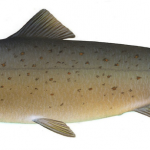
The fact that the problems highlighted by EU officials, UK environment protection agencies and the academics are being subjective in their targets for vilification. Much work has been carried out in this area with regard to the issues of trans-gender fish, and the concerns from such discoveries over the years; this research has shown that it is not just one particular compound (ethinyl estradiol) a synthetic estrogen used in the contraceptive pill formulation as suggested by the media. There are many other estrogenic compounds and many other unrelated substances that mimic their formulation effects in the natural environment.
A Japanese Vision.
Officially the UK government and the EU agencies say that concern has been rising for ten years; in the library at the Trusts office there are published reports going back twenty years which quote research far older, a minor but fundamental issue, but there has been time to get closer to bringing the subject towards resolution sooner. The discussion of fees being a red herring and as such should be side-lined. The need is to find the economic answer to this conundrum.
The government and the EU are at pains to note that there is no threat to the human population from estrogenic drugs, this though is not altogether accurate there have been several banned in the past for use due to multiple concerns regarding health issues from DDT to Diethylstilbestrol which was used through from the 1930s to 1970s to treat sexually transmitted diseases and later pregnancy issues. Those that took the drug are still monitored as are their children and grandchildren who have been shown to exhibit a range of abnormalities and unusual characteristics. The fate of DDT is well known with a global cessation of use; the latter medication was banned for human use, but is still recognised as a valuable veterinary drug for the treatment of bitch canines suffering from poor sphincter control; its use as a bovine growth hormone ceased in the 1960s as it was found to be cariogenic to humans
At the moment there is no dedicated government funded research projects into the issue though the Department of Environment, Farming and Rural Affairs (DEFRA) have now put to tender a research project ‘Review of the Socioeconomic Impacts of Pharmaceuticals in the Water Environment’ which will bring England in line with the rest of the UK and Europe.
In the view of many specialists in pharmacological risk analysis the present testing regimes require high levels of certainty on environmental breakdown and chemical pathways, this is done at present in the prescribed manner which is in isolation and unlikely to mimic the natural environment and is unable to consider the natural mixing of the many separate entities that are carried out as the result of sewage collection and treatment systems, let alone natural drainage all of which combine and are remixed again in rivers and other water bodies.
In the past the Trust has been asking for some, if not decisive, action from the regulators and/or the government to begin to limit future problems but now the prospect is becoming more apparent, the government, be it from London or Brussels is concerning: the Catch 22 question is that if we want an environment that is risk free with regard to trans genetic/gender fish and possible transgender humans (one of the abnormalities induced by genetic links to Diethylstilbestrol is a male inability to father children) the cost is to be borne by society in a way it can afford.
The options are now to be worked out by a sociological study that is uncertain of the risks and the public are totally in the dark regarding the issues. Bring on the clowns.

(© ToonTown)