The Trust was contacted recently to help with the problems of ochre contamination to a small wetland that has naturally developed at the base of the spoil heaps of Waingrove Colliery, not far from Langley Mill on the edge of the Derbyshie side of the River Erewash. The site is right on the edge of the exposed coalmeasures that form the geological and county devide in the area. On the farside of the valley is Nottinghamshire
The local community has developed a group dedicated to the local environment and have in recent years purchased 12.5 acres of woodland that through their stewardship will survive as a resource and amenity to the village in perpetuity. Part of the site consists of old spoil heaps that are the last remnents of the local colliery that closed in 1921. The capped shaft which is just short of 300 feet deep is marked and is now part of the woodland that has developed over the spoilheaps over the last ninety years.
The woods are a noted bird watching site and is a regular destination for twitchers. It is also popular for dog walkers and riders both of horses and mountain bikes.
The Pollution.
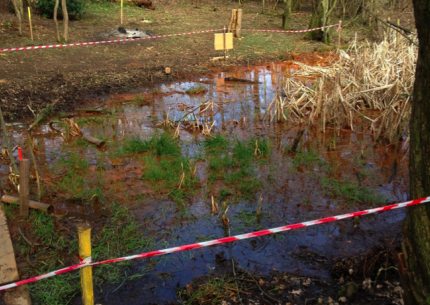
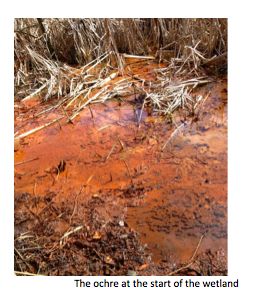
As already said the ochre is the main pollutant; iron hydroxide which is the residuel material created by water enriched with iron in solution meeting air. The ochre coats the base of the wetland and can be seen to contaminate the small stream that flows away from it for about 75 metrers but by the time it reaches the culvert (100 meters) that channels the flow beneath a road it is running clear. Examination of the bed of the stream shows no iron reaches below the obviouse drop out location.
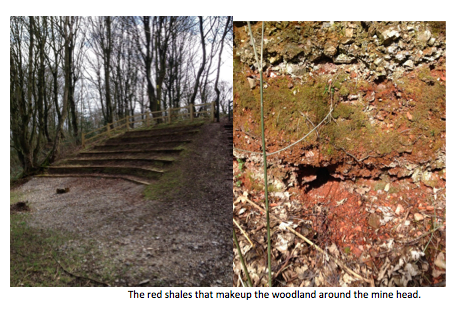
The source of this contamination is not from the mine itself but eminates from the pit tips that makeup the wooded area above the wetland. The iron is leaching out from the site as rainwater perculated through the shales that were the predominating waste material from the mine. This shale has burned out almost completely leaving a red shale mineral waste deposit; the pit tips burned for several years after the mine closed. The hight of the waste tips having now been compressed by oxidation, fire and time.
Community Plans.
The management group and Trustees of the woodland planned to develop the wetland, part of which is in their ownership for pond dipping and other educational activities. This has now been put on hold untill agreements are reached with the Environment Agency, the neighbouring farmer, Coal Authority and themselves asto the future of the sight. The wish being that the wetland be maintained in its present form or if the landowner and farmer agree extended to allow for greater capacity within the the wetland for ochre deposition.
Initially there had been a plan to remove the ochre deposits from the start of the wetland in a bid to make it more attractive to invrrtabrates. This has been delayed as well till a concensus regarding the sitr has been achieved.

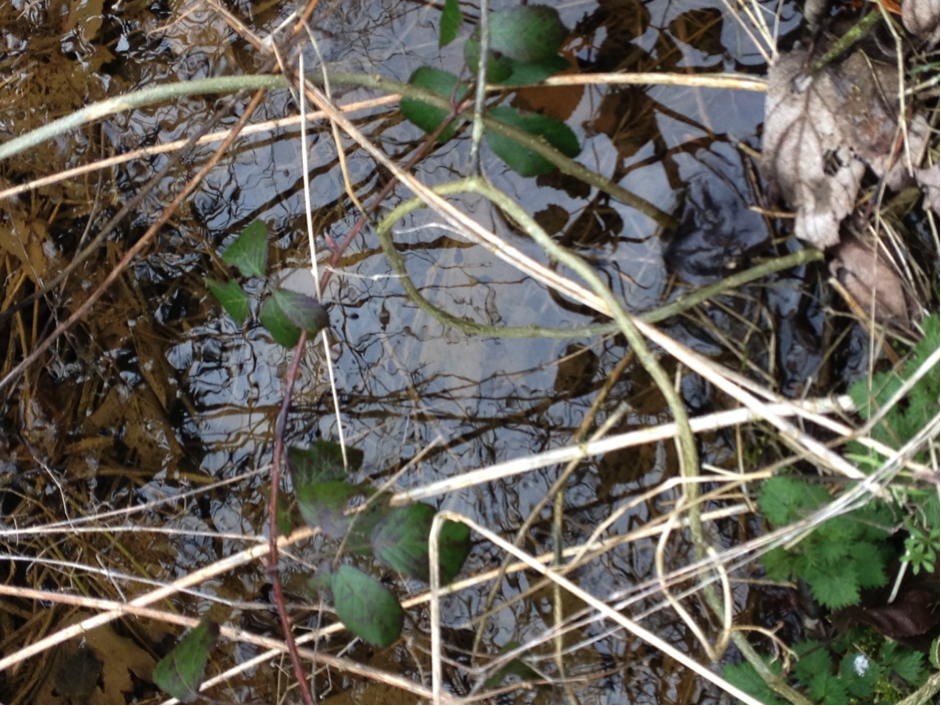
Clearwater before the culvert under a road
The Trust will support the work to achieve agreement on the long-term development of the treatment of the water at this site; it is both an historical feature and a site for ongoing research local to both Derby and Nottingham.