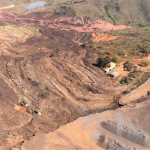
The pollution of Whitehaven Harbour by minewater coming from a stream linked to the railway tunnel beneath the town. Network Rail are examining the linkages between the tunnel and old coal mines.

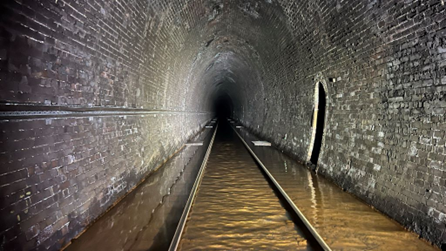
The mines were found to impede to some extent while the tunnel was being driven beneath Whitehaven in the 19th Century. Though the problem of water was never noted at that time or afterwards. The waters within the tunnel are entering from at least three points along its length.

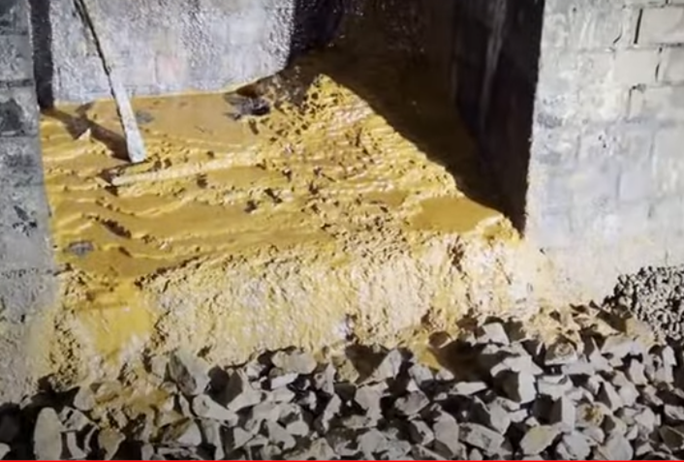
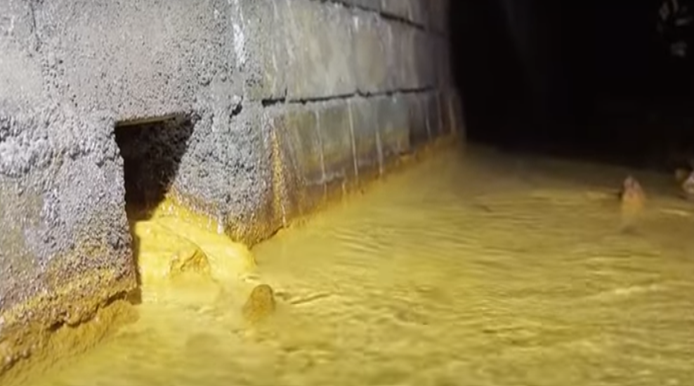
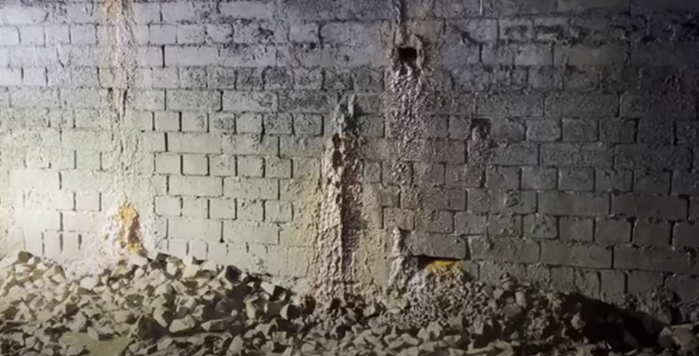
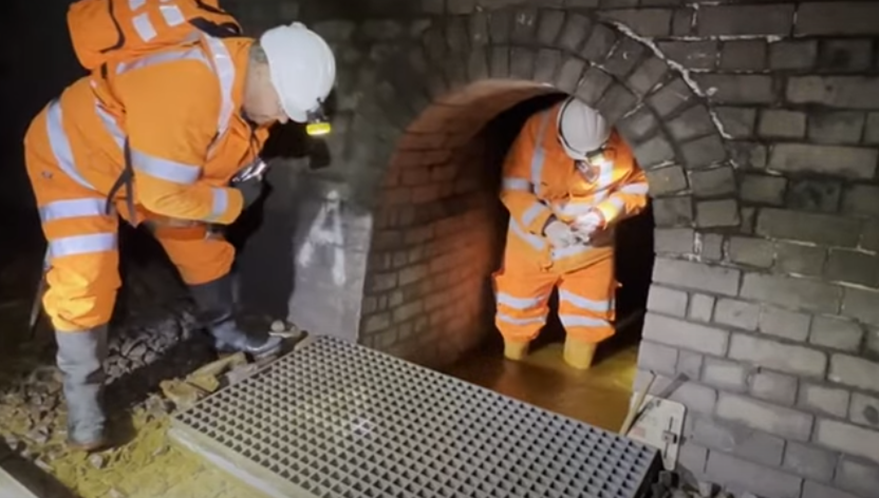
The tunnel was relined at the end of the 1940s, but no information has been made available of the reasons for the work. The pictures show 19th Century detail such as bricks, so much was likely to have involved grouting and brick replacement. There are a number of signs of ochre seepage, but most appear to be historic minor staining. There would appear to be four recent inflows of some volume, one is not at present running into the tunnel but damp. Two others are actively flowing.
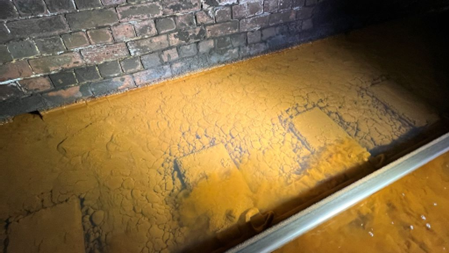
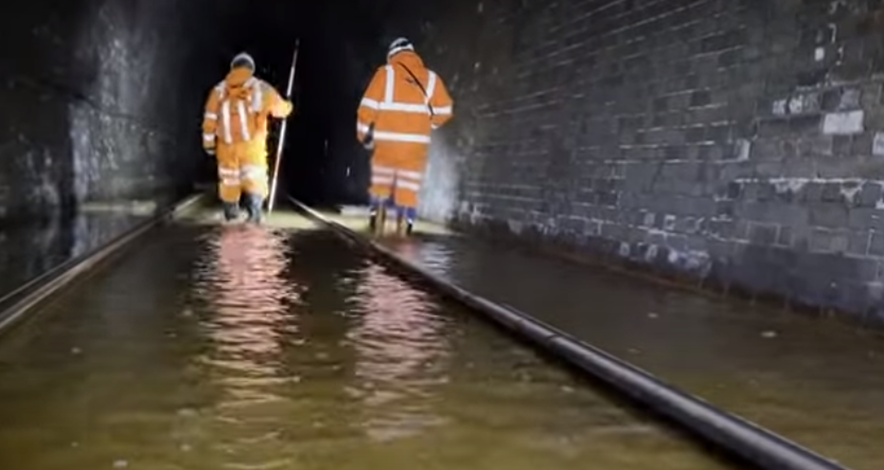
The track bed shows some flow in parts of the tunnel whilst other parts are static. The limestone bedding for the track has attracted iron out of the water forming as iron hydroxide. The water ingress appears to be coursing concern to Network Rail for its effects on the tunnel brickwork. The trains passing through the tunnel have had their speed cut from 40 mph to 20mph to cut risk of splash onto the walls.
The true source of this now year long pollution is hoped to be revealed soon when the report by a pair of consultancies is published. There can be no doubt that the water originates from old mines, some of which are likely unrecorded or at least not understood well due to the lack of plans. The mines responsible are all sunk in the 17th and 18th centuries,
The other conundrum, one which may be impossible to identify being what caused this sudden outflow to start. It may well be failure of stall and pillar integrity which has allowed heave or subsidence allowing mines to drain from one level to another. It may well have broken a fault stopping flow. The geology of this particular mining area is complex with many faults that limited drainage from one area to another.

Many of these old mines were drained by adits running water through specially dug tunnels taking water away from whole areas of worked and unworked ground. The opening up of a stopping may allow a mine system to drain into the tunnel indefinitely.
It is unusual for a mine to discharge water via another route not directly linked to the mine. The problems that are apparent make this a problematic issue. It begs the question of how to treat the water in the short term whilst a long-term sustainable solution. The town and its harbour are intrinsically linked and a major visitor attraction and sailing base. The economic damage to the town is getting worse. The long-term treatment options that have yet to be considered will also rid the tunnel of its flooding. This is important for the town and for the nuclear industry just down the track.
The limestone track bedding within the tunnel may allow for the water to change its acidity. We are aware that the water has been recorded as having a pH 3.6 and by the time it reaches the brook it is pH 7The majority of the limestone appears to be coated in iron hydroxide which may allow the water to demonstrate its acidity into the harbour in a more damaging way over a protracted period.
Network Rail are needing to end this tad hoc drainage of these mines via the tunnel as well. The water is not just slowing trains speed it is also damaging the track bed. Limestone is turning from hard rock to a slush which may require the track to be relayed.
Reference: