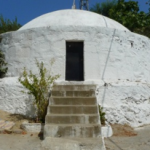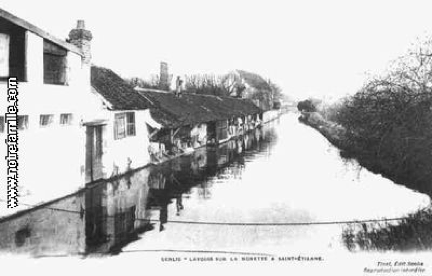
The Nonette is a small river in northern France, a tributary of the Oise which is a Tributary of the Seine, entering that river on the right bank at Gouvieux, downstream of Paris. The postcards that follow show a riverscape from over 100 years ago, some of the buildings no longer exist; most notably the huge watermill which was destroyed during the German advance on Paris in 1914. The town of Senlis being about the farthest west the Germans achieved before being pushed back towards the Somme and Marne rivers and Verdun.
Today the river still has the timeless air that comes from these old pictures, today the waters are cloudy as they were in the past and evidently carrying the chalk from the plain of Picardy and the silt overlying the limestones that makeup the plateau on which the city of Senlis and the town of Chantilly are located.
The river rises at Nanteuil-le-Haudouim and flows slowly for 40 kilometers to the Oise. The gradient of the river is shallow as is its depth. In the past it allowed shallow freeboard barges to use the flow to carry crops and industrial produce from the surrounding area to the markets of Paris and Rouen and allowed coal to be brought into the area.
The Nonette is a river like most others and does not keep within its bounds, flooding has
always been an issue that has had to be lived with, periodic inundation is less of a threat today than it was due to the creation of water storage capacity in abandoned mineral workings along its length.
The large mill demonstrates the rivers transportation uses, the top floor gantry shows that at the time of the photograph or a little earlier the sacks of grain for milling were brought by lighter to the mill. The quay by the mill demonstrates the importance of the operation as the queuing area for vessel waiting to load and unload is substantial and would have only been built for such a major milling business, which was also involved in weaving the woolen cloth that the area was once famous along side leather and tanning which brought great prosperity up to the end of the 19th century.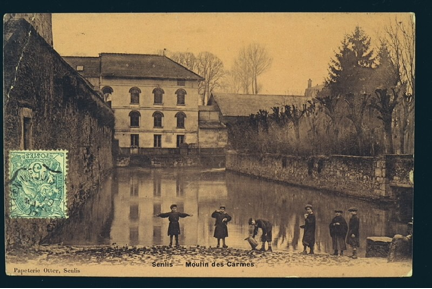
Today along the river there are still other buildings that demonstrate the rivers industrial past including several other smaller mills, warehouses and wool carding and spinning sheds.
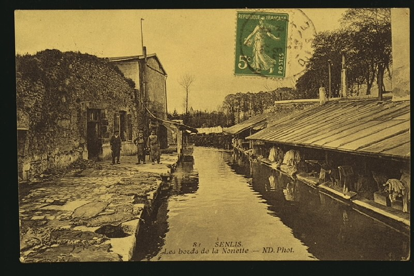
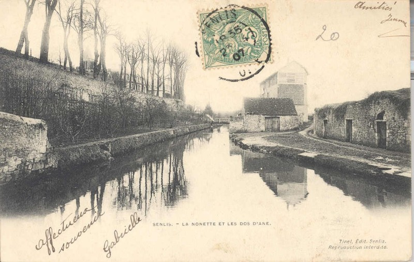
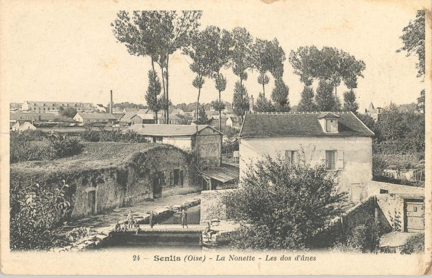
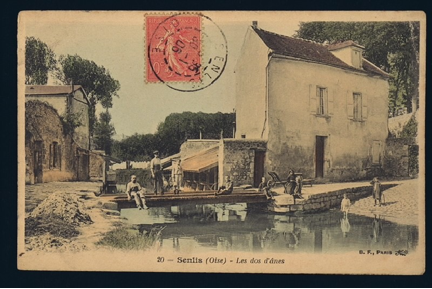
The bridge across the river is made of removable beams to allow river traffic to get by though by the appearance of the riverside the use of the river has diminished to nearly nothing. The majority of freight traffic having left the river and was now using the railway that had quite expansive goods yards at this time in the north of Senlis.
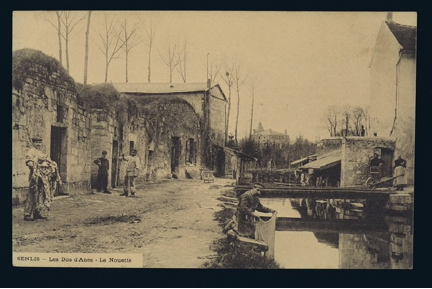
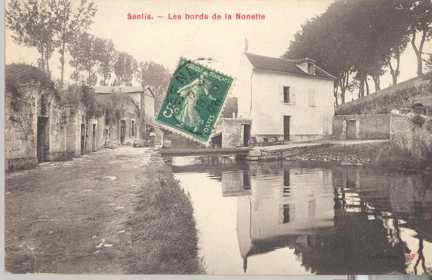
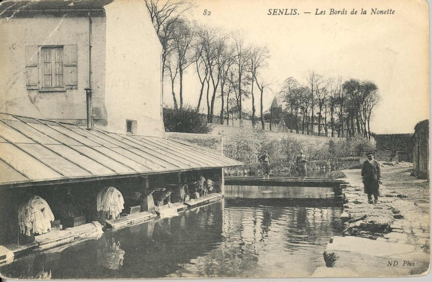
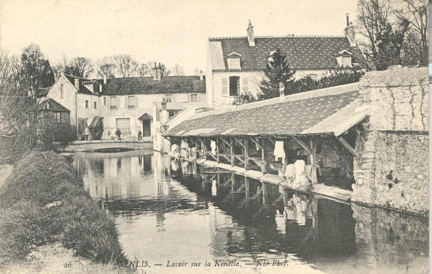
Washing stations such as the above were a norm in France up till the late 20th century in many remoter areas of the country. Several sites are preserved along the Nonette and most other rivers across the country.
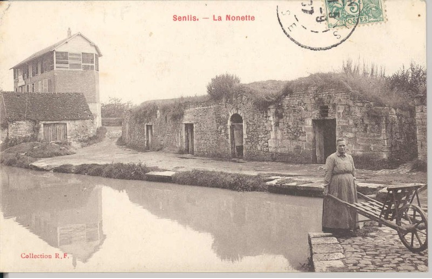
The purpose of looking at some very remarkable old postcards of a river of no great fame or notoriety is that they give clues to understanding the past and the influence that may have on today’s rivers. The past is now locked up to some degree in the silt and mud at the bottom of the river, but as can be found by understanding the rivers previous uses one is allowed to begin to recognize sites within its environs; the industries that have vanished but may still effect the area, chrome and other metals from tanneries, phenols and ‘blue billy’ plus other hazardous compounds from coal gas manufacture. In small cities and towns across Europe, rivers were the life blood of communities who used them as transport routes before roads were improved. River barges were faster than oxcarts and carried more.
It is also worth being aware the fragile nature of such a river that has been polluted in the past. It still has to carry the waste from the sewage treatment of the communities along its banks; it has had, and still receives volumes of agricultural chemicals, including fertilizers and insecticides. Regionally the government and the farmers are doing much to control the future run off into the rivers is still receiving residues of that which was put on the land ten to twenty years ago.
Acknowledgement.
Personally, I thank my Nephew and his Wife for introducing me to the Nonette with these pictures, inviting me to stay for several days so I could become acquainted with the river and also for their generous hospitality.