The tar pit was one of a number in the Belper area of Derbyshire left over from the local historical business of recycling engine oils. The carcinogenic and highly acid (pH1) waste residues being deposited around this part of Derbyshire and as far a field as the West Midlands up to the late 1970s.
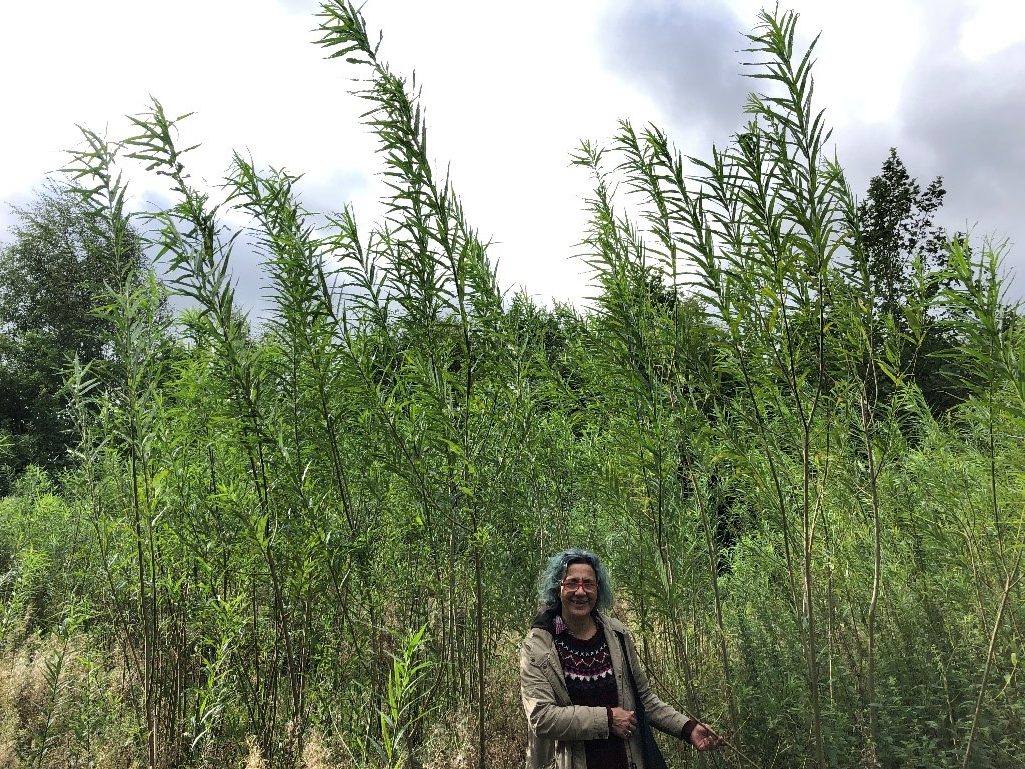
The willows are growing well and more importantly demonstrating that they are up to the job they have been set. The bare stem of this wand has been defoliated in part by gases vented by the plant. The new leaves are discernible as buds below the mature leaves at the head of the plant.
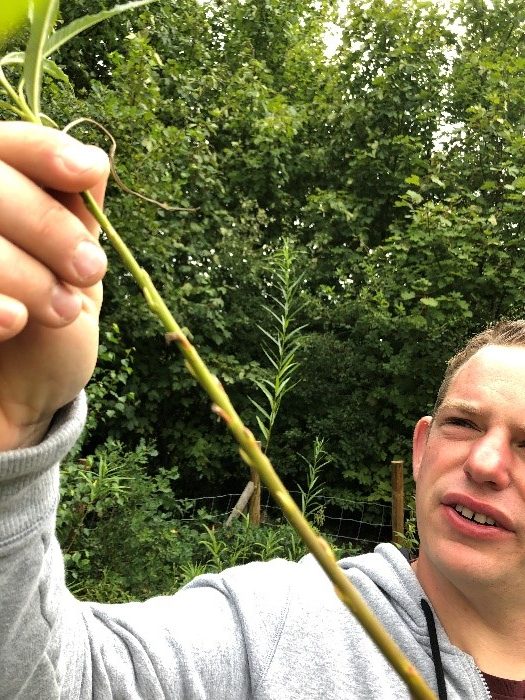
Such defoliation is brought about by the breakdown of the tars on which the willows have been planted. The roots of the willows are carrying natural bacteria from the tar surface downwards and the plant is channeling the gases generated in the breaking down of the hydrocarbons up the plant’s stem and venting them from leaf and joint nodes. The gases being toxic to the plant defoliate it temporarily.
It is noteworthy that several willows that appeared to have been killed off totally due to this venting process have been found to now (4 to 6 months after the severe shock of meeting the tar) have regenerated and are again growing strongly. This ability to adapt to hostile environments led us to choose the willow as tree of choice in the first instance. The ability of willows to grow in mine water with high acidity and metals in Cornwall, Cumbria and Scotland first alerted us to these abilities and the extremely hardy nature of Salix in the first instance in the 1990s. The work then and subsequent research has culminated in this trial.
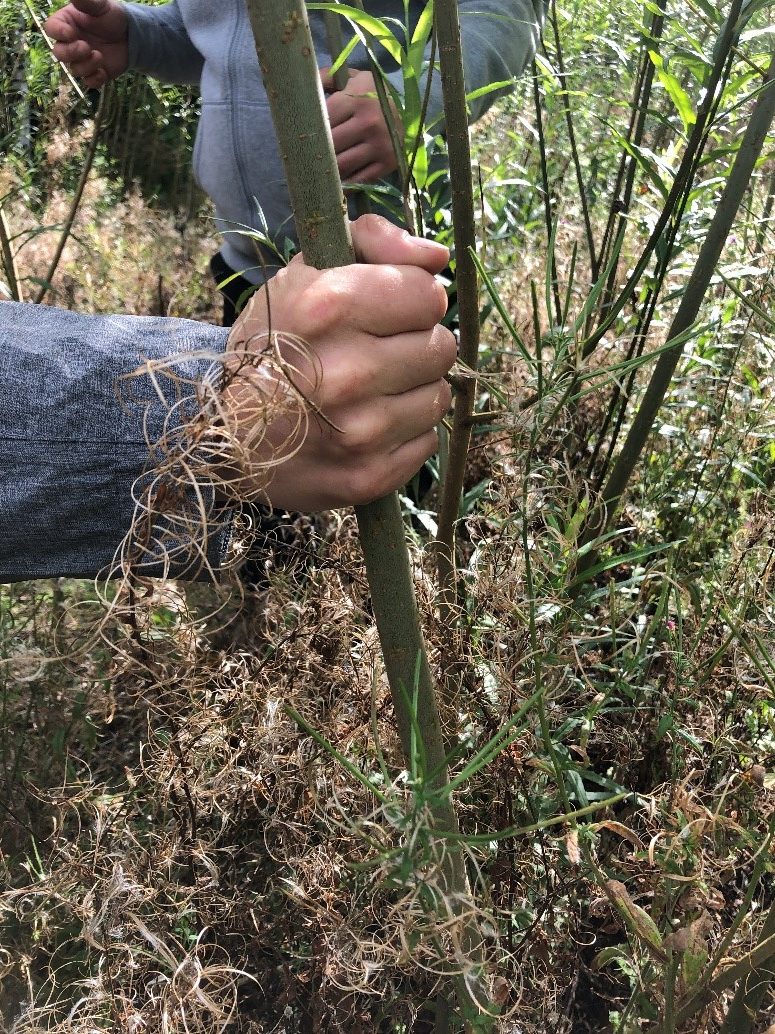
The development of the willows is well illustrated (above). The thicker stem is starting to develop a juvenile bark whilst the rejuvenated plant behind which had died back several months ago shows its juvenile skin.
Questions have been put to us regarding the actual root growth into the tar. The roots demonstrate their progress into the hydrocarbon by their stability and when excavated their physical presence up to two feet down into the tar. This method of land remediation has never been claimed a ‘quick fix’ and requires the trees to be managed, although lightly for some time till established. Even then costings will only ever be a fraction of any other remedial method that might be considered.
The main ‘other’ benefit is that an area that was devoid of any plants or life and was a quaking tar desert is almost instantly transformed into a developing ecosystem. At earlier periods of the project we have demonstrated that mice and birds fed on the site, deer, foxes and badgers visited the site, grass snake and great crested newts were present. This last visit on the 21st August showed other transformations.
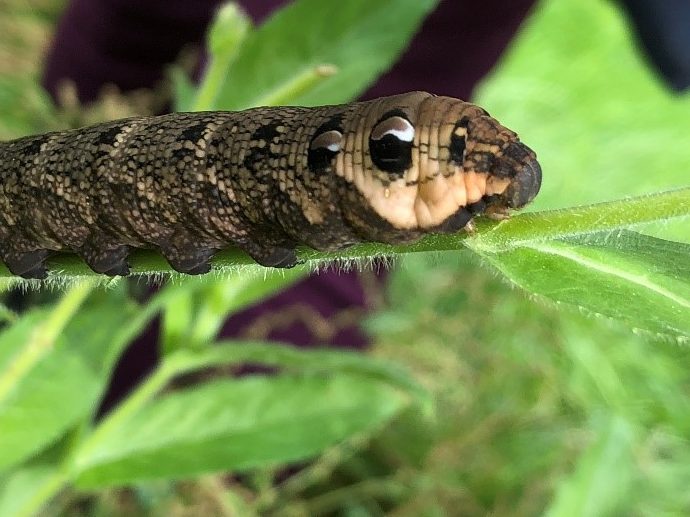
The caterpillar of the Elephant Hawk Moth was present. Though not uncommon in the UK is a first for this part of Derbyshire.
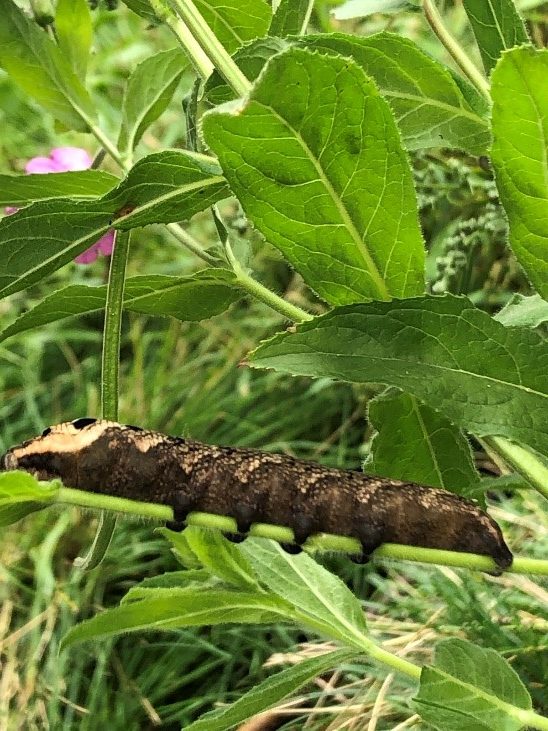
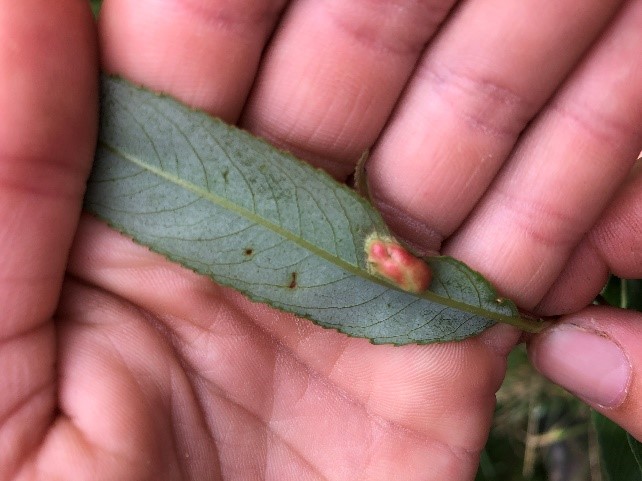
Below is a pink white wart on a willow leaf that is really gall belonging to the Willow Saw Fly, again a first for the area. The saw fly is a member of the wasp family and a voracious aphid predator.