Rivers have from early times been the main and most comfortable method of moving goods to ports for export up until the railways came into being in the mid-1800s. The rivers continued in this role in a major way till the mid-20th century when new roads vied with the railways to take bulk materials over long distances.
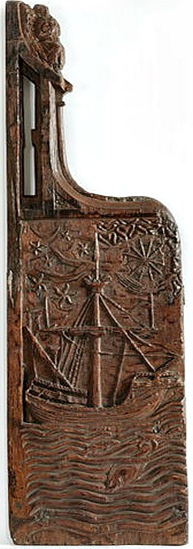
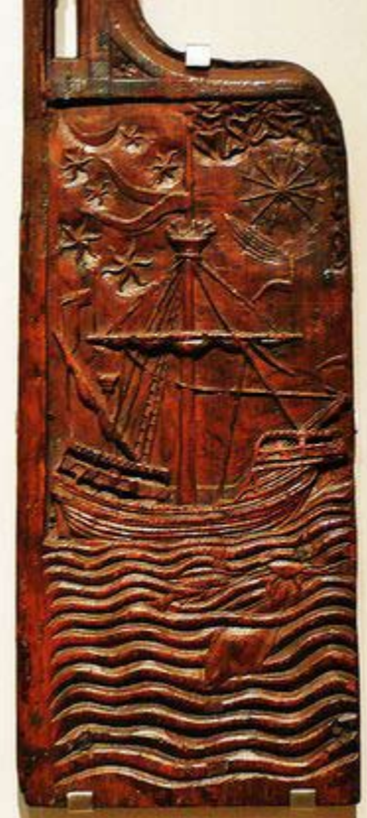
Two carved bench-ends from St Nicholas Chapel, Kings Lynn depicting a late medieval ship that shows striking similarities with the graffito located in the South Porch. Victoria and Albert Museum. The first being an earlier work the second a later copy
The interesting aspect of the two carvings above correspond with the pictures that follow: the first four are graffiti drawn on walls in Cley Church in Norfolk. One picture which is unique amongst the illustrations is the one with a figure on the deck of one of the ships. The drawing outlines the clothing and most specifically the headgear worn by sailors.
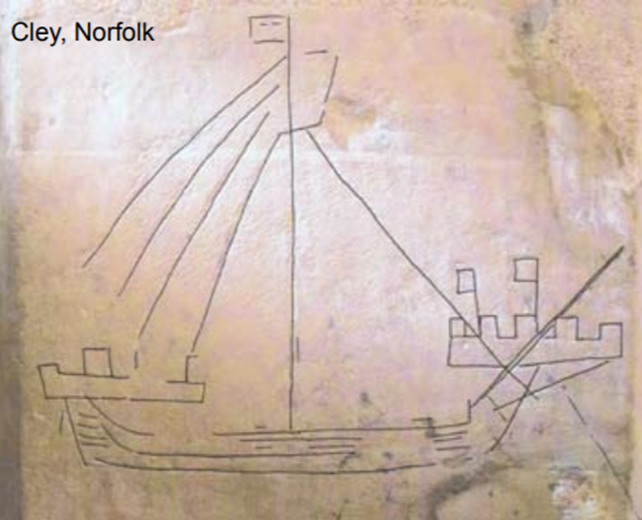
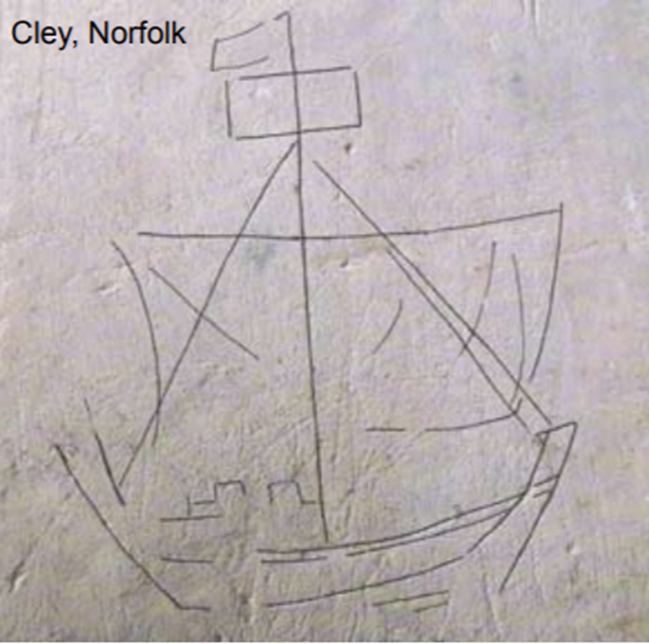
Cley
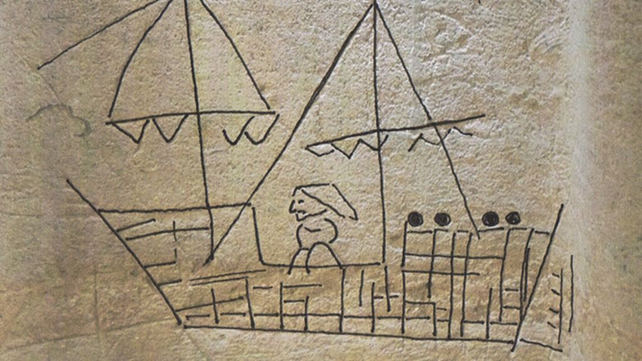
Cley
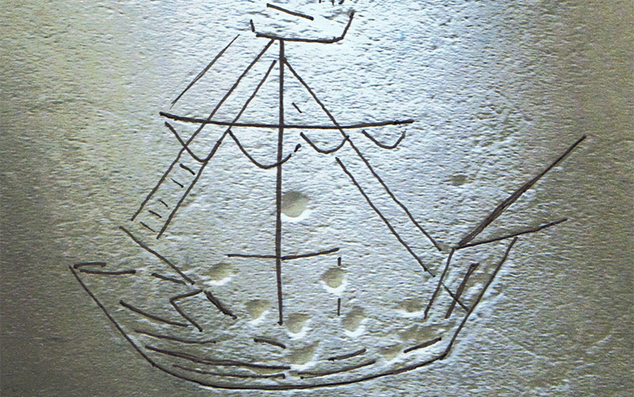
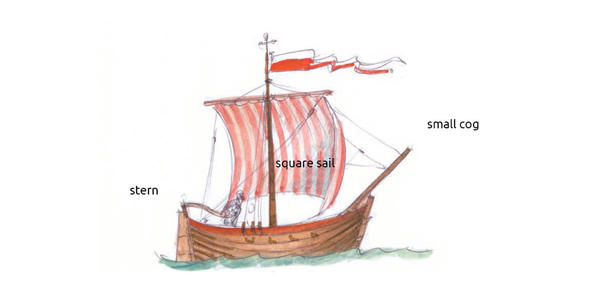
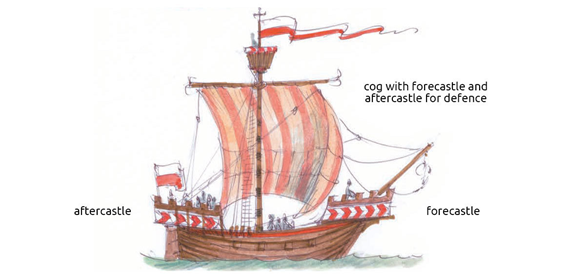
The cog was the ocean-going ship of the medieval period, 15 to 20 metres long, 5 to 7 metres wide and carry 50 to 90 tons of cargo. The hull was flat bottomed and could rest on its keel for loading and unloading. With problem it could sail or be hauled up rivers to inland ports, thus saving time and expense of transhipping to river transports. The mast was often able to be lowered to allow passage beneath bridges.
The trow was a river boat that was used right up to the 20th Century for river transport of goods. Its basic design was similar to a cog without the fore or aft castles with a mast that could be dropped. The river boat had no deck so allowing a greater carrying capacity in its hold. They could be shorter or longer that other craft so long as they could pass through the shortest lock on a river. Over time individual designs were developed for each river, most notably the rivers Trent and Severn.

Trows
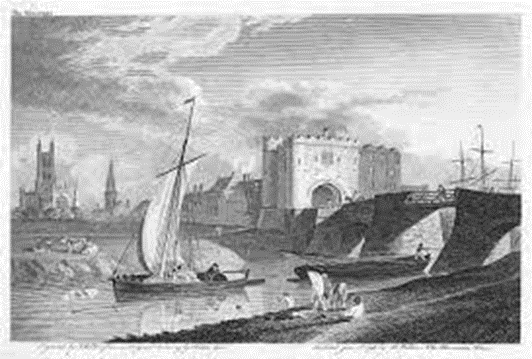
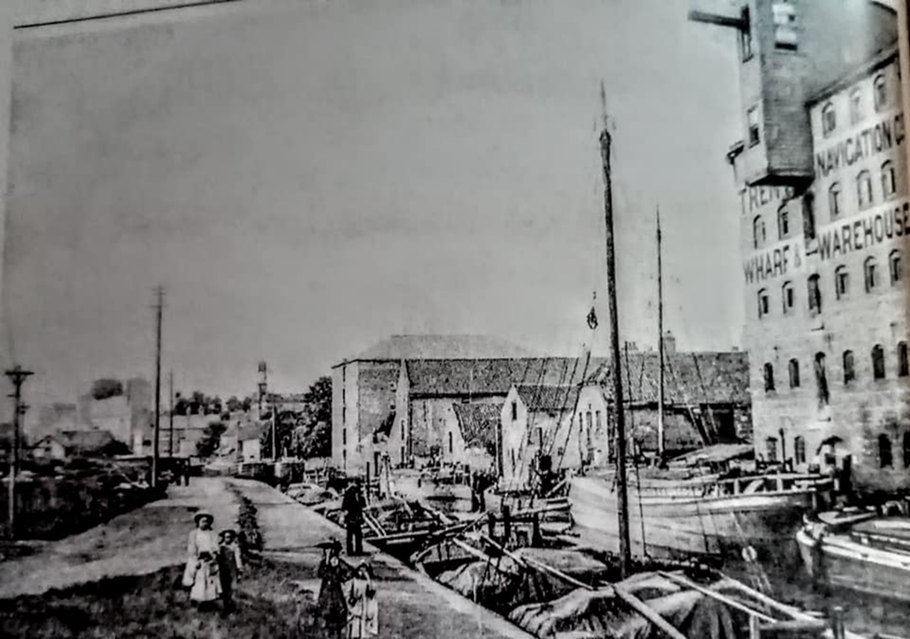
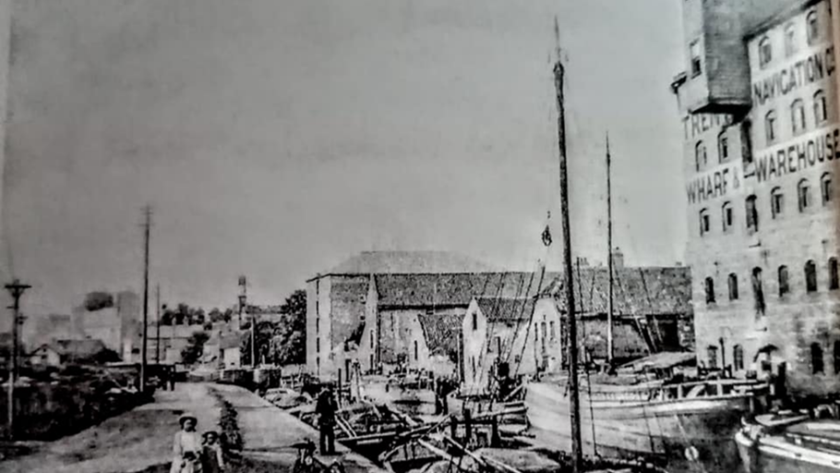
Newark in the early 20th Century showing boats with small masts that could be dropped for passing beneath bridges, they used a small sail whilst traveling upriver. The boats though still show their basic medieval form.
This short article came about when we learnt that many Victorian and earlier weirs on many rivers were given a foundation of trows sunk across a river or spur of a river and held in place by being filled with stone. Today the fashion in river care and engineering is to remove such structures. In many instances such weir braking is conducted with little care. Such action should be carried out with due diligence, research needs to be conducted into the history of structures prior to weir removal alongside consultation with county archaeologists and other stakeholders. Removal is often an act of brutal vandalism with little if any understanding of the structure being removed.
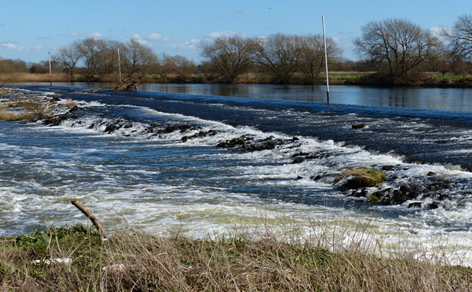
Avraham Weir on the River Trent was put in place in the 18th Century. The foundation of this broad structure is said to have been created using a number of Trent Trows set onto the riverbed in the manner mentioned above.