Introduction.
A few weeks ago, a relation of mine telephoned me, informing me that they now owned half a mile of the River Glaven along with an old watermill. It sounded amazing and the more I research the details of the river the more wonderful it appears to be. I look forward to seeing the reality in the future.
Being nosey, I felt a little research into the river and the mill’s location was in order.
The River.
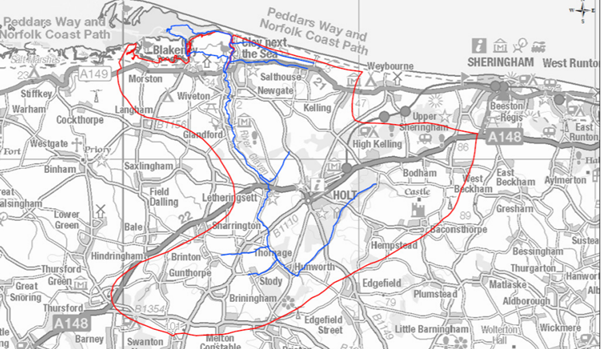
The River Glaven is 17 kilometres in length and drains a catchment of 115 Km2 of rural North Norfolk, UK. Rising from springs in Lower Bodham and Baconsthorpe which join forming Selbrigg Pond, the first of four in line of river ponds along its length. The river discharges into the North Sea via Cley and Blakeney harbours. The river has two major tributaries, the Stody and Thornage Becks.
The River Glaven is underlain by chalk geology and for much of its length is a rare form of river, a chalk stream, 1 of only 200 globally; 165 of these are in eastern and southern England. The geological makeup of the river encourages a particularly characteristic flora and encourages a particularly diverse aquatic fauna.
The river has been engineered and altered over the millennia to allow for various uses, aesthetic (lakes set in parkland such as at Bayfield Hall) as well as commercial, mills and small-scale transportation nearer the coast. This has led to many of the natural meanders being removed over the centuries and the inevitable changes that such actions have, such as steep banks and problems of flooding. There are areas of wetland and fen still within the catchment especially large areas are to be seen below the sluice gates at Cley which protect the Glaven from saltwater intrusion upstream.
Wildlife.
Brown Trout, Bullhead, Stone Loach, European Eel, Three-spine Stickleback and Brook Lamprey may be found upstream of the sluice gates at Cley, whilst on the seaward stetch of the river Common Smelt, River Lamprey and Sea Trout are regularly caught. The sluice, and other barriers upstream that stop fish migration are being evaluated. The desire of many conservation groups being to see sea trout returning to much of the river.
White-clawed Crayfish are well established along much of the River Glaven, but the American Signal Crayfish are making their presence known to the native crayfish’s detriment.
Flora along the river is remarkably diverse. Water-crowfoot (Ranunculus penecillatus) is widely seen along much of the river’s length. Soft Hornwort (Ceratophyllum submersum), a rare plant anywhere in Britain has a strong presence within the Glaven Valley/
Water Quality.
The Glaven is a high-quality river but suffers agricultural pressures that are common across the Eastern Counties. Biological quality is high along most of the rivers though it suffers from elevated levels of nitrates and phosphates that emanate from agriculture and rural sewage treatment and discharge from sewage treatment works such as that from Holt. The use of pesticides and herbicides are also apparent.
Agricultural land runoff and that from roads are also polluting the river with sediments that coat the gravels of the river floor stopping the deposition of fish spawning into the gravels, further damaging fish breading in the river.
Restoration of Natural Flow.
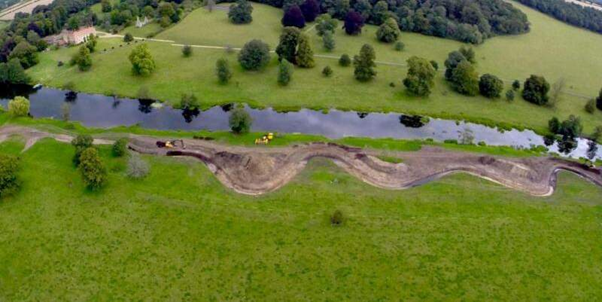
The river being restored as a meandering stream alongside the lake that was put in place in the 18th Century.
The conservation groups of the area desire to encourage the restoration of the Glaven, they are receiving support from many sources. This development in water management and care for the aquatic environment might be aimed at the increase in fishery value. It is easy to give fisheries a monetary value unlike any other aspect of the water system now that most water mills have ceased to function. The other aspect of waterpower, generation of electricity is not popular due to its possible interruption or impediment of fish movement.
The Mill.
Thornage Watermill is a late 18th century red brick undershot watermill, three storeys high with an attic and a roof of pantiles. It was derelict for some years till the late 1990s when it was restored as a dwelling. Much of its machinery is still in place and incorporated into the present living space of the dwelling.
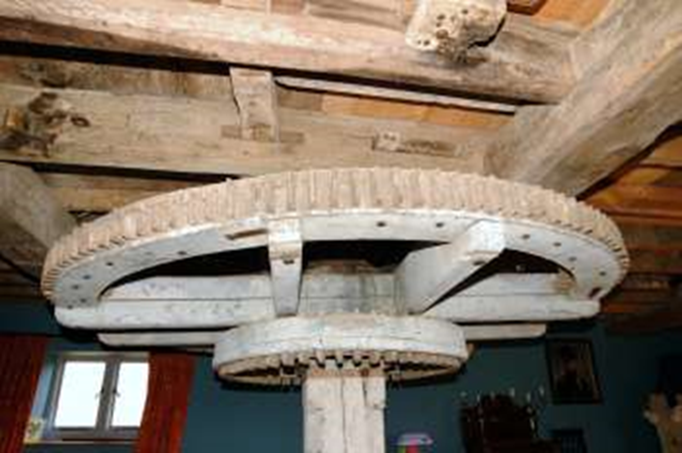
The spur wheel.
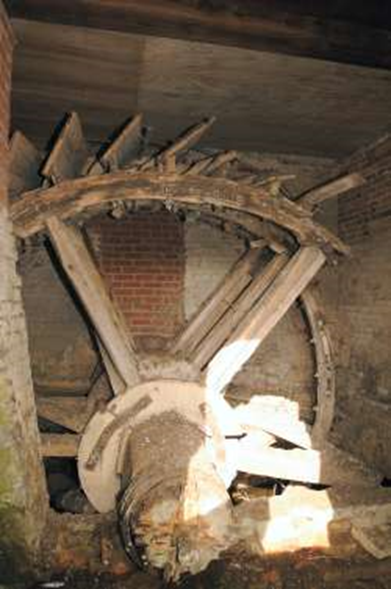
The remains of the undershot wheel in 2003.
A mill has stood on or close by this site since at least 1086 as it is mentioned in the Doomsday Book where it is reported that there were 19 watermills along the river. In the 1200s it was known as Feldmille. Thornage being one of 6 surviving today, the others being Hempstead, Hunworth, Letheringsett, Letheringsett Brewery mill and Glandford. The mill at Letheringsett is still active, the only operating watermill in Norfolk.

OS 1885. The parish boundary runs along the original river course to the east of the mill and present river course.
The mill ceased functioning in 1937 and was not converted to a dwelling to late in the 1900s. the mill wheel and race have never ceased being the route of the River Glaven which was rerouted in the 18th Century to its present line if flow when the present mill was built. To the east of the present river one can observe the original channel outline with its meanders making the boundary of the parish of Thornage. The course of the Glaven needed to be altered in order to construct the mill in an area able to hold the mill dam without flooding the surrounding area.

1966 The abandoned mill at the edge of the farmyard. The owners in 1974 considered reopening the mill but later abandoned the project.
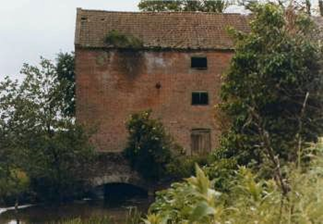
1977 view if the river beyond the wheel pit.
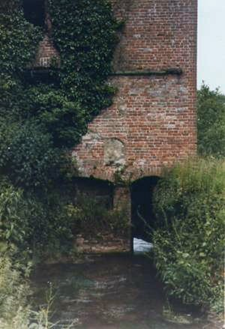
Headrace in 1977
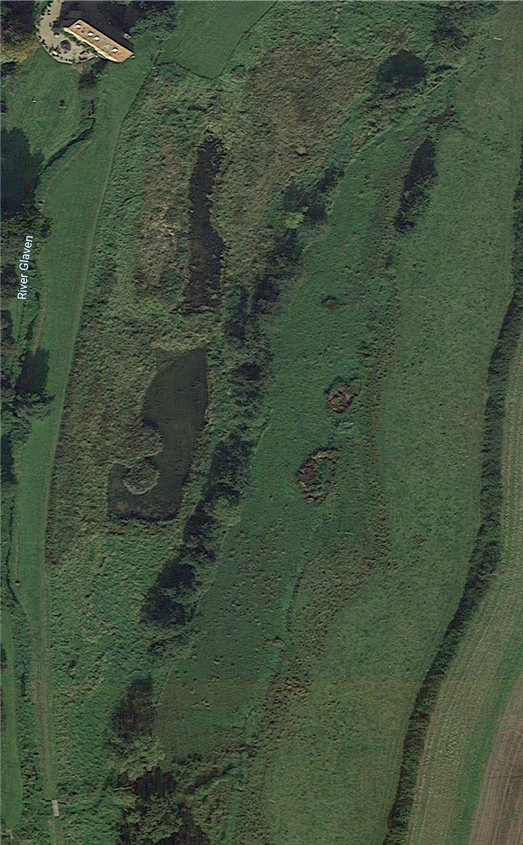
| Headrace in 1977
The River Glaven has not had just two channels as might have been expected, paliochannels or other shifts have taken place since the last Ice Age. These may well have developed initially whilst covered by the ice sheet. |
Conservation Groups and User Groups Involved Along the River.
Wild Trout Trust.
Norfolk Rivers Trust.
World Wildlife Trust.
River Glaven Fishing Association.
River Glaven Conservation Group.
Norfolk Wildlife Trust.
Bibliography.
Web Sites.
http://www.heritage.norfolk.gov.uk/record-details?MNF6527
http://www.norfolkmills.co.uk/Watermills/thornage.html
https://en.wikipedia.org/wiki/River_Glaven
https://www.wildtrout.org/content/river-glaven
https://www.riverglaven.co.uk/index.php/about-the-river-glaven/
https://webarchive.nationalarchives.gov.uk/20110303150026/http://www.ukbap.org.uk/UKPlans.aspx?ID=9