This autumn has been a busy and interesting season as most are. We have been keenly looking forward to new projects as well as keeping our present projects going forward. There is a need to engage our present successes with acidic tar with new challenges going forward. This would appear to be Hoole Bank, a large tar pit on the outskirts to Chester.

This site was a clay pit that extends over a hectare in size and is in places 5 to 6 metres in depth filled with tar. A bund that leaks in parts allowing tar to exit the pit and develop large swollen deep pools of very acid slop or slide beyond the fence and enters the drains and a tributary of the River Gowy, one of the rarest rivers in Europe. The Gowy, it appears is a river that some eels manage to breed in rather than leave freshwater for the Sargasso Sea. This is made possible because the river passes under the great Manchester Ship Canal via a syphon making it unpassable for eel to pass through. The population though is high, one of the most buoyant eel populations in Europe. The tar has not reached the river yet, but hydrocarbons already reach its waters. The tributary though is a gooey mess of varying acidity depending on rainfall.
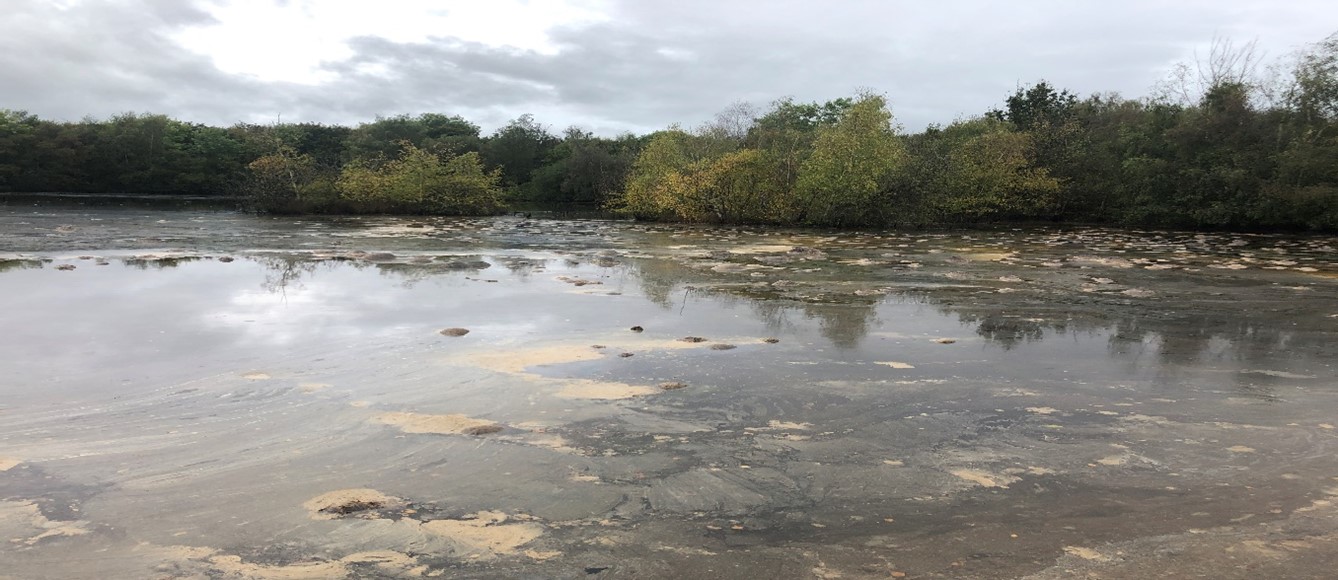
The lake of tar is covered by up to a metre of rainwater which is covered by a thick layer of alga that appears to inflate into domes. The makeup of the gas that inflates these domes is yet unknown.
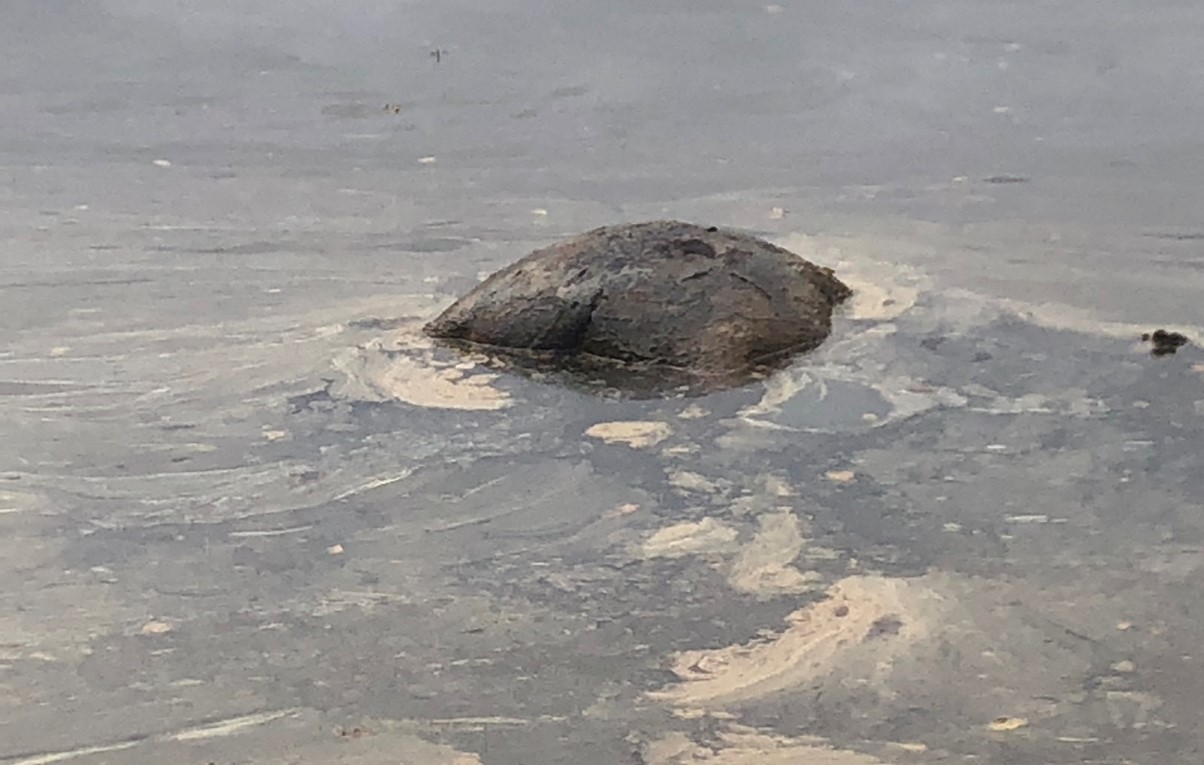
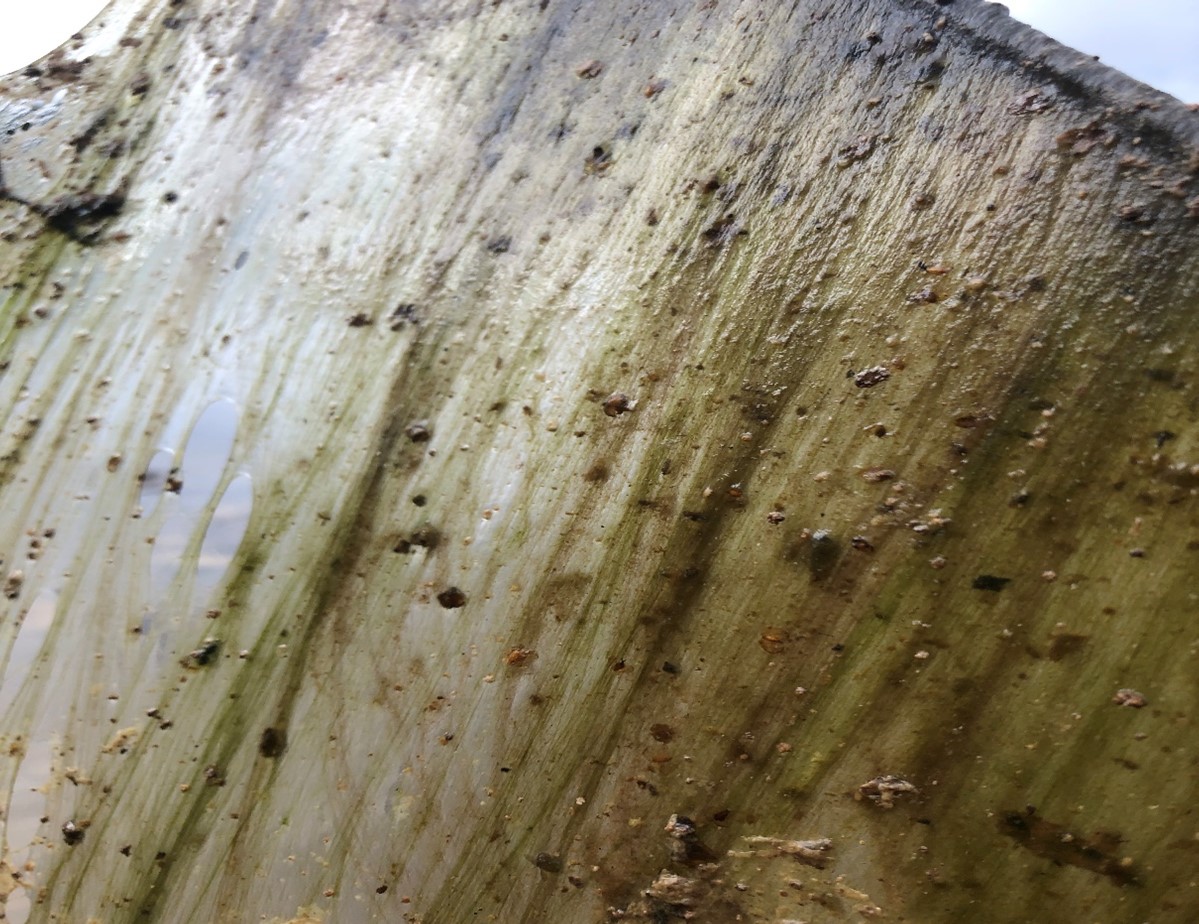
The algal growth is like that which we find at Cinderhill acid lake in Derbyshire. It is slimy and blankets the lake in stratified layers.
We have been invited by the local authority who wish us to carry through an initial trial project to demonstrate over an 18-month period that an agreed section of the tar pit might be stabilised and at the same time stabilise the pits surrounding bund.
Preliminary design work is underway as is an initial risk assessment.
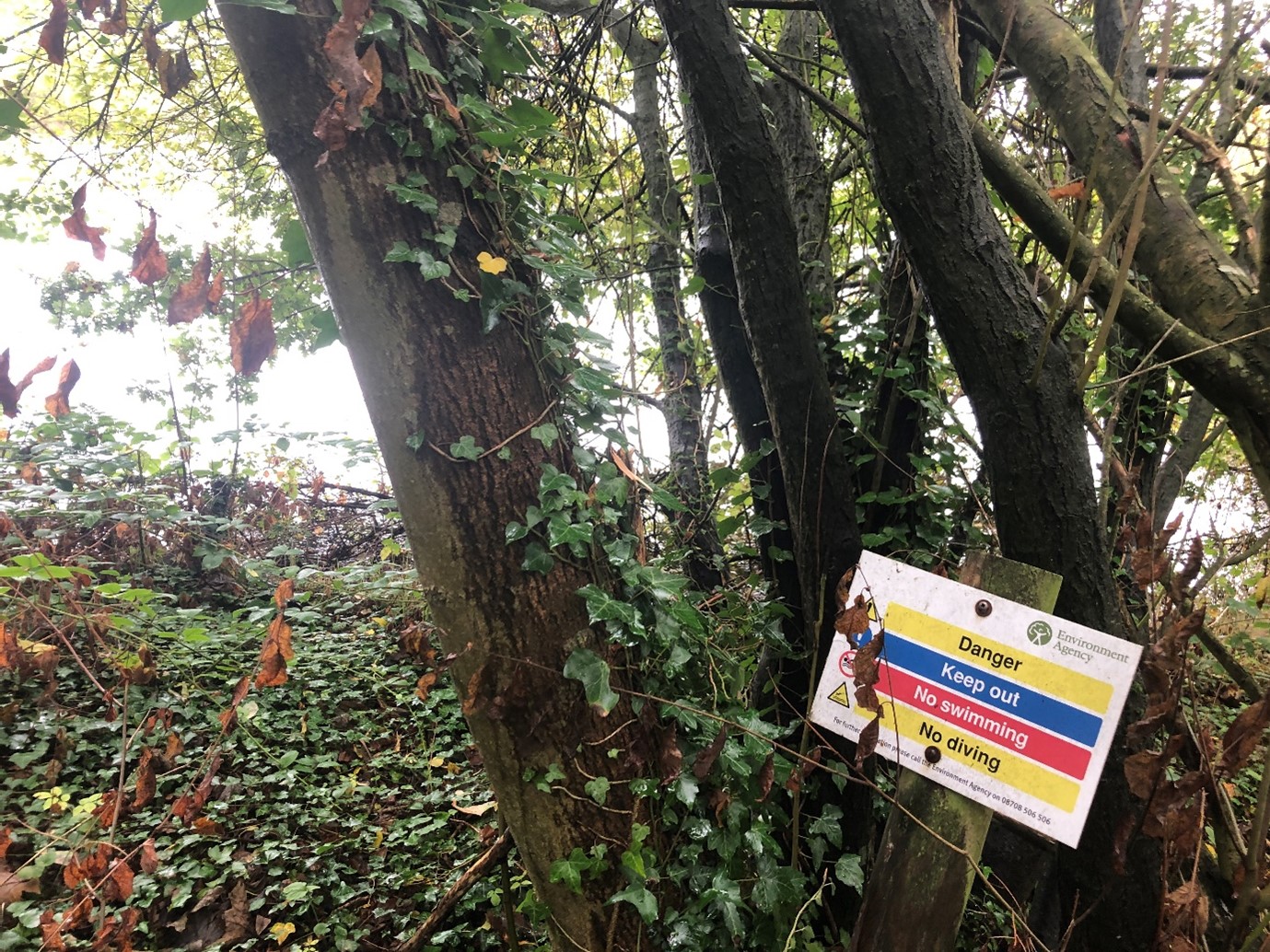
The Environment Agency need to be brought into the project which would be managed by the council who own and maintain the fence around the site. The Environment Agency though hold the key to the gate.
There are several boreholes around the site perimeter but these, allowing for both gas collection and water sampling are not maintained by either party. The gas valves have popped out under pressure of gas in the collection tubes. Some were replaced on our visit.
Cinderhill Tar Pit.
The research site is looking well at the end of October with natural leaf drop occurring. The gas induced defoliation had been overridden by the willows with a spirt of leaf growth as was anticipated at the last Trustees meeting. Several interesting beetles, snails and slugs have spotted over the last months along with signs of larger animals visiting the site, fox, deer, badger, stoat, and weasel, the last two species may be the reason we see no rabbits about. Rabbits being common on site up to this year.
Acid Lake, Cinderhill.
The site is being monitored weekly now, pH and other tests to understand fluctuations in water quality. Most times the water is clear but occasionally it is turbid.
There have been break ins to the compound around the other tar pits which we have reported to the Environment Agency, who contact Fuchs to have repairs conducted. The repairs need to be better and hopefully will be soon. The gate we put in place id not causing any problems. The scrape back of the tar entering the water have not started again so the next stage can go ahead next year depending on the funding situation.
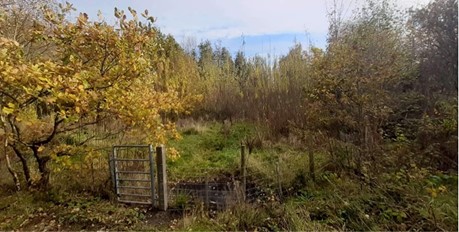
Minewater Seepage.
The minewater seepage we identified near our research site has been confirmed by the Coal Authority and has been visited by them. They will monitor over the next while after heavy rain. The pumping at Woodside is now confirmed to be the reason for its appearance. The water treatment lagoons had to be relined and the pumping had been ceased during the period of replacement. The Coal Authority were surprised by the distance the pump shut down had affected. Showed them a plan of underground roadways to help confirm the linkages.
Cinderhill Meetings.
Environment Agency visited to admire the willows growing on the research site and look at the minewater site. Very satisfied with the progress on site, amazed by the size of the trees and the surface grass cover.
Coal Authority.
As already reported above, plus a conversation that covered a historic request to drain the acid lake to the coal measure workings. This request had been declined by the Authority.
Harworth.
A short visit to see how the site was looking at the end of the season.
Harworth entertained Sophie, Nathan, and I to Christmas Lunch to discuss plans around the Cinderhill site going forward; several water schemes to increase the areas diversity and environmental care.
Amber Valley.
Meeting postponed due to their continued Covid restrictions.
Denby Pottery.
The project to remediate the historic glaze pit is being considered again and will be going ahead if a budget can be allocated to the project this year.
Passing of Patricia Wood
It is with regret that the Trust notes the death of Patricia Wood, one of the original founders of the organisation in 1990 when it was known as Clean Rivers Campaign. She continued her involvement with the Trust into the new millennium. A ‘Green’ before such notions were mainstream.
Meeting with the Rev. Paul Cawthorn.
Involved in issues to do with landfill leachate sources and historic poor practices of industries and regulators of such sites in, Wales and the West of England.
Meeting with Nottingham City Council.
Discussion with the officers regarding carbon sequestration and remediation of contaminated land as a concept for use within the city as part of its carbon reduction policy.
Minewater heat was also covered briefly.
Refugee.
Talking with one of Ayse Wood’s students, an Iranian water, catchments, watersheds, and dam specialist. He was, prior to leaving Iran a lecturer at a university in Iran but has spent the last year in limbo awaiting the right to stay in the UK. This he has now gained. He is learning English at the present time at B Met, Birmingham.
Contacts and Requests.
1/ We were contacted recently by a minerals company regarding the artisan mining areas of Ghana. We are aware of many of the issues as they have been brought to our attention several times over the years. Such mining methods are very polluting and dangerous. Many employers in this form of mining use child labour and need regulation and reorganisation. At this point I am unsure what is being asked of us.
2/ Have been discussing the salvage of the abandoned oil tanker off the Red Sea coast of Yemen. The purpose of these discussions has been to attempt to gain local political acquiescence if not total agreement. The tanker has been at anker for several years and if it breaks up will shed its cargo, which will pollute a long stretch of the coastline, polluting the drinking water supplies of over eight million people.
3/ Have had further discussions regarding Middle East mining law.
Funding.
Fundraising has been the order of the day; hopefully, enough funds will be available to see the growing workload funded adequately. I know that the Trust can function on a pittance and still surpass expectations, but it would be wonderful not to be stretching funding to the extent we have at times over the years.
Winter Aphid of the Day at Cinderhill.

Giant Willow Aphid 8mm long. Photographed on 24th November. The frost and snow will hopefully remove any threat of infestation in the spring.